



A good friend of mine once suggested I write an article about how people can get back on track financially after the holidays. My initial response surprised even me. I said, “That’s a good idea—I never thought of that.”
She looked at me like I had three heads.
“All the financial writers are talking about holiday hangovers and Christmas blues,” she said. “I can’t believe you never thought about it.”
After giving it some thought, I realized why the idea didn’t immediately resonate with me. I help people get back on track and get ahead financially every single day. Why would my advice suddenly change just because the calendar says December instead of March?
That question led me to a deeper realization: being broke after Christmas isn’t a seasonal problem. It’s a symptom. A warning sign. A preview of what’s coming if nothing changes.
Think about it. Christmas falls on December 25th every single year. It has never moved. It has never surprised anyone. Yet millions of people behave as if it snuck up behind them, tapped them on the shoulder, and yelled, “Surprise—I’m here!”
Do people believe time will pause until they’re ready to plan? Do they convince themselves that some imaginary rescuer—Santa Claus, a bonus, the lottery, the casino, or a financial knight in shining armor—will show up and clean up the mess caused by a lack of preparation?
That belief has a name. It’s called false hope.
And in my professional opinion, being broke after Christmas is a microcosm of what financial life looks like for many households year-round.
According to industry surveys, the typical American household spends roughly $900 to $1,100 during the holiday season on gifts, food and decorations. The majority of those purchases are made using credit cards. Even more concerning, only about 37 percent of holiday borrowers expect to pay off that debt within two months, meaning nearly six out of 10 people are still paying for Christmas well into March and beyond. Let that sink in!
Now ask yourself a few honest questions. Is $900 to $1,100 really such a massive amount that it’s impossible to save for ahead of time? Is it so overwhelming that even if credit cards are used, paying the balance off within three months feels unrealistic? Is this amount truly large enough to justify months of financial stress, regret, and “holiday hangovers?”
If you answered yes to any of those questions, I hate to be the bearer of bad news—but someone needs to say it plainly. If $1,000 knocks you off your financial feet, you’re not dealing with a Christmas problem. You’re dealing with a money management problem. And the stakes are far higher than the holidays.
Surveys consistently show that more than 90 percent of Americans have faced a serious financial emergency, yet nearly 60 percent cannot cover a $1,000 unexpected expense from savings. Imagine if that emergency were $3,000, $5,000, or more. A medical bill. A major car repair. A job loss. A family crisis.
How does the average household handle it? They borrow.
Credit cards. Personal loans. Buy Now, Pay Later loans. Payday loans. Retirement loans and withdrawals. Debt becomes the default solution because savings were never part of the plan. That’s exactly why I strongly recommend a fully-funded emergency fund of three to six months of living expenses, along with ongoing sinking funds for both expected and unexpected costs. Emergencies aren’t rare—they’re inevitable. The only surprise should be whether you planned for them.
When you zoom out even further, $900 to $1,100 looks downright small.
It’s small compared to the cost of sending a child to college. Most families already understand how painful student loan debt can be, yet far too few take proactive steps to establish college savings early. It’s small compared to the true cost of homeownership—not just the purchase price, but maintenance, repairs, taxes, and insurance. That’s why I consistently advise people to get their financial house in order before buying a house.
$900 to $1,100 is microscopic compared to what it takes to maintain your lifestyle in retirement.
Roughly eight in 10 senior households are either already struggling or at serious risk of financial insecurity during what should be their so-called golden years. Social Security’s long-term future remains uncertain. Traditional pension plans have all but disappeared. Many employers no longer match 401(k) contributions. Even in households that receive both Social Security and a pension, those income sources often replace only 20 percent to 60 percent of pre-retirement income.
That gap doesn’t close itself.
This is why I constantly emphasize retirement savings—not someday, not “when things calm down,” but consistently and intentionally over time. The same habits that leave people broke after Christmas are the very habits that leave people financially exposed in retirement: overspending, lack of savings, poor money management, and no clear financial game plan.
None of this is new. I’ve written about these solutions repeatedly in this column. Budgeting. Emergency funds. Sinking funds. Debt reduction. Long-term investing. The principles don’t change because the seasons don’t change human behavior.
What does change is whether you finally decide to take responsibility.
If you need help building a plan that fits your real life—not a spreadsheet fantasy—I’m here to serve. A new year doesn’t magically fix old habits, but it does offer a powerful opportunity to draw a line in the sand and do things differently.
Action Steps: How to Get a Grip on Your Money
First, create a written monthly budget and actually use it. Second, start an emergency fund—even if it begins with $25 or $50 per paycheck. Progress beats perfection. Third, separate short-term goals from long-term goals by using sinking funds for known expenses like holidays, car repairs, and insurance premiums. Finally, automate your retirement contributions so saving happens whether you feel motivated or not. Financial stability isn’t built on luck—it’s built on systems.
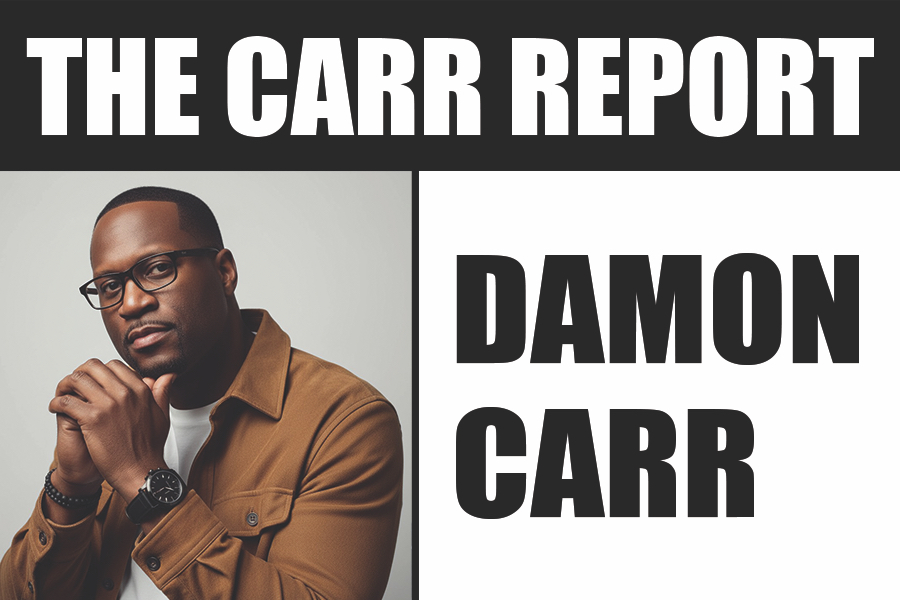
(Damon Carr, Money Coach & Tax Pro can be reached at 412-216-1013 or visit his website at www.damonmoneycoach.com)
Helping you flip your finances from stressed to blessed — one smart decision at a time.