


By Erick Johnson, The Chicago Crusader
Maxwell. Babyface. GloRilla. The Isley Brothers. It’s time for America’s largest and hottest Black summer event: the iconic Essence Festival of Culture in New Orleans.
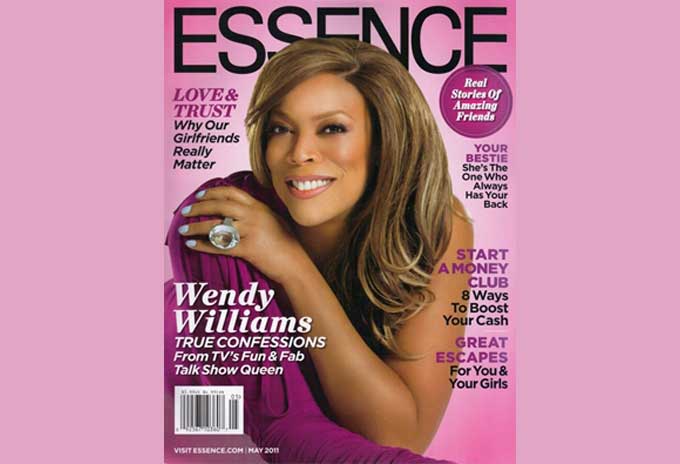
During its 30-year history, the event over time has come to be known affectionately as simply Essence Fest. The annual production was founded by the national Black woman’s publication, Essence Magazine.
The festival is a popular Fourth of July tradition that showcases America’s Black music and culture on the world stage.
Tickets to many events have been sold out for months out as music fans across the globe flock to the Big Easy, filling hotels, restaurants and entertainment venues near and around the French Quarter.
From July 3-6, as many as half a million people are expected to attend four days of music, food, fun and education empowerment. They will soak in a party atmosphere that includes concerts, culinary dishes and educational seminars and workshops.
But few people know that the popular Essence Fest is produced mostly by people who don’t look like the performers or spectators who have made the event what it is today.
The Chicago Crusader has learned that for the last 12 years, Essence Fest has been produced by the Solomon Group, a big, successful White firm in New Orleans that has no Blacks in key executive positions.
The contract with Essence Fest has boosted the profile and reputation of Solomon Group among Black institutions, which also have contracts with the firm, including the International African American Museum in Charleston, South Carolina.
The Solomon Group’s rise to prominence in Black America is stunning. The firm started in 2009 in New Orleans, home of Mardi Gras, top culinary dishes and world-renowned jazz artists. Solomon Group has produced Essence Fest since 2012.
Throughout a year of planning, the Solomon Group is responsible for transforming the Caesar Superdome and downtown New Orleans into a musical wonderland with massive performance stages and over the top impressive sound and lighting displays.
The Solomon Group’s core staff of engineers, production designers, consultants, producers and technology specialists are part of the firm’s massive production team that oversees an army of volunteer and seasonal workers from staffing firms that help present Essence Fest’s musical extravaganza.
As artists like Mary J. Blige and Erika Badu belt out their hits on grand stages, the Solomon Group’s professional staff are there to make sure the lighting, sound, design and technical aspects are perfect.
When the Essence Festival is over, workers help the Solomon Group disassemble stages, displays, and exhibits before they pack them up and start planning for next year’s event.
There’s more. As part of its enormous contract with Essence Fest, Solomon Group is responsible for managing concerts. That includes overseeing the logistics, the flow of performances and a host of other services.
But questions are afloat about the Solomon Group’s commitment to hiring and promoting Blacks in its firm. Photos of the firm’s core staff show that of 27 staffers, only three are Black. They are Tiffany James, human resources specialist, Wendy Richard, director of people, culture and training, and Asha Robinson, a senior producer. The other staff members are mostly White.
Leading the firm are founders Gary Solomon Jr. and Steve Fink, executive producer. Another top executive is Sam Aouididi, chief financial officer. None of them are Black.
Many people with whom the Crusader spoke were shocked that Essence Fest is produced by a White firm.
“I’m disgusted. That’s why we don’t get nowhere,” said Janice Jeffries, a Chicago resident who once attended the festival. “We can’t stick together. You mean to tell me you couldn’t find a Black production company to get it done.”
Artrlynn Luke, a New Orleans resident, said her perception of Essence Fest changed after the Crusader told her who produced event.
“I did not know that” said Luke, who attended Essence Fest two years ago.
“I thought African American people were running the whole event. That’s news to me. It’s very disappointing.”
It’s unclear how the Solomon Group obtained its long-term contract with Essence Fest or whether event organizers searched for qualified Black owned production firm to produce the festival.
In a statement to the Crusader, Alex Ebanks, Essence Ventures’ Vice President of Communications who graduated from HBCU Spelman College, said “Solomon Group has been a long-standing producer of the Essence Festival of Culture.
“Our goal is always to identify partners and vendors that can support and meet our layered needs for the event with a prioritization for businesses within the New Orleans and Greater Louisiana region, as a part of commitment to economic growth and impact.
“In addition to Solomon Group, the Festival hires many Black, women, and minority-owned businesses that provide a range of services such as small and medium-scaled event production, stage management, operations, and logistics. Some of these businesses and their employees have been with the Festival since day one or more than 6 years, when the company was acquired.”
Ebanks did not provide any names of the Black businesses she said Essence hires for its annual extravaganza.
Black contractors in many industries have historically struggled to compete with White firms, which often have more capital and resources to provide high quality services companies need to stay on top.
According to its website, in addition to Essence Fest, the Solomon Group has also produced numerous high-profile events, including the annual College Football Playoff games, the NCAA March Madness, the NFL Draft, Major League Baseball Draft, NASCAR, LIV Golf, NHL All-Star Weekend, ESPN’s half time shows, and Dick Clark’s Rockin’ New Years Eve in New York’s Times Square.
Despite questions emerging about the production company’s commitment to hire Blacks, many fans still plan to attend and support Essence Fest. Some praise the Solomon Group’s high-quality work which has made Essence Fest shine on the global stage. And the festival itself has boosted the profile of Essence Magazine.
It is unknown how much Essence pays the Solomon Group to produce the festival. Neither Essence nor the firm disclosed the financial details of the contract.
Founded for Black women in 1970, Essence is a national magazine. It grew in popularity under Editor-in-Chief Susan L. Taylor, who led the magazine from 1981 to 2000. Essence Fest was created under Taylor’s leadership.
In 2005, Time, Inc. purchased Essence, sparking concerns of a White-owned company owning a major publication. Under Time ownership, Essence appointed as its editor-in-chief Michael Bullerdick, a White male who resigned after his conversative views were discovered on his Facebook page.
In 2018, Richelieu Dennis, a Black multimillionaire entrepreneur, bought Essence from Time Inc. As founder and chairman of Essence Ventures, Dennis still owns Essence Magazine today. According to a Business Insider article in 2023, Essence Magazine has a monthly circulation of over 1 million copies, competing with the likes of Vogue and Elle.
In the Summer of 1995, the Essence Festival started in New Orleans. The event featured Luther Vandross, Gladys Knight, Aaliyah, and thought leaders like Reverend Jesse Jackson and Representative Maxine Waters.
In later years, the festival blossomed into an enormous event that featured top Hip Hop and R&B recording artists as well as Black celebrities, professional athletes and political figures, including President Barack Obama and his wife, first lady Michelle.
In 2017, the cast of “Girl’s Trip”-Regina Hall, Queen Latifa, Jada Pinkett Smith, and Tiffany Haddish- visited Essence Fest after filming the popular movie at the 2016 Essence Fest.
In its first year, organizers told a New Orleans television station that the festival injected one million dollars into the local economy. The following year, the amount leapt to $75 million dollars. Now, organizers say the festival pumps over $300 million dollars annually into New Orleans’ local economy.
For over three decades, the Essence Fest highlighted and promoting the contributions of Black women long before they began rising in politics and business.
Of the three Blacks who work for the Solomon Group, two are women.
Since acquiring the Essence Fest contract, the Solomon Group’s list of Black clientele has grown to include AT&T in Black, the B.B. King Museum, the Louisiana Civil Rights Museum, and Tyler Perry’s “The Passion” film.
In 2024, the Solomon Group obtained a contract with the International African American Museum in Charleston, South Carolina. The non-profit museum is one of the most successful and highest performing Black institutions in the country. According to its IRS 990 tax filings, the museum has nearly $55 million in assets and generated over $14 million in contributions and grants in 2023.
This year’s Essence Fest will include Jermaine Dupri, who will perform a tribute to legendary producer Quincy Jones, who died last year.
This article originally appeared in the Chicago Crusader