


by J. Pharoah Doss
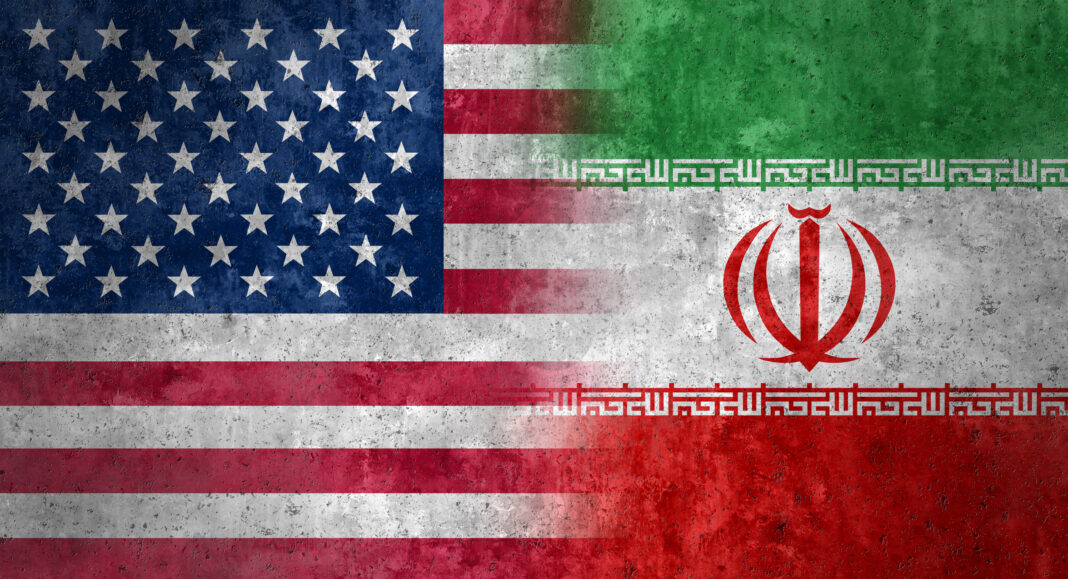
Last year, the United States and Israel launched a military operation that severely damaged Iran’s nuclear program. This year, the United States and Israel launched a military operation that decimated Iran’s missile capabilities and killed the top leaders of Iran’s Islamic regime, while US President Donald Trump called for the Iranian people to reclaim their nation from the radicals.
Trump critics allege the president broke his pledge of “no new wars” by starting an unnecessary war against Iran on Israel’s behalf.
Kian Tajbakhsh, a professor of international relations at New York University, recently went on CNN to address America’s current war with Iran. He argued that most of the discussion overlooks the big picture. President Trump did not start a war with Iran; he seeks to finish one that began in 1979.
In 1979, the Iranian Revolution deposed Iran’s pro-Western Shah, Mohammad Reza Pahlavi. The revolutionaries overthrew the monarchy and founded the Islamic Republic of Iran, led by Ayatollah Khomeini.

Historians have argued that the Iranian revolution rectified a two-decade-old injustice. After becoming Prime Minister of Iran in 1951, Mohammad Mosaddegh nationalized the Anglo-Iranian Oil Company, seizing all British assets. In 1953, Britain and the United States staged a coup to depose Mosaddegh and install the pro-Western Shah of Iran, who supplied Western oil firms with half of Iranian oil.
Professor Tajbakhsh told CNN that in 2003, he worked on high-level projects with Iran’s Foreign Ministry, and an Iranian deputy foreign minister told him that the current regime believes it is at war with the United States—it’s a cold war, but a war nonetheless.
Cold wars are periods of political antagonism between nations marked by threats, propaganda, and other measures short of open warfare. Iran expanded on this concept by sponsoring terrorism, although being mired in a “cold war” was not Iran’s original objective.
In 1979, the Islamic Republic of Iran declared three goals.
1). The regime pledged to wage war against the United States, even if it required enduring hardships.
2). The regime swore to destroy the state of Israel. It aided groups such as Hezbollah and Hamas in this effort.
3). To export the Iranian revolution worldwide.
The actual Cold War was a nuclear arms race between the US and the Soviet Union. By 1979, the two superpowers had agreed to limit their nuclear arsenals, but the Islamic Republic of Iran established another goal: to become a nuclear-armed nation.
The United States and its allies proclaimed that the Islamic Republic of Iran will never be able to possess nuclear weapons. It is worth noting that Iran signed the Treaty on the Nonproliferation of Nuclear Weapons in the 1960s. The Non-Proliferation Treaty defined nuclear-weapon states as those that obtained them before 1967, and nations without nuclear weapons agreed to sign the treaty as non-nuclear-weapon states, promising never to acquire nuclear weapons in exchange for nuclear technology for peaceful purposes.
However, the treaty was signed by a pro-Western Iranian government rather than the revolutionary regime.
The Iranian cold war experienced various phases between the establishment of the Islamic Republic of Iran and the Biden/Harris administration. Iranian revolutionaries overran the US embassy in Tehran in 1979, resulting in a hostage situation that lasted more than 400 days. In 1983, Iranian proxy Hezbollah bombed a Beirut military barracks that housed US and French troops, killing 241 US troops, 58 French military personnel, and six civilians.
The Iran-Iraq War occurred from 1980 to 1988. The Iraqi ruler wanted to prevent Iran from spreading its revolution throughout the Middle East. The United States and some of its allies supported Iraq in this preventive measure, which increased tensions between Iran and the United States.
In 1995, US President Bill Clinton placed the most severe sanctions on Iran due to their efforts to develop nuclear weapons and their support for terrorism throughout the Middle East. In 1996, an Iranian military proxy destroyed the Khobar Towers in Saudi Arabia, killing 19 Americans. President Bill Clinton opted for a diplomatic solution rather than a military reaction.
After 9/11, US President George W. Bush designated Iran a member of the Axis of Evil, a group of rogue nations that supported terrorism and presented a threat to the US and its allies by seeking “weapons of mass destruction.”
In 2005, US President George W. Bush froze all assets of individuals connected with Iran’s nuclear program. Beginning in 2010, Israel launched a decade-long campaign to destroy facilities and assassinate scientists affiliated with Iran’s nuclear program.
In 2015, U.S. President Barack Obama agreed to the “Iran nuclear deal.” The agreement limited Iran’s nuclear program to civilian use in exchange for sanction relief, but three years later, US President Donald Trump pulled out of it. On October 7, 2023, under the Biden/Harris administration, Iranian proxies conducted air and ground operations against Israel, killing approximately 1,200 people and taking more than 250 hostages.
Israel responded by decimating all of Iran’s military proxies that encircled them. In 2024, an Israeli military operation killed numerous Iranian generals in Syria. These generals helped prepare the October 7th attack, which is widely regarded as the worst for Jews since the Holocaust.
In an unprecedented response, Iran launched missiles and drones at Israel. This was the first time Iran attacked from its territory.
Professor Tajbakhsh believes Trump is ending a war that began in 1979, but Iran’s orchestration of October 7th and subsequent direct attack on a sovereign nation signaled that Iran officially ended the cold war. Iran demonstrated to the US and Israel that they were willing to go on the warpath regardless of the repercussions and then declared that they would continue to strike until their revolutionary goals were met.
The US and Israel responded to the Iranian offensive by demonstrating the adage that “sometimes the best defense is a good offense.”.