
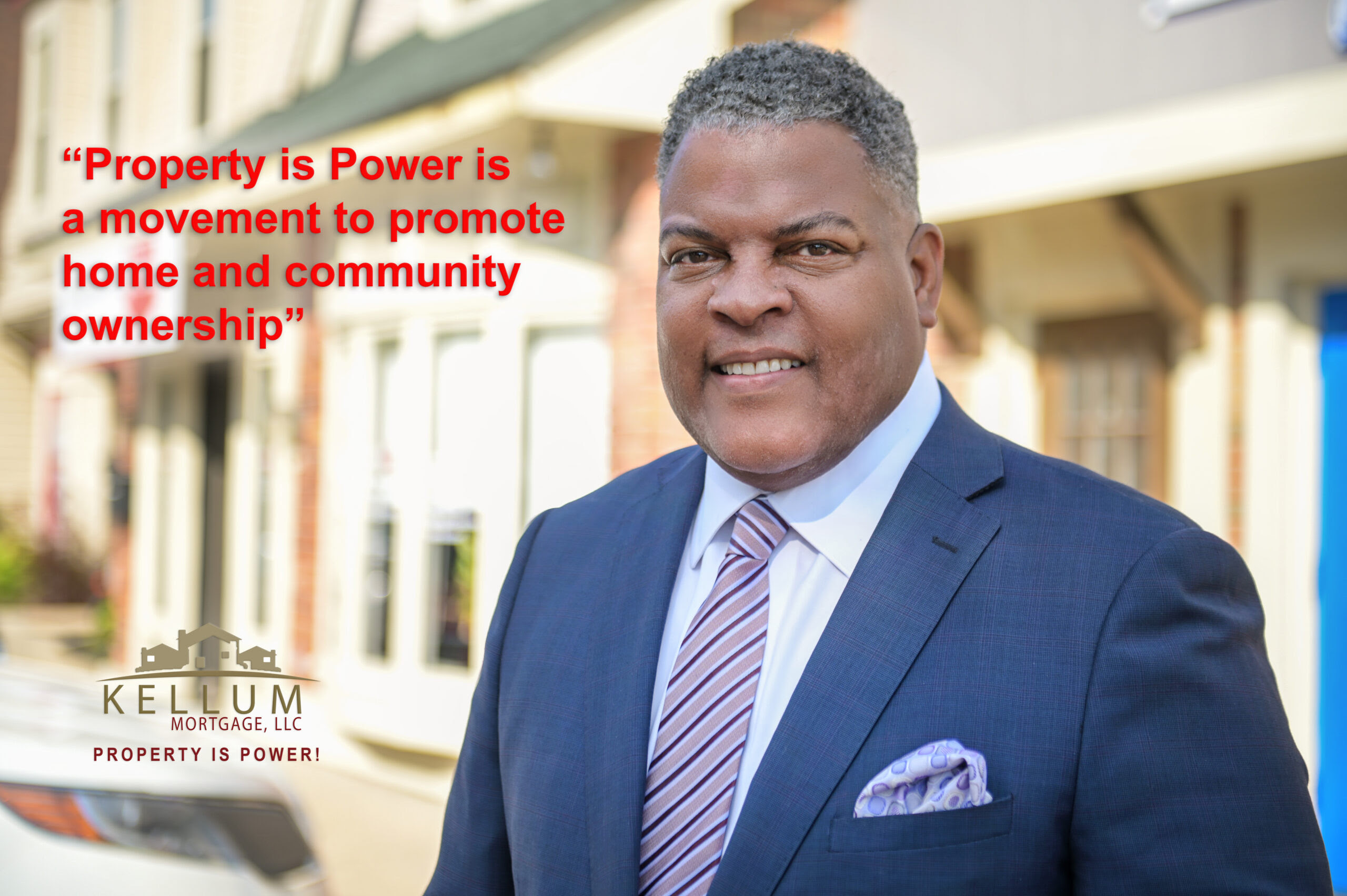


by Dr. Anthony O. Kellum
There is a dangerous mindset quietly circulating through parts of Black America, and even high-income earners believe that wealth-building must wait for perfect conditions. Black America has become obsessed with interest rates.
Turn on financial television, scroll through social media, or sit in almost any conversation about housing, and the discussion eventually circles back to the same anxiety—rates are too high. Buyers are waiting, consumers are nervous, and the market feels uncertain, and within Black America, particularly among educated professionals, aspiring homeowners, and first-generation wealth-builders, that anxiety has quietly evolved into something more dangerous—paralysis. Too many people are waiting for perfect conditions before they allow themselves to participate in ownership.
Perfect rates.
Perfect prices.
Perfect timing.
Perfect certainty.
But wealth has never been built that way in America. Ownership has always rewarded movement more than hesitation. That is especially important for Black folks to understand right now because while many people are frozen by fear and over-analysis, others are still buying. Investors are still acquiring assets. Families with long-term vision are still positioning themselves for the next 20 years, not just the next six months. And perhaps that is the central misunderstanding in today’s housing conversation; the goal was never supposed to be chasing low interest rates.
The goal is ownership.
The goal is assets.
The goal is equity.
The goal is appreciation.
The goal is legacy.
Somewhere along the way, many Americans became psychologically attached to the abnormal housing market created during the pandemic era. Mortgage rates at 3 and 4 percent were treated as though they represented the natural order of the economy rather than what they actually were; emergency-era monetary conditions created during an extraordinary period in modern history. Those rates were never guaranteed to last. Historically speaking, what we are seeing now is far closer to a normal market than what America experienced a few years ago. Yet many potential buyers remain emotionally anchored to that anomaly, waiting for the market to somehow return to a version of itself that may never fully exist again.
Meanwhile, opportunity keeps moving, and that is the real danger; not rates themselves, but hesitation. Because while some people are debating whether to wait, others are acquiring duplexes, four-family properties, commercial storefronts, single-family rentals, and appreciating land. Others are building equity while many are still building excuses. The people quietly creating wealth in America understand something fundamental that many consumers still struggle to fully embrace; you are not marrying the interest rate. You are marrying the asset. Interest rates can change, markets fluctuate, debt can be refinanced, terms can improve over time, but first, ownership must exist.
That is the step many people keep postponing. There is no refinancing without first acquiring the property, there is no equity without ownership, there is no appreciation without positioning yourself inside the market, there is no generational wealth without assets attached to your family name. And Black Americans must become more disciplined about understanding this distinction. For too long, many conversations surrounding Black wealth have been dominated by caution rather than acquisition. We have become hyper focused on what could go wrong while overlooking what ownership has historically made possible. Yes, preparation matters. Yes, buyers should understand financing, taxes, reserves, debt ratios, and market conditions. But eventually, strategy must become action. Because real estate has never primarily been about perfection, it has always been about positioning.
Families and investors who quietly build wealth in America understand this instinctively. They think long-term. They acquire strategically; they understand that assets held over time tend to reward patience and ownership far more than fear and hesitation. And Black families must increasingly think this way if we are serious about transforming our economic future. Because ownership changes how people live, think, and move through the world.
A homeowner thinks differently than a renter. An investor thinks differently than a consumer. A family with appreciating assets approaches life differently than a family surviving entirely on earned income. Property creates leverage. Property creates flexibility. Property creates options during economic uncertainty.
Most importantly, property creates inheritance, and inheritance is where communities begin building real economic continuity across generations. This is why Black America cannot afford to continue functioning primarily as consumers inside communities we do not own.
Ownership matters! Homeownership should not simply be viewed as a lifestyle milestone or a symbolic achievement; it should be understood as economic infrastructure. A mortgage is not merely a monthly payment over time; it often becomes a transfer mechanism from expense into equity.
Rent disappears.
Equity accumulates.
That distinction changes families over 20 or 30 years.
And yet too many people continue approaching wealth from a scarcity mindset, believing opportunity is limited or unavailable to them. But wealth-building has always required expansive thinking.
The ocean does not know limitation. A person can approach the ocean with a spoon, a bucket, or an entire swimming pool, and the ocean remains infinite. The limitation is rarely the opportunity itself. More often, the limitation is the mindset approaching it. Black America must begin thinking larger economically.
Not recklessly.
Not irresponsibly.
But strategically and expansively.
Buy the first property.
Build the first layer of equity.
Acquire the first appreciating asset.
Then continue building from there.
One property can become two, equity can help finance future acquisitions. Appreciation can create leverage; rental income can create flexibility. A family home can become the foundation of a family portfolio. That is how wealth compounds quietly over time, and that is how communities rise economically. There is also a broader responsibility attached to ownership that extends beyond individual success. Wealth becomes transformative when it circulates intentionally. When Black families own homes, support Black businesses, hire Black professionals, invest in Black neighborhoods, and pass assets down to future generations, entire communities become more stable and resilient.
That is how schools improve.
That is how neighborhoods stabilize.
That is how political influence expands.
That is how children inherit opportunity instead of instability.
And perhaps most importantly, that is how economic dignity becomes normalized. The future of Black wealth in America will not belong exclusively to those who earned the highest salaries. It will belong to those who acquired appreciating assets early, leveraged them intelligently, held them long enough to compound, and transferred them intentionally across generations.
Property is power!
(Dr. Anthony O. Kellum—CEO of Kellum Mortgage, LLC
Homeownership Advocate, Speaker, Author NMLS # 1267030 NMLS #1567030 O: 313-263-6388 W: www.KelluMortgage.com.)
Property is Power! is a movement to promote home and community ownership. Studies indicate homeownership leads to higher graduation rates, family wealth, and community involvement