


by Robert Hill
Even before an American British colony evolved into the United States of America, its war on Black people had begun. In fact, the new nation, celebrating its semiquincentenniel this July 4, was built on and grew rich off of the human misery of hardworking but uncompensated African American slaves. By 1861—the start of the American Civil War—forced Black slaves had been made to produce King Cotton exports more valuable than other United States exports combined, upon pain of death and/or or mutilation.
To keep that party going, the treasonous Confederate military killed about 300,000 Americans during the Civil war, according to history.com. But, the war on American Blacks has been ubiquitous, taken many forms and produced long-term effects that persist to this day.
Be it slavery, sharecropping, Black Codes, Jim Crow, redlining, segregated neighborhoods, restrictive covenants, school segregation, disenfranchisement or gerrymandering etc., in all walks of American life the American reign of terror by America against Americans who are Black is commonplace nationwide, but especially in the south.
ROBERT HILL
Recently, the 1995 Caucasian Roades scholar and MS Now journalist Rachel Maddow, PhD, called attention to this horrible aspect of Americana, focusing on several violent, political, economic, social and historical realities. Her analysis compares the Trump administration’s war on Blacks to the post-Reconstruction period and the President Woodrow Wilson racism, through which Black Federal employees were officially segregated by race.
Rachel Maddow noted the removal from their positions by the current administration of the highest ranked Blacks from their administrative and non-partisan Board positions in the Federal government. The neutered Republican-controlled U.S. Congress demonstrates more fealty to the White House than to the U.S. Constitution, upholding Congressional support for Trump lawlessness.
This observer in Pittsburgh and from Syracuse, New York especially focuses on two of the several egregious firings of top Black American officials: former Librarian of Congress Carla Hayden and former National Labor Relations Board member Gwynne Wilcox.
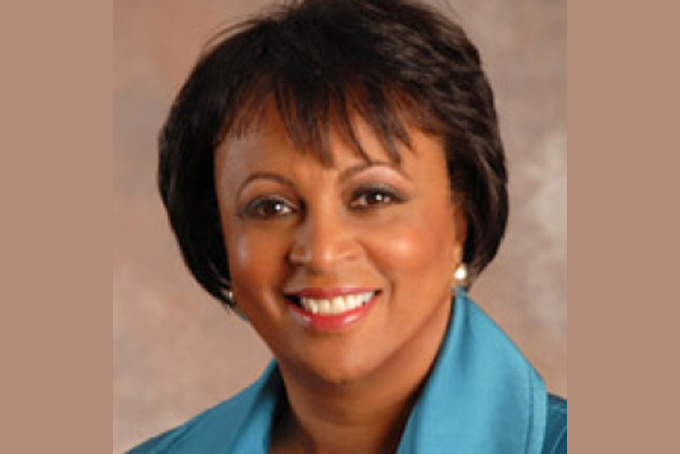
Before my arrival here in Pittsburgh, Carla Hayden served as a professor of information science at the University of Pittsburgh School of Library and Information Sciences. She taught here from 1987 to 1991. Dr. Hayden spent four years in Pittsburgh doing her part to prepare a future generation of librarians and information technology professionals, regardless of race.
In 2016 Carla Hayden became the first Black and first woman named the librarian of Congress. In 2025 President Donald Trump fired her as the librarian of Congress.
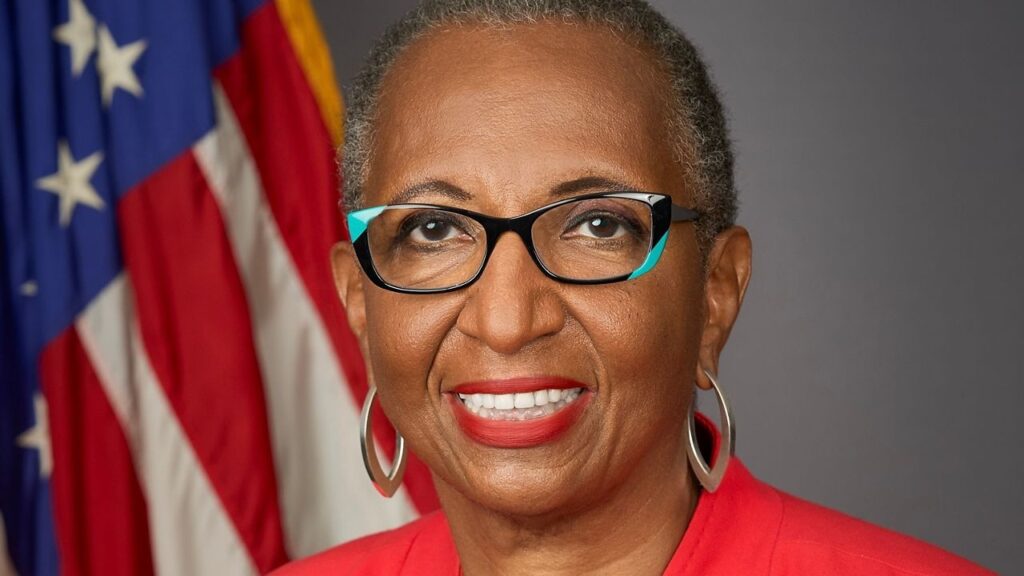
Former National Labor Relations Board (NLRB) member Gwynne Wilcox and I have known each other for more than 40 years. As an alumna, she was president of Friends of Syracuse University (a New York City Black and Latinx alumni organization) when I was a vice president at Syracuse University.
A renowned New York City labor lawyer, Gwynne Wilcox served two NLRB terms beginning on September 11, 2023. She served as chair of the NLRB from December 17, 2024 to January 20, 2025.
President Donald Trump ended the membership of Gwynne Wilcox on the NLRB on January 27, 2025, before her term had expired. She litigated; in the final U.S. Supreme Court John Roberts ruling, she lost her NLRB seat.
Of course, the most profound battles in the war on Black Americans by America centers around the carnage of gerrymandering. For White Supremacists, racial gerrymandering is as close to disenfranchised African Americans during slavery as the racists can get in 21st century America. Voting district Gerrymandering follows seriatim a feature of Americana.
First, our nation abided slavery from at least 1619 to 1865. During that period, Black slaves experienced two realities: unremunerated work and death. Voting was out of the question for the enslaved.
The thirteenth amendment to the U.S. Constitution ended American chattel slavery. During the 1865-1877 Reconstruction period, Black voting helped put African Americans in state legislatures, the U.S. Congress and some 1,500 government offices, north and south.
Next, the Ku Klux Klan and it’s like were having none of that and virtually ended Black voting in the South—through discrimination, intimidation and lynching—where most ex-slaves and their offspring lived prior to the early 20th century great migration
Then, in about a 90-year span almost no Blacks were permitted to vote in countless Southern counties. Poll taxes and other race-based invidious barriers ensured Black disenfranchisement and the concomitant disappearance of African American office holders in the Southern states.
A great measure of relief from that horror show created the 1964 Civil Rights Act and the 1965 Voting Rights Act. Enormous victories in the workplace and in schools demonstrated progress, notably at the polls.
Because America had succeeded in segregating northern and southern neighborhoods by race, majority-Black voters elected substantial numbers of public officials to power. In the U.S. Congress 67 African Americans are serving in 2026.
But also today, recent see-saw U.S. Supreme Court rulings that support the redrawing of election districts—gerrymandering—to diminish Black voting power could result in no Blacks in Congress after 2027. Section 2, a critical feature of the 1965 Voting Rights Act was virtually eliminated by the U.S. Supreme Court. Captured majority-Black voting districts are being swallowed into overwhelmingly larger majority-Caucasian voting districts, diminishing the power of Black voters back to the days of the pre-1965 Voting Rights Act.
In the 21st century edition of America’s war on African Americans, will the voting district gerrymandering by the state legislatures result in the disappearance altogether of Black members of Congress? It seems like old times.
(Robert Hill is an award-winning Pittsburgh writer and communications consultant.)