

Hear ye, hear ye. The court of public opinion is now in session. The dishonorable Judge Igor Insanity, presiding. There is currently a class action suit by the NBGA (naïve Black golfers association), being adjudicated regarding the lack of participation in the PGA. Santa Claus Jones is the charging party or the plaintiff, either title will suffice.
There was a time that for Black golfers to be granted access to the “the sport of kings,” they were forced to rely on the benevolence of “the abolitionists of golf,” to judge them to be worthy. Please hit rewind on your VCR and join me as I take a look back at the familiar story of how Black golfers were forced to climb the mountain of bias as well as navigate through social and economic obstacles protected by pockets of the “quicksand of racism.”
Let’s begin with Lee Elder. According to Wikipedia.com: “Elder was the first Black player to compete in the Masters Tournament and was a pioneer in professional golf. Elder joined the PGA Tour in 1968 after earning his tour card and quickly made history. In 1974, he won the Monsanto Open, which earned him an invitation to the Masters Tournament. On April 10, 1975, he became the first Black golfer to play in the Masters, facing significant racial hostility, including death threats. He competed in the Masters six times, achieving his best finish of T-17 in 1979. In 1979, Elder became the first Black American golfer to qualify for the Ryder Cup.”
We also cannot forget another once-in-a-lifetime African American golf legend, Calvin Peete. As we look back at his historical career, wikipedia.com also tells us that: “Calvin Peete was one of the most successful African American golfers in PGA Tour history renowned for his extraordinary driving accuracy and 12 Tour victories. At age 12, he suffered a badly broken arm from a fall, which healed improperly, leaving his elbow permanently fused. Peete did not start playing golf until he was 23 years old. He studied golf books and sought advice, developing a unique and highly effective swing despite his physical limitations.”
Peete turned professional and became the most successful African American golfer before Tiger Woods, winning 12 PGA Tour events, including the prestigious 1985 Players Championship. He was ranked among the top 10 players in the world in 1984.
He was nicknamed “Mr. Accuracy” and led the PGA Tour in driving accuracy 10 times between 1981 and 1990, hitting nearly 82 percent of fairways.
For many years, Blacks were barred from having any role on a golf course, except for performing the role of a caddie. And for many years, many of them were not even permitted to do that. Another reason that African Americans were not welcome was that they supposedly did not have the intellect, the means or the social graces to comfortably assimilate into White society. For many years Black athletes have been narrowed down by the powers-that-be to a joint and a “forty.” Although there is no officially recognized list of PGA excessive partyers that exists, I will compile a list of recognized PGA party animals that played and partied over the years. However, the comings and goings of Tiger Woods and his “big personality” were profiled more often than the other “big personalities,” many times over.
The following is a list of PGA partygoers put together by the quickreport.com and fanarch.com: John Daly—Nicknamed the “Grip It and Rip It” man, Daly was a decade-defining figure for his wild swings, unpredictable behavior, and reputation for partying hard off the course. He was known for his boisterous personality, frequent appearances at high-profile events, and a lifestyle that often drew attention for its excess.
Payne Stewart—Stewart’s classic style and dramatic flair made him a fan favorite, but his off-course persona was equally flamboyant. He was known for his big personality, love of the spotlight, and occasional controversies, which contributed to his “party boy” image. Mark Calcavecchia—While not as notorious as Daly or Stewart, he was a big personality who could go on long weekends, enjoy himself, and often made headlines for his off-course antics.
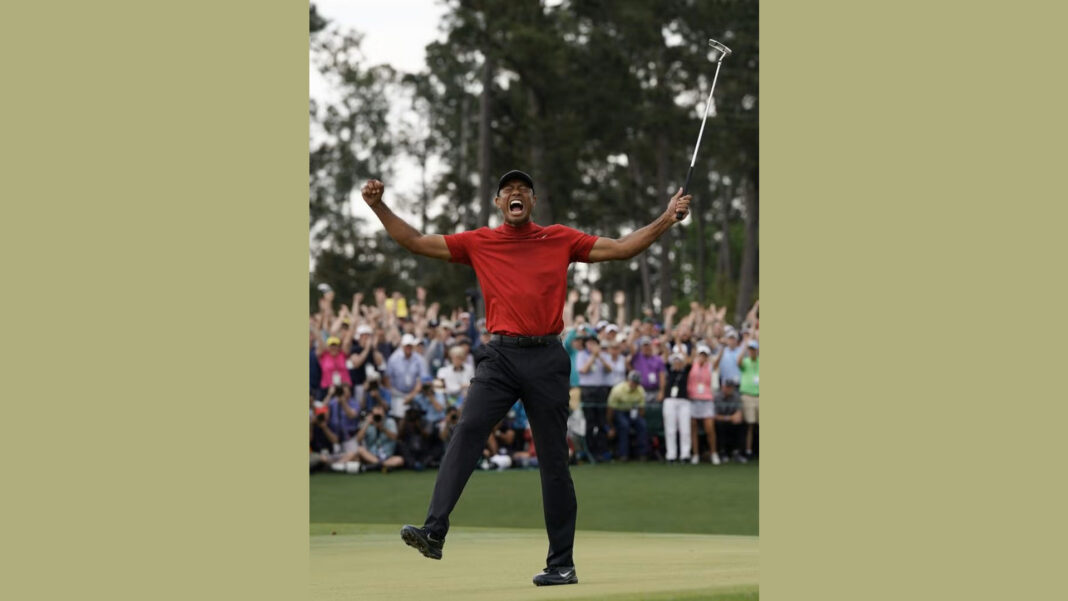
Tiger Woods—While Woods’ on-course dominance was unmatched, his off-course lifestyle was a major talking point. Known for his lavish parties, high-profile relationships, and frequent appearances at celebrity events, Woods became one of the most talked-about figures in sports for his partying.
Phil Mickelson—Mickelson’s 2000s were defined by both his golfing excellence and his reputation for enjoying life. He was known for his big personality, love of the spotlight, and occasional off-course controversies.
Vijay Singh—Singh’s work ethic was legendary, but his personality was also big and flashy, and he was known for enjoying himself and making headlines for his lifestyle.
Ernie Els—The “Big Easy” was known for his smooth swing and composure, but also for his love of the party scene and high-profile social life.
Retief Goosen—While more reserved, Goosen’s unflappable demeanor and occasional high-profile appearances made him part of the “party scene” in golf circles.”
In the 1990s, John Daly and Payne Stewart were the most notorious for their partying, with Daly’s wildness and Stewart’s flair. In the 2000s, Tiger Woods became the most famous for his lavish lifestyle, joined by Phil Mickelson, Vijay Singh, and Ernie Els as figures with big personalities and reputations for enjoying life off the course. Phil Mickelson had a reputation for enjoying life and his love of the spotlight, and “occasional off-course controversies.”
While Tiger Woods was known for his lavish parties, high-profile relationships, and frequent appearances at celebrity events, Woods became one of the most talked-about figures in sports for his partying. Was Tiger Woods a convenient and closer target? I have said enough.