

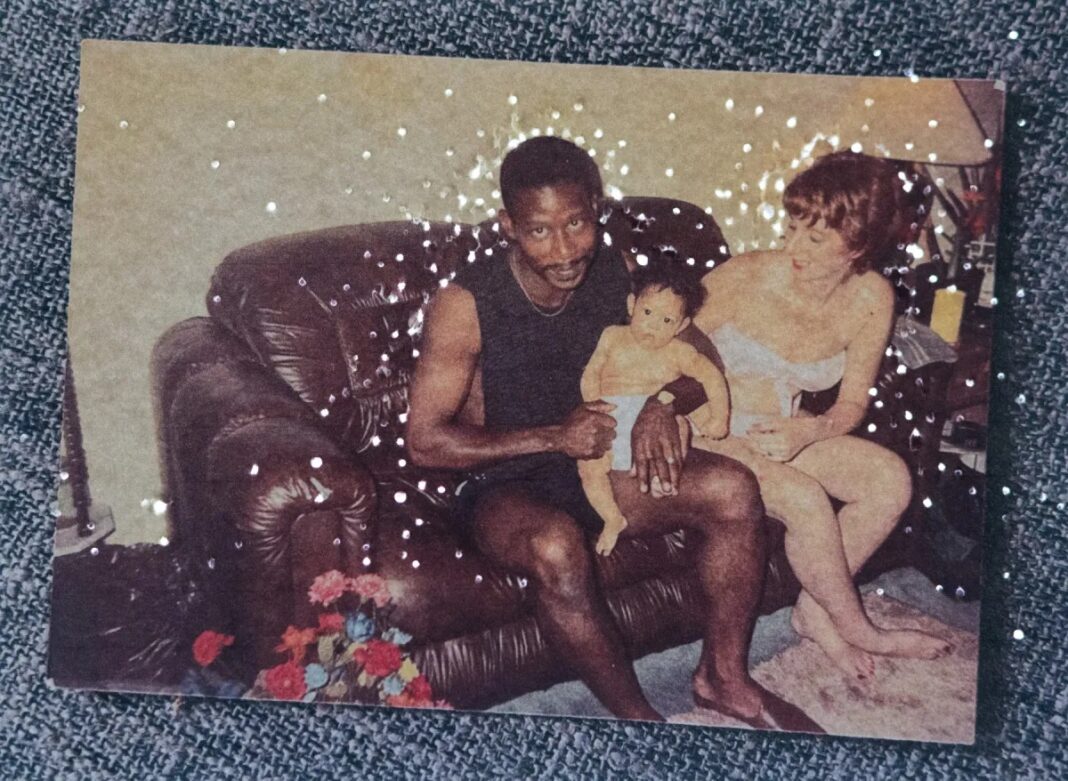

In 2022, I gave voice to Pittsburgh’s stark disparities through a public performance. Shortly after, I lost both my parents – and I saw in them how policy becomes personal.
“Pittsburgh’s Public Source is an independent nonprofit newsroom serving the Pittsburgh region. Sign up for our free newsletters.”
I’ve lived in Pittsburgh for more than a decade. It’s where I built my adult life, where I have raised my children and where I have spent years as an artist, writer and cultural worker. Much of my work here has centered on questions of visibility, power and the conditions that shape people’s lives.
In 2022, I gave a public performance piece in response to Pittsburgh’s 2019 Gender Equity Commission report “Pittsburgh’s Inequality Across Gender and Race.” For the piece, titled “Most Livable City,” I balanced a steel beam across my shoulders while reading aloud some of the starkest racial disparities in the country.
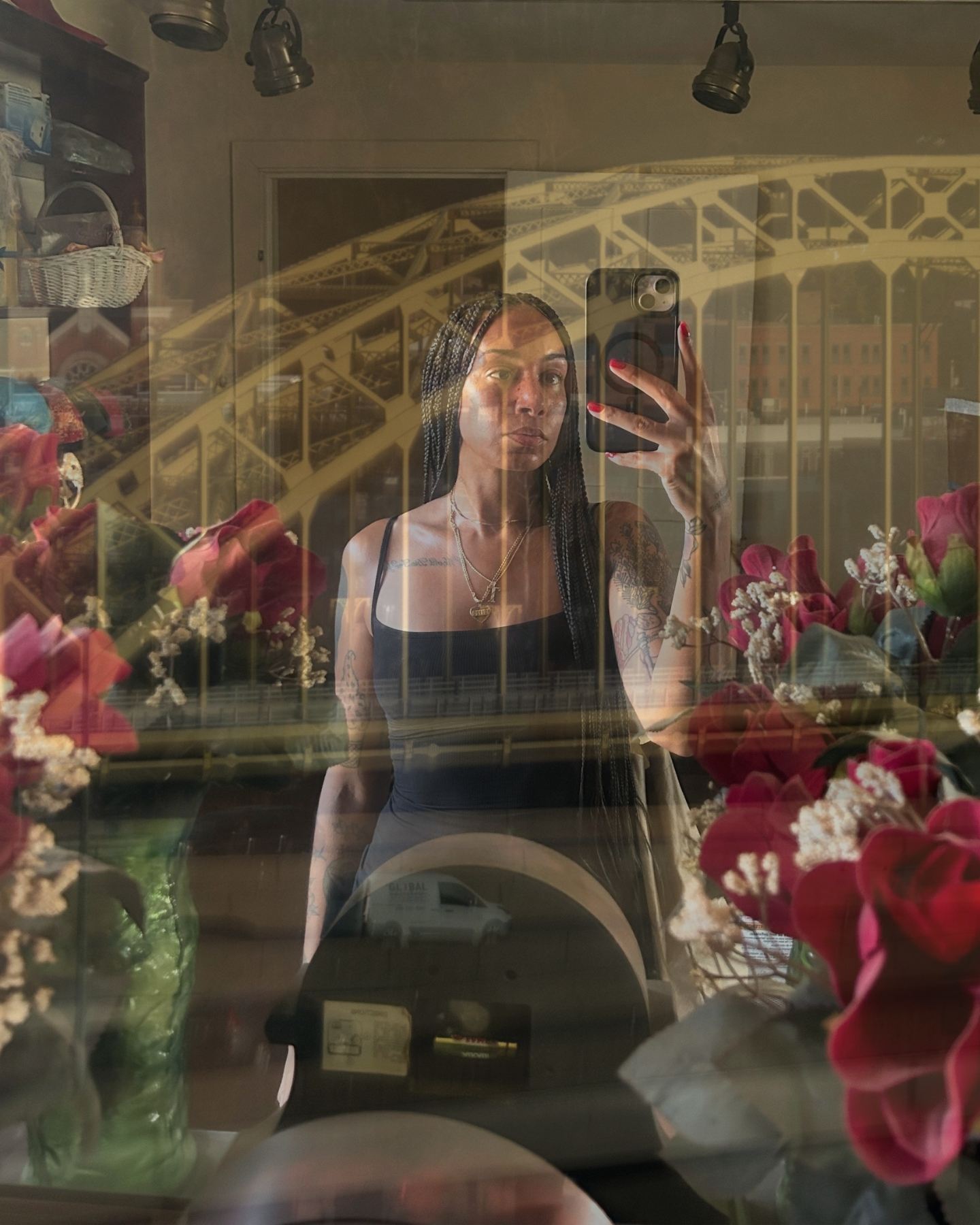
The report’s findings were alarming, but not altogether surprising. Much of what was described reflected things I had already experienced as a Black woman in Pittsburgh, or would come to experience when I prematurely lost my parents just years later.
The disparities the report measured on a citywide scale were already obvious to many Black residents. We saw, up close, who had access to care, who lived with chronic stress and illness, whose health concerns were taken seriously. My connections to those findings were never solely about race or gender. My father was Black, and my mother was white. Both of them spent years navigating financial instability, chronic health challenges and barriers to care.
Their experiences were different in important ways, but both were shaped by the underlying reality that poverty narrows options. It limits access to treatment, extends crises and makes recovery significantly more difficult. Long before I lost either of them, I understood that poverty was a public health issue. I did not then know it would also prove so personal.
Where being Black costs you seven years
People often imagine death as a catastrophic moment that separates “before” and “after.” But many deaths associated with poverty are cumulative. They emerge through years of delayed treatment, chronic stress, unstable employment, environmental exposure, inaccessible healthcare, food insecurity and the normalization of exhaustion. In Pittsburgh, and across Allegheny County, these conditions are measurable.
Public health data consistently shows that life expectancy, chronic illness, disability and premature mortality remain sharply stratified by race, income and neighborhood. In Allegheny County, the average Black resident has a life expectancy of 71 years, compared to 78 years for white residents. Researchers examining neighborhood-level disparities in Pittsburgh have identified life expectancy gaps as large as 22 years for residents in communities within a few miles of each other. Black Pittsburgh residents experience disproportionately high rates of chronic disease, cancer mortality, maternal mortality, infant mortality, cardiovascular disease and premature death.
“Black adult mortality rates in Pittsburgh were higher than in 98% of comparable U.S. cities.”
The Gender Equity Commission report on which I based my performance concluded that Black adult mortality rates in Pittsburgh were higher than in 98% of comparable U.S. cities. Researchers have connected these disparities to the long-term effects of redlining, environmental exposure, housing segregation, neighborhood disinvestment and unequal access to healthcare. Studies on historic redlining in Allegheny County found that neighborhoods subjected to discriminatory housing policy continue to experience lower life expectancy and higher rates of illness today, suggesting that poverty here is not abstract; it is measurable in the body.

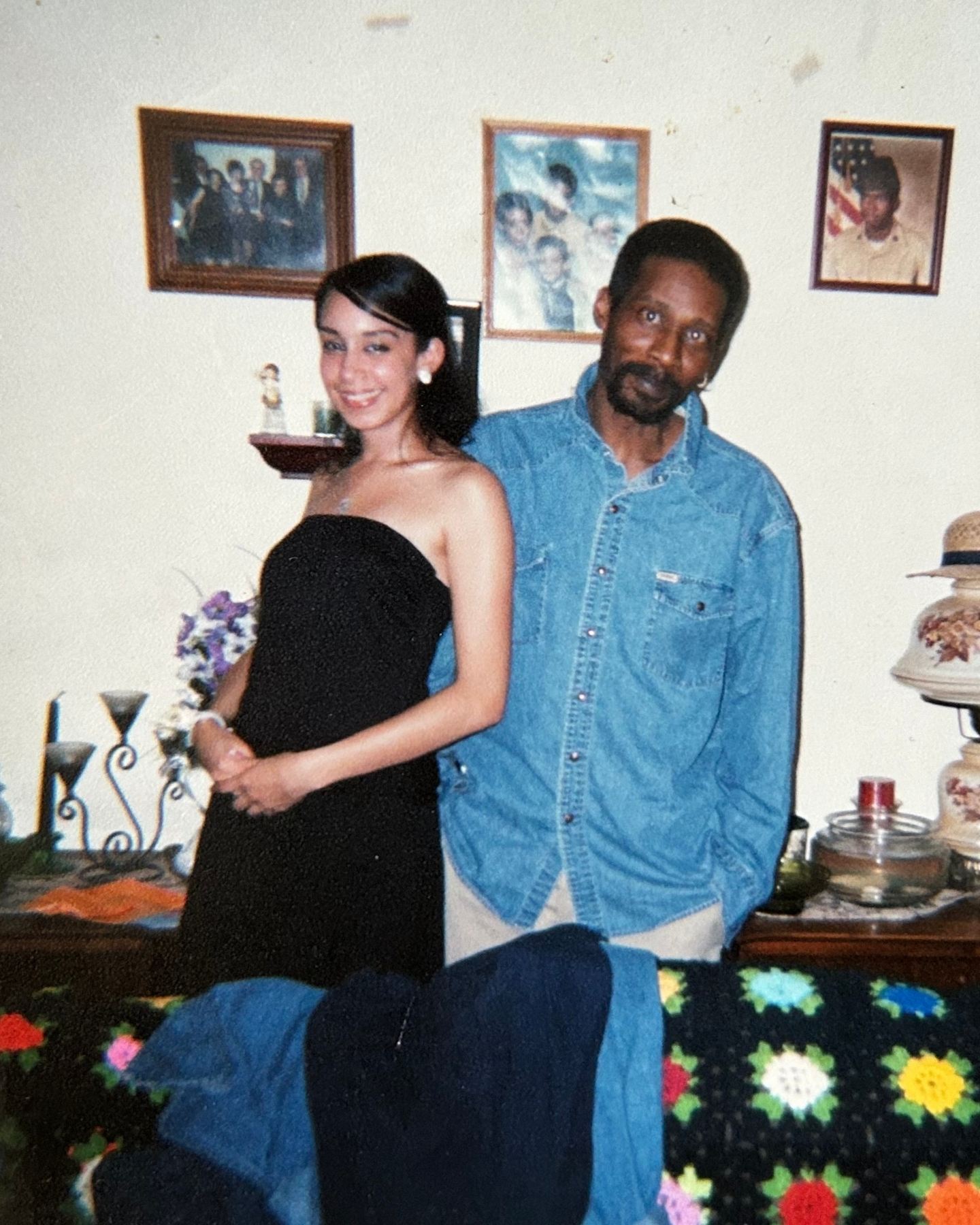
My parents’ lives existed within those conditions. My father died of metastasized lung cancer after delaying treatment while trying to hold together my mother’s health challenges alongside our family’s fragile financial reality. My mother died of cardiac arrest after years of compounding health issues, misdiagnoses, chronic pain and prolonged battles for adequate care.
Their deaths were very personal, but they were also shaped by systems larger than any single decision they made. Poverty narrowed their options long before it shortened their lives.
Worn down by denials, delays

My whole life, I watched my parents manage their own pain because there was rarely space for anything else. Aspirin for headaches. Tiger Balm for sore muscles. Exhaustion was treated as normal, because survival demanded it. They worked low-wage and temporary jobs for years while navigating inconsistent healthcare, financial instability and bureaucratic systems that often seemed designed to wear people down rather than care for them.
That reality is only becoming more precarious under a federal administration actively reshaping public health infrastructure through cuts to Medicaid, attacks on disability and social safety net programs, weakened environmental protections and efforts to reduce federal oversight of public health systems. Policies that limit healthcare access, reduce housing assistance, privatize care, weaken labor protections or cut environmental regulation do not impact all communities equally; they intensify existing disparities. In cities like Pittsburgh, where health outcomes are already uneven across racial and economic lines, those policy decisions accelerate the conditions that produce premature illness and death.
My mother struggled for years to secure disability benefits even before many of these policy shifts were proposed. She spent years navigating denials, paperwork, hearings and administrative delays while her health steadily deteriorated. She was eventually approved, but only after prolonged instability and continued physical decline. \
“The cruelty of these policies is that they often ask for labor from bodies already breaking down, treating survival itself as something that must be earned.”
My father died when he was 68, in February of 2023. At that point, my mother was barely getting by. Under recent work requirement proposals tied to SNAP and other assistance programs, someone in her condition could have faced even greater barriers to maintaining basic support, potentially being forced to prove employability despite chronic illness and disability.
The cruelty of these policies is that they often ask for labor from bodies already breaking down, treating survival itself as something that must be earned. Public health is often discussed as though it exists separately from economics or governance, but the body absorbs policy directly. Whether someone can afford preventative care, whether a hospital remains open in their neighborhood, whether clean air standards are enforced, whether Medicaid approvals are delayed, whether disability claims are denied, whether public transit reliably connects people to care — these are all public health questions.

Bureaucratic systems shape mortality just as much as any disease. After my father died, my mother’s health deteriorated rapidly. When it became clear she needed assisted living, we entered a prolonged fight with Medicaid over placement and care approval. We appealed repeatedly, and were denied repeatedly. The facilities approved for her were not equipped to meet her needs, and those denials directly shaped her final months before she died in June 2024. She was only 64.
‘Natural causes,’ manmade disparities
What harmed my mother was not one dramatic institutional failure, but attrition: waiting periods, refusals and systems that exhausted already vulnerable people until there was little left to fight.
What my parents’ deaths taught me is that “natural causes” often have deeply unnatural timelines. When I say policy killed my parents, I am not saying their lives lacked effort, love or intelligence. They worked, they showed up, they raised four children under conditions that required constant sacrifice. But there was no buffer, and no real seasons of ease in which their bodies could recover. Health became a series of compromises, and those compromises accumulated until there was nothing left to give.
“We call some deaths tragic and others inevitable, and policy relies on us believing that slow harm is not violence.”
Today, I find myself thinking about their losses not only as a daughter, but as a parent.
My daughter has just completed treatment for medulloblastoma, an aggressive form of pediatric brain cancer. We are fortunate to be close to UPMC Children’s Hospital, but having dealt with such immense loss has shifted the way I think about health and survival. It has shifted the way I read public health data. The statistics now feel deeply personal, and I worry about long-term outcomes for my daughter, and what kind of future exists for her in a city where life expectancy, mortality and access to care remain so unevenly distributed.
My parents’ lives taught me that health is shaped by far more than medical treatment alone.
Their losses changed me permanently. Every day, I experience a grief that I often don’t have the words for. I am angry that they are gone, but I am angrier at how we are trained to privatize this kind of loss, and to treat early death and prolonged illness as unfortunate but ordinary, as if “ordinary” is an excuse for “acceptable.” We call some deaths tragic and others inevitable, and policy relies on us believing that slow harm is not violence. But if we keep treating poverty as a personal flaw instead of a public health crisis, we will keep mourning people while refusing to explicitly name what killed them, and we will keep accepting shortened lives as normal.
Tara Fay Coleman is an artist, writer, and cultural worker. She can be found on Instagram, and at https://www.tarafaycoleman.com/.
This article first appeared on Pittsburgh’s Public Source and is republished here under a Creative Commons Attribution-NoDerivatives 4.0 International License.