
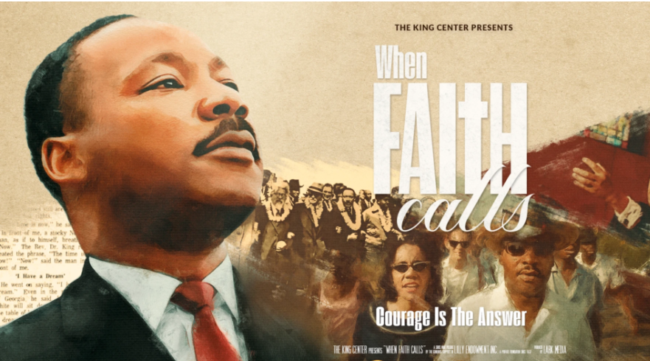

A groundbreaking new documentary series, “When Faith Calls,” offers never-before-seen footage and fresh insight into the life of Dr. Martin Luther King Jr. and the influences that shaped his journey from childhood to global civil rights leader.
Unlike many works centered primarily on King’s activism and legacy, the six-part series examines his spiritual foundation as the son of generations of religious leaders. It explores how faith shaped his worldview, strengthened his commitment to nonviolence and gave him the courage to embrace “the evidence of things not seen.”
Through this deeply personal lens, “When Faith Calls” reveals how King’s religious upbringing helped transform him into a visionary and one of the most influential leaders of the 20th century.
Produced by the Martin Luther King Jr. Center for Nonviolent Social Change under the leadership of King’s daughter, Dr. Bernice A. King, was produced and directed by Rachel Dretzin and Phil Bertelsen, “When Faith Calls” premiered its first episode during a red-carpet event at the Carter Center in Atlanta.
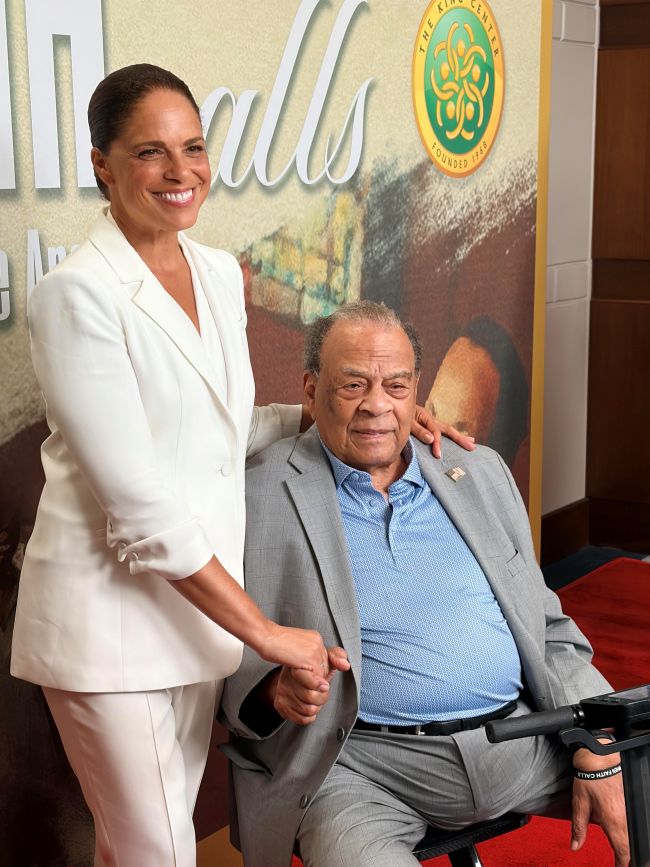
Atlanta Mayor Andre P. Dickens provided opening remarks for the screening, wich was moderated by veteran broadcast journalist and executive producer Soledad O’Brien. The historic event brought together entertainment figures, civic leaders, social-change advocates and local celebrities and other prominent Atlantans, including: King family members, Rev. Isaac Ferris King, Dr. Angela Ferris Watkins, Dr. Alveda King, Celeste Beale, Jennifer Fields, as well as Ambassador Andrew J. Young, Rep. Justin J. Pearson, and Rev. Onotombi Naomi Tutu, daughter of the renowned world leader Archbishop Desmond Tutu along with a host or other dignitaries. Actors Blair Underwood and Phylica Rashad provide the voices of Dr. King and Coretta Scott King in the film’s naration.
“This film is so beautifully done and it’s really exactly what the title says; ‘what should your response be when faith calls, [courage is the answer],” explained O’Brien. “It’s a look historically at the things that motivate and inspired and sometimes put the pressure on Dr. King and … also lands with us today. How should we be responding to the issues today that e are sifting through that have a lot of moral complications to deal with. I love that this film is a look back, but it’s also a look forward.”
The premiere episode explored King’s formative years in Atlanta, focusing on the influence of the Black church, his family’s religious legacy and his education at Morehouse College. Together, those experiences helped shape the faith, philosophy and leadership that would later define his role in the Civil Rights Movement.
“When Faith Calls was born from a question my parents lived and answered every day of their lives” What does faith require of us? Not the comfortable faith that asks for nothing. but the demanding, costly, world-transforming faith that compels ordinary people to step into extraordinary purpose,” explained Berneice King.
“My father, the Reverend Dr. Martin Luther King, Jr., and my mother Mrs. Coretta Svott King dod not choos the Movement because it was sfae or convenient. They chose it because thier faith left them no ohter choice,” King added.
Created by The Martin Luther King Jr. Center for Nonviolent Social Change — the official living memorial to Dr. King’s life and work — “When Faith Calls” draws on one of the most significant archives of civil rights history in the world. Each episode weaves primary sources — King’s own sermons, speeches, and writings — with the voices of those who marched alongside him, those he inspired, and the next generation carrying the struggle forward.
For more infmormation on the “When Faith Calls” documentary and upcoming episodes visit: When Faith Calls: King Center