


by J. Pharoah Doss
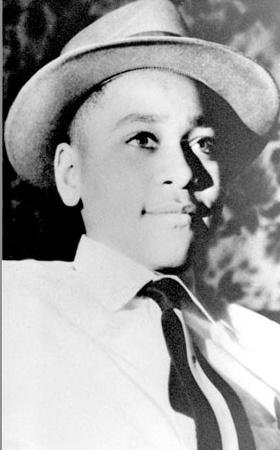
Between 2012 and 2015, if you asked high school students, “Who was Emmett Till?” They would tell you that he was a Black teenager from Chicago who was lynched by White racists in 1955 while visiting relatives in Mississippi after allegedly flirting with a White woman.
They also would not claim to recall it from history class.
They would tell you that they learned about it after the national media compared the 1955 lynching of Emmett Till to the 2012 killing of 17-year-old Trayvon Martin by a neighborhood watch volunteer in Florida or the 2014 police shooting of 18-year-old Michael Brown in Missouri.
These comparisons were done strategically to emphasize that Martin and Brown were harmless teens who were unreasonably murdered by racists, but the comparisons were disingenuous.

In 2012, ABC News reported that they obtained the neighborhood watch volunteer’s medical report, which was compiled by his family physician. ABC reported that the volunteer was “diagnosed with a closed fracture of his nose, a pair of black eyes, two lacerations to the back of his head, and a minor back injury the day after he fatally shot Martin.”
The neighborhood watch volunteer said that he acquired the injuries during a “life and death” struggle with Martin. Martin was likely agitated because the volunteer was following him; Martin confronted the volunteer, hit him in the face, jumped on top of him, and repeatedly bashed his head against the pavement. The volunteer indicated that Martin attempted to remove his handgun from his waistband, but he blocked him from doing so before drawing the weapon and firing in self-defense.
In 2014, the national media initially reported that Brown surrendered to the Missouri police officer. He raised his hands and said, “Don’t shoot,” but the police officer shot him anyway. Riots broke out in Missouri, and “Hands up, don’t shoot” became a national protest anthem.
After further investigation, it turned out that the “hands up, don’t shoot” version of events was false.
The Missouri police officer stated he encountered two Black men walking in the middle of the street. The officer told them to walk on the sidewalk. Brown’s response was profanity-laced. The two ended up in a violent struggle over the officer’s gun. In the end, the officer fatally shot Brown in self-defense.
Martin and Brown were far from harmless; however, it is crucial to note that the neighborhood watch volunteer from Florida and the Missouri police officer were not comparable to the men who murdered Till.
Several days after Till’s encounter with the White woman, her husband and his half-brother arrived at the family house where Till was staying. They kidnapped and tortured Till for violating Jim Crow’s unwritten rule that Black males of any age were not permitted to make sexual advances toward White women. Till was shot in the head, and the men used barbed wire to attach a large metal fan used for ginning cotton to his neck before throwing his body into the river.
This takes us to the Nolan Wells incident. Wells was an 18-year-old Black male and freshman at Southwest Mississippi Community College. On July 4th, Wells and his White friends went to Horn Island, an undeveloped island 8 to 10 miles off the Mississippi Gulf Coast that can only be reached by boat, to party on the beach.
However, Wells did not return with his friends. Eventually, Wells was reported missing. Two days later, Wells’ body was recovered face down on Horn Island’s northwest beach. The authorities stated that Wells was discovered in the same area where he was last seen, and they had no suspicion of foul play. The Jackson County Sheriff indicated that there was no initial evidence of a crime. The sheriff stated that investigators were working hard to find out what happened, but it was assumed that Wells drowned.
When the public learned that Wells was the only Black person among a large group of Whites and that he allegedly stayed on the island with a White female, it was assumed that Wells was harmed because of his race.
Then civil rights attorney Benjamin Crump was hired to represent the Wells family.
A staff writer at The Grio wrote, “Crump is helping this Black family fight for justice in the same state where a Black mother was unable to receive justice for their son Emmett Till when he was murdered in 1955 … there was no civil suit to file, no damages to pursue, no lawyer she could hire to force a fact into the record … The reason a family in Mississippi in 2026 has a lawyer running a parallel investigation is that a family in Mississippi in 1955 had no way to ensure accountability in the public sector.”
Crump added, 20 years ago, Black people would have had no hope of getting justice. The local authorities would not charge anyone, and nothing would happen. Nobody was allowed to bring civil actions in support of Black lives in America. However, Trayvon Martin’s legacy marks a shift in our discourse about the value of Black life and the lived experiences of Black mothers and fathers who have suffered the unspeakable loss of their children.
This time, the comparison focuses not on Emmett Till and Nolan Wells themselves, but on their parents; however, this comparison is still disingenuous.
Till’s parents knew exactly what happened to their son. They also knew who was responsible because the men who killed their son were arrested but acquitted of murder by an all-White-male jury. To make matters worse, Till’s killers sold their story for $4,000 to Look Magazine, in which they bragged about murdering Till and depicted their actions as a chivalric defense of White womanhood.
Wells’ parents do not know what happened to their son, but they need someone to blame so that Crump can continue “the legacy of Trayvon Martin” and pursue civil actions.