

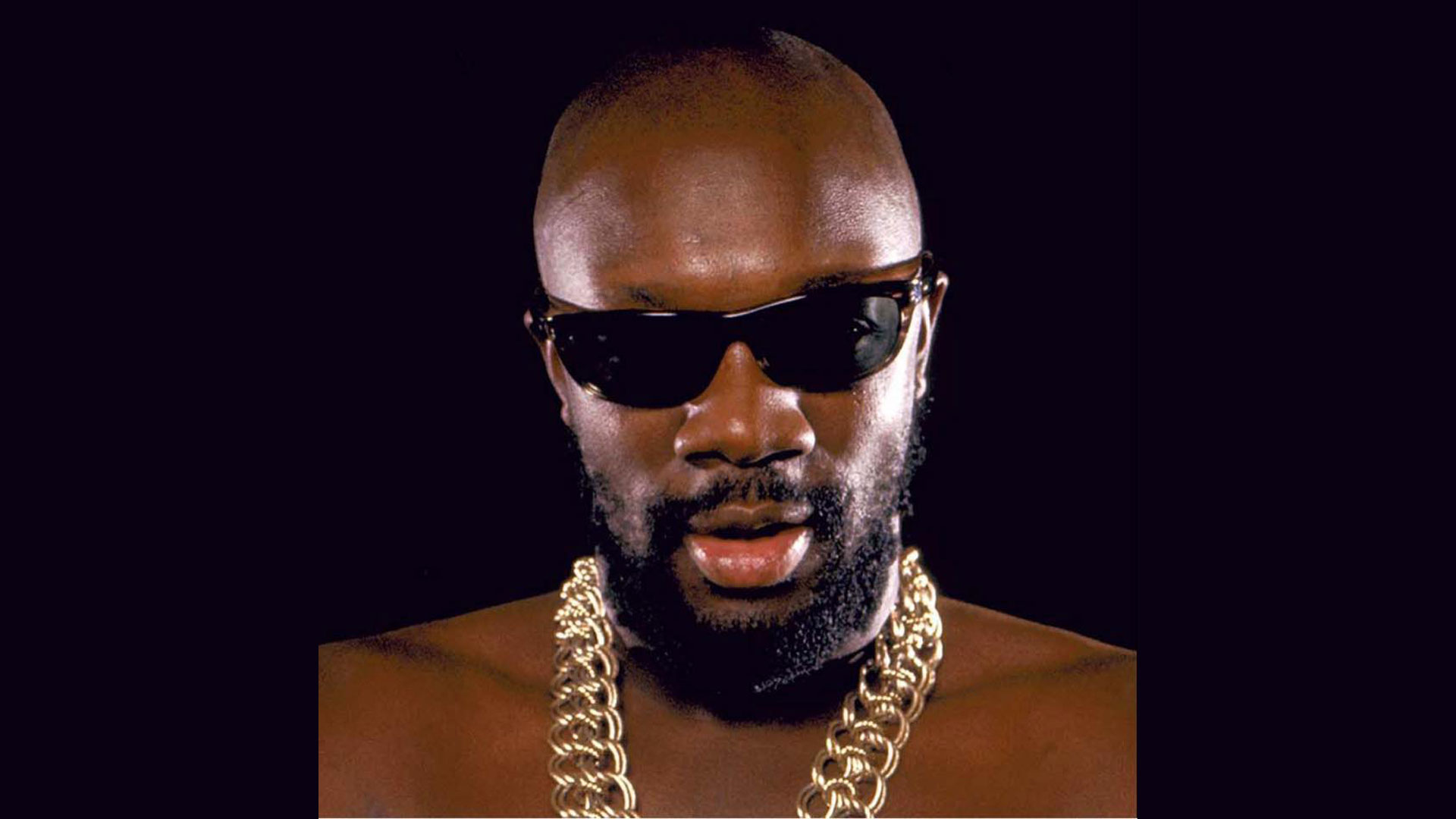

ISAAC HAYES
• AUGUST 19
1791—Benjamin Banneker writes a letter to Secretary of State (later president) Thomas Jefferson denouncing slavery. In his letter, Banneker declared, “I freely and cheerfully acknowledge that I am of the African race” and then precedes to label America’s recently achieved freedom from England a “hypocrisy” as long as Blacks continued to suffer under “groaning captivity and cruel oppression.” Banneker was a Black activist against slavery even though he is generally recognized for his mathematical achievements, designing one of the first clocks made in America and laying out the nation’s capital after Pierre L’Enfant abandoned the job.
1954—African American diplomat Ralph Bunch is named Undersecretary of the United Nations. Bunch had already received the Nobel Peace Prize (1950) for his work as a U.N. negotiator during the Arab-Israeli war of 1948-1949. Bunch would later become U.N. Secretary General. He was born in Detroit but raised in Los Angeles.
• AUGUST 20
1619—This is the most probable date that Black History in America begins. Approximately 20 Africans (the records of the day referred to them as “20 and odd Negras”) arrived in Jamestown, Va., aboard a Dutch ship. It appears the Africans were sold as indentured servants who could work and earn their freedom. Little is known about the group except that the Dutch had stolen them from a Spanish slave ship which was probably headed for the Caribbean or South America. Few names survive. But one of the men was called Anthony (or Antonio) and one of the women was called Isabella. The available records indicate the ship arrived in Jamestown in the latter part of August. Other records and some speculation have led most historians to believe the actual arrival date was Aug. 20, 1619—the beginning of Black history in America.
1830—The first National Negro Convention is held. It takes place in Philadelphia and is chaired by Richard Allen, founder of the African Methodist Episcopal Church. Top on the agenda of the gathering was what could free Blacks do to help bring an end to slavery.
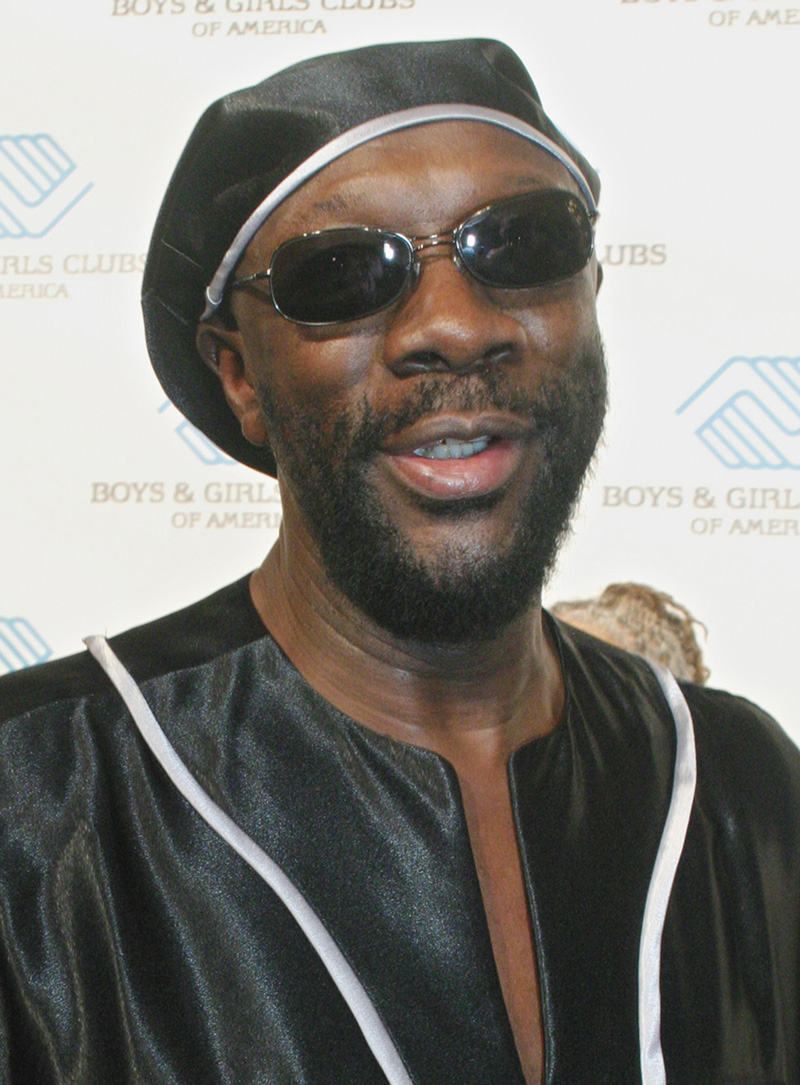
1942—Musician, composer, singer, songwriter Isaac Hayes is born on this day in Covington, Tenn.
• AUGUST 21
1831—The Nat Turner slave rebellion begins in Southampton, Va. It was the best organized and most deadly slave revolt in American history. The charismatic Turner brought together between 50 and 70 Blacks (some slave and some free) to launch his revolt prompted by what he saw as a vision from God. As many as 70 Whites (men, women and children) were killed during a two-day period. It took the local militia and a detachment of federal troops to put down the rebellion. However, Turner, known as “the Prophet” by his followers was not captured until Oct. 30. He was hanged on Nov. 11, 1831. Interestingly, he became known as “Turner” after the rebellion. During his life, he was simply known as Nat and was considered a brilliant, self-taught man. After the rebellion, Virginia passed a law making it illegal to teach a Black person how to read and write.
1904—Jazz pianist and bandleader William “Count” Basie is born on this day in Red Bank, N.J.
1936—Basketball legend Wilt “The Stilt” Chamberlain is born in Philadelphia, Pa. The 7’1” phenomenon had an amazing NBA career including being the only player to score 100 points in a single game. Chamberlain died in October 1999.
• AUGUST 22
1791—The Haitian Revolution begins. It was the most successful Black slave revolt in world history. Led by Toussaint L’Ouverture, a trusted house slave who initially opposed the rebellion, the slaves defeated the mighty French army led by Napoleon. They also defeated a contingent of British troops. However, L’Ouverture was tricked into attending a “peace” conference where he was captured and would later die in prison. It fell to one of his lieutenants, Jean-Jacques Dessalines, to complete the struggle and declare the island nation an independent republic on Jan. 1, 1804.
1843—A National Convention of Black Men takes place in Buffalo, N.Y. The militant abolitionist Henry Highland Garnett called for a slave revolt and for free Blacks to launch a nationwide strike in support of the revolt. But a more moderate Frederick Douglas opposed Garnett’s plan out of fear of potential violence.
1989—Black Panther Party co-founder Huey P. Newton is gunned down in California. He was killed by a 24-year-old member of the Black Guerilla drug gang. The reason for the murder was never clearly revealed, but Newton supporters considered it a political assassination. Newton had founded the militant Black Panther Party along with Bobby Seale in 1966. The group advocated community control, armed self-defense and a mixture of Black Nationalism and socialism based on the works of Mao Tse-tung, Che Guevara and Frantz Fanon.
• AUGUST 23
1826—This is generally recognized as the day that the first Black person in America graduated from college. His name was Edward Jones and he received his BA degree from Amherst College in Massachusetts. Despite the general recognition, however, there is some evidence that the honor actually belongs to Alexander Lucius Twilight who appears to have graduated from Middlebury College in Vermont in 1823. Nevertheless, Jones would eventually leave America and help establish the African nation of Sierra Leone.
• AUGUST 24
1854—Dr. John V. DeGrasse, perhaps the most prominent Black person in New England during the pre-Civil War period, is admitted to the Massachusetts Medical Society. DeGrasse was born in New York City in 1825 and graduated from Bowdoin College in Maine.
1950—Chicago attorney Edith Spurlock Sampson is named by President Harry S. Truman as the first African American representative in the U.S. delegation to the United Nations. Sampson was also the first Black female elected judge in the United States. She was born in Pittsburgh, Pa., around 1901 and died in 1979.
• AUGUST 25
1862—After a disastrous loss to the South during a battle known as the Peninsular Campaign, U.S. Secretary of War Edwin M. Stanton orders the arming of 5,000 Black soldiers in a bid to turn the tide against the pro-slavery forces. The Blacks (both freedmen and former slaves) fought with distinction winning 15 Congressional Medals of Honor. In fact, the Black soldiers were so effective, near the end of the Civil War, the Confederacy, in a desperation move, actually attempted to recruit Black soldiers to the pro-slavery side.
1908—The National Association of Colored Nurses is founded by Martha Minerva Franklin. At the time Black nurses were not welcomed in the all-White American Nurses Association.
1925—Six men, led by A. Phillip Randolph, organize the Brotherhood of Sleeping Car Porters—a union composed of porters and attendants on the nation’s railroad passenger cars. The effort was the most successful Black labor organizing campaign in American history. The Brotherhood would go on to become the largest and most powerful Black controlled union in America including more than 15,000 members by 1959. Randolph would also become a major (often behind the scenes) figure in the Civil Rights Movement of the 1960s. He played a key role in Dr. Martin Luther King’s famous 1963 March on Washington. Randolph would often boast that his union was a success not because people loved it, but because it knew how to “push people out of the way.”
1927—The first Black person to win the Wimbledon Singles Tennis Championship, Althea Gibson, is born on this day in Silver, S.C. Gibson won Wimbledon on July 6, 1957. The all-around athlete died on Sept. 23, 2003.