
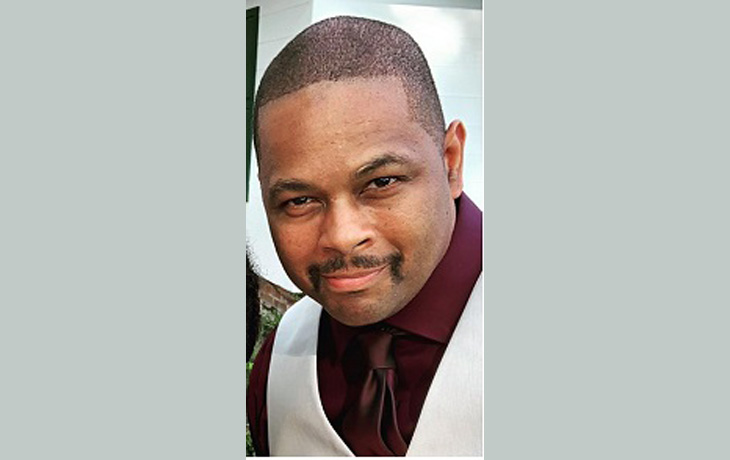


This tragedy begins with two scholars, one White and the other Black, hired a year apart at the University of Cambridge in England.
The White Scholar
In 2022, Nathan Cofnas, then in his mid-thirties, was appointed as an early-career research fellow at the faculty of philosophy. He also became a research associate at Emmanuel College.
In 2019, the international journal Philosophical Psychology published Cofnas’s paper, which argued for studying race and intelligence through the lens of race realism. Nine scholars wrote a joint letter to the journal stating that Cofnas’s research was not up to academic standards since he ignored major studies that disproved his position and that his paper could only be considered an attempt to promote scientific racism. The editor of Philosophical Psychology resigned due to the controversy.
Once at Cambridge, Cofnas quickly became embroiled in another controversy over race realism, which many academics consider pseudo-science.
In a 2024 Substack post, Cofnus stated that in a meritocratic system, Black people would disappear from almost all high-profile positions outside of sports and entertainment, and Harvard faculty would be recruited from the best of the best students, which means the number of Black professors would approach zero per cent.

Students immediately complained that Cofnus supported “the logic of eugenics” and called for his dismissal. Prominent academics around the world opposed the firing of Cofnas on the grounds of academic freedom, but Emmanuel College dismissed Cofnas because his views on DEI and race ran contrary to the institution’s core values.
The Black Scholar
At 37 years old, Jason Arday became the youngest Black professor ever appointed at the university in 2023. Prior to joining Cambridge, Arday taught at Leeds Beckett University, Roehampton University, Durham University, and the University of Glasgow.
The head of the faculty of education stated that Arday was the “best in the world” in the type of research that he conducted on race, inequity, and social mobility in education. The pro-vice-chancellor for education said Arday’s experience highlights the barriers faced by many under-represented groups across higher education, especially at leading universities, and Cambridge has a responsibility to do everything possible to address these issues by creating academic spaces where everyone feels they belong.
Arday instantly became an international celebrity, but not for his academic work; it was his life story that captured all the attention.
Arday claimed that at 3 years old he was diagnosed with autism, global developmental delay, deafness, and dyscalculia. He was non-verbal until 11, and he couldn’t read and write until he was 18. When Arday was 18, he was assaulted by two people, which he claimed led to the development of epilepsy; during his first year of undergraduate studies, he was also diagnosed with dyslexia.
The same year Cambridge hired Arday, he won the “Most Inspirational Person of the Year Award” at the Multicultural Business and Community Champion Awards and came in 4th place in the Shaw Trust list of the 100 most influential disabled people in the United Kingdom.
Plagiarism
In 2026, Cofnus was hired as a postdoctoral researcher at Ghent University. Students protested and petitioned for Cofnus’s discharge, but the university refused, citing academic freedom.
Again, it didn’t take long before Cofnus was involved in a controversial matter.
He published a Substack post called DEI Fraud and Cover-Up at Cambridge: University Refuses to Investigate DEI Star’s Plagiarism. He revealed that Arday’s 2015 PhD dissertation had substantial verbatim copying from a previously published work and that the 10 papers representing his most important work contained plagiarism, did not employ scholarly methods, or were not actually written by Arday.
Cofnus stated that there are serious questions about Arday’s biographical claims. Developing normal speaking abilities after being nonverbal until age 11 is medically improbable, and he left secondary school with a General Certificate of Secondary Education in Physical Education and Textiles. These tests require literacy, and they are normally taken at age 15 or 16, but Arday claimed to have not learned to read and write until 18.
Cofnus further said that most Cambridge professors had known for over a year that Arday was a plagiarist with a fabricated background.
The Media
Journalists from major media sources around the world went deeper and validated Cofnus’s claims, prompting hundreds of headlines labeling Arday an academic fraud.
The New York Times said, “In hindsight, elements of Dr Arday’s story seemed too good to be true; Cambridge ignored repeated warning signs … in addition to passing over more experienced candidates for the job, administrators gushed publicly about Dr Arday’s scholarship and privately disregarded complaints about his work. They declined to investigate plagiarism concerns and accused his critics of a “vile campaign” to discredit him. Dr Arday’s claims about not speaking were false, a former classmate and a speech professional who worked with him told The New York Times. His supposedly remarkable trajectory from nonverbal preteen to Ph.D. had no precedent in medical literature, experts in developmental and speech delays say. That should have set off alarm bells for the Cambridge hiring committee.”
To avoid further embarrassment, Cambridge launched an independent investigation into Arday’s appointment. Arday immediately resigned but clarified that his resignation was not an admission of guilt.
Days later Arday was found dead; it is believed that he took his own life.
Irreversible Damage
Arday’s supporters have blamed his death on Cofnus’s vendetta against his former employer, the media attack on Arday’s credentials, and Cambridge’s inability to safeguard a Black scholar, but Arday’s backers are oblivious to the irreversible damage caused by Arday’s charade.
Arday’s story provided hope for parents of autistic nonverbal children whose child’s probability rate of achieving fully fluent speech was low. Arday’s story allowed them to believe that with more effort and the right speech therapist, anything was possible for their child, but their hope died right before Arday did.