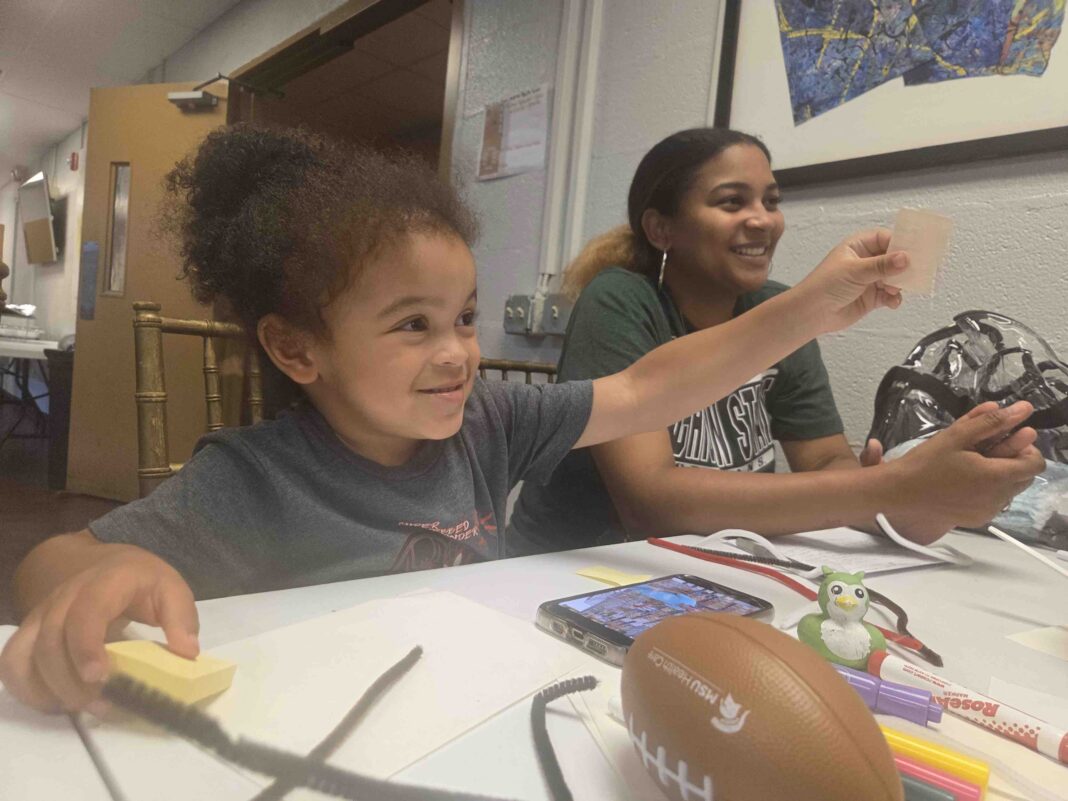


2-YEAR-OLD RIVER HAS SOME FUN AT THE SEPT. 1 EVENT SPONSORED BY PITTSBURGH UNITED IN FAVOR OF PAID PARENTAL LEAVE IN ALLEGHENY COUNTY. ALSO PICTURED IS RIVER’S MOTHER, ARIEL MEJIA. (PHOTO BY ROB TAYLOR JR.)
It’s now in the hands of Allegheny County Council
by Renee P. Aldrich
For New Pittsburgh Courier
A broad coalition of advocates, including elected leaders and community members and led by the organization Pittsburgh United, have been calling for the passing of paid parental leave legislation for new mothers in Allegheny County to address the infant and maternal health crisis and to ensure kids and parents can thrive.
Studies and data introduced at a Sept. 1, 2026, meeting at the Jeron X. Grayson Center in the Hill District said that paid parental leave not only reduces infant and maternal deaths, but also improves mental and physical health for new parents and children.
Additionally, according to Pittsburgh United, paid parental leave gives families the opportunity to start strong in life—parents having the time to heal and bond with their baby, plus adjust to life with a new human without the added stress, pressure and financial burden of unpaid time off from work.
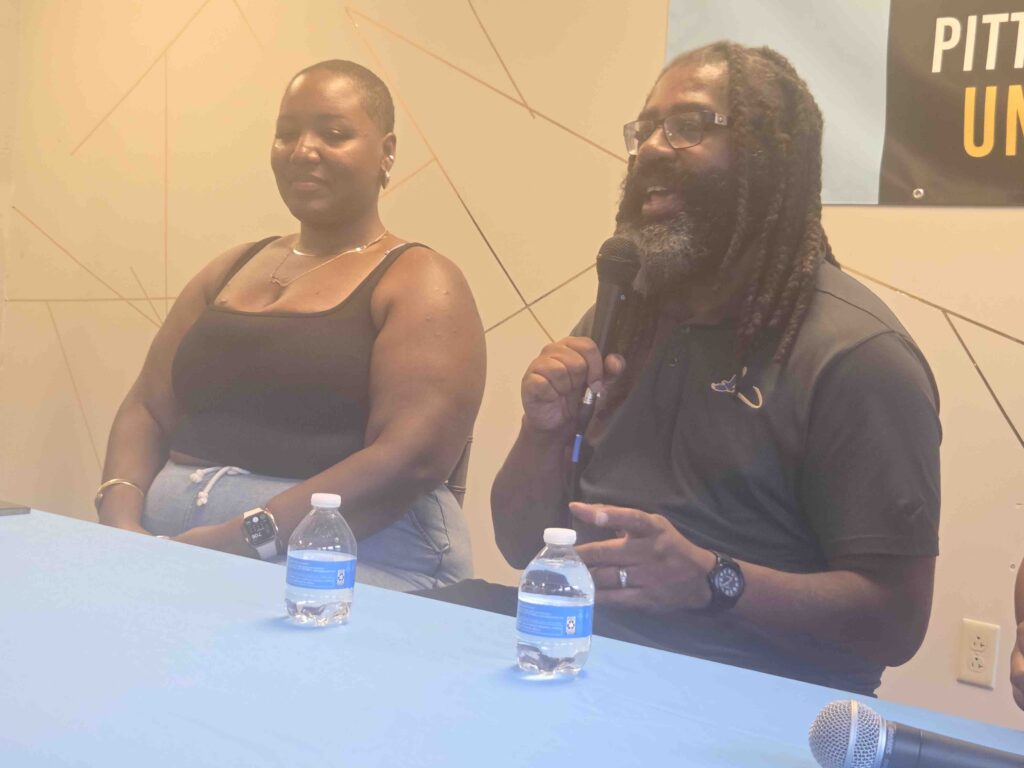
WILKINSBURG MAYOR DONTAE COMANS WAS A PANELIST FOR PITTSBURGH UNITED’S EVENT ON SEPT. 1, AS WAS EBONY FOWLER, LEFT. (PHOTO BY ROB TAYLOR JR.)
The panel, moderated by Desmond Hargrove, was comprised of Iyanna Bridges, a professional doula; Dontae Comans, Mayor of Wilkinsburg and a father who benefited from paid parental leave after his wife, Ashley Comans, recently gave birth; and Ebony Fowler.
Bridges was asked, “What does the absence of paid parental leave look like within families and what choices are families forced to have to make without it?” Bridges’ response was: “(The absence of paid parental leave) looks like delayed healing, physically and emotionally. It looks like families making the choice to just quit work altogether to make sure they can be home, thus increasing the number of people who are on public assistance.”
Bridges said that ultimately, “there are no positive outcomes from depriving families of the option to take the time from work in order to be home to raise their children and heal their body.”
A question to Fowler was, “What does postpartum look like in families?” Her response was: “Postpartum recovery and bonding looks like moms harming themselves and their children. It also looks like fathers experiencing a hormonal shift and imbalance and no one recognizing, along with stress being added to their plate, and they end up harming their wives, partners, children and themselves.”
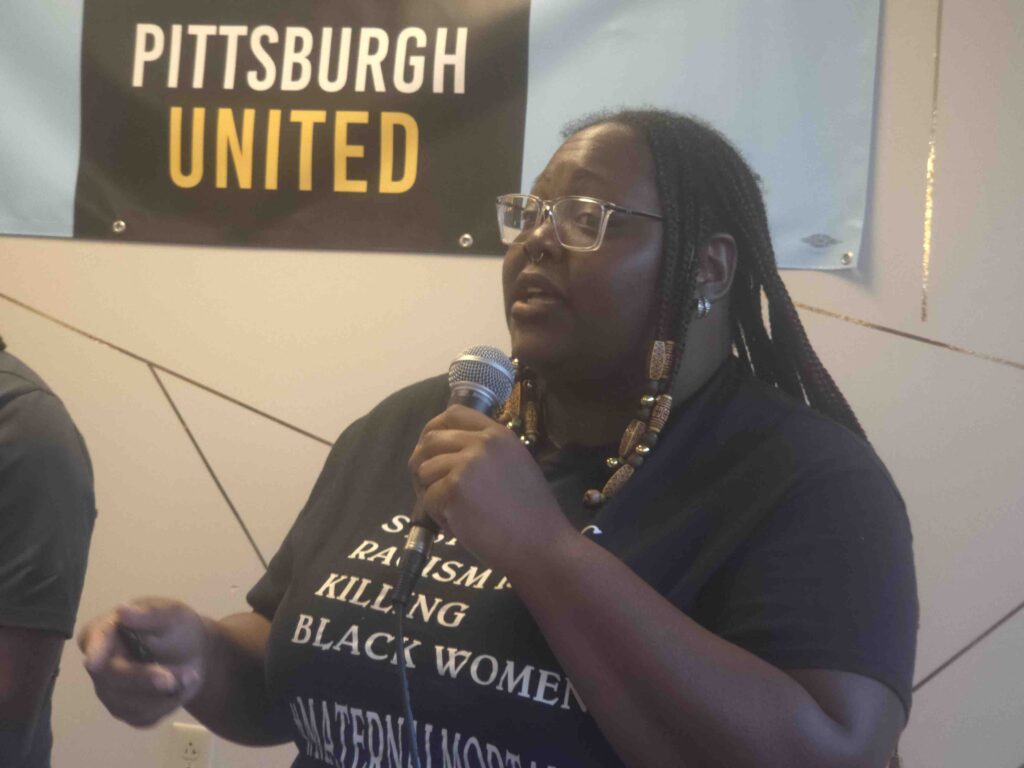
IYANNA BRIDGES WAS A PANELIST FOR PITTSBURGH UNITED’S SEPT. 1 EVENT IN THE HILL DISTRICT.
Fowler added: “Postpartum looks like families asking a neighbor, a family friend or family member to watch their children and that child ending up being harmed because that individual was inadequate to watch children in the first place.”
The goal of the Sept. 1 event was three-fold; to make sure that all elements of the proposed legislation were made known; to stress that through voting, organizing and everyone playing their part in the process, these kinds of life-changing proposals can happen; and to encourage each individual to call Allegheny County Council and express their desire for this vote.
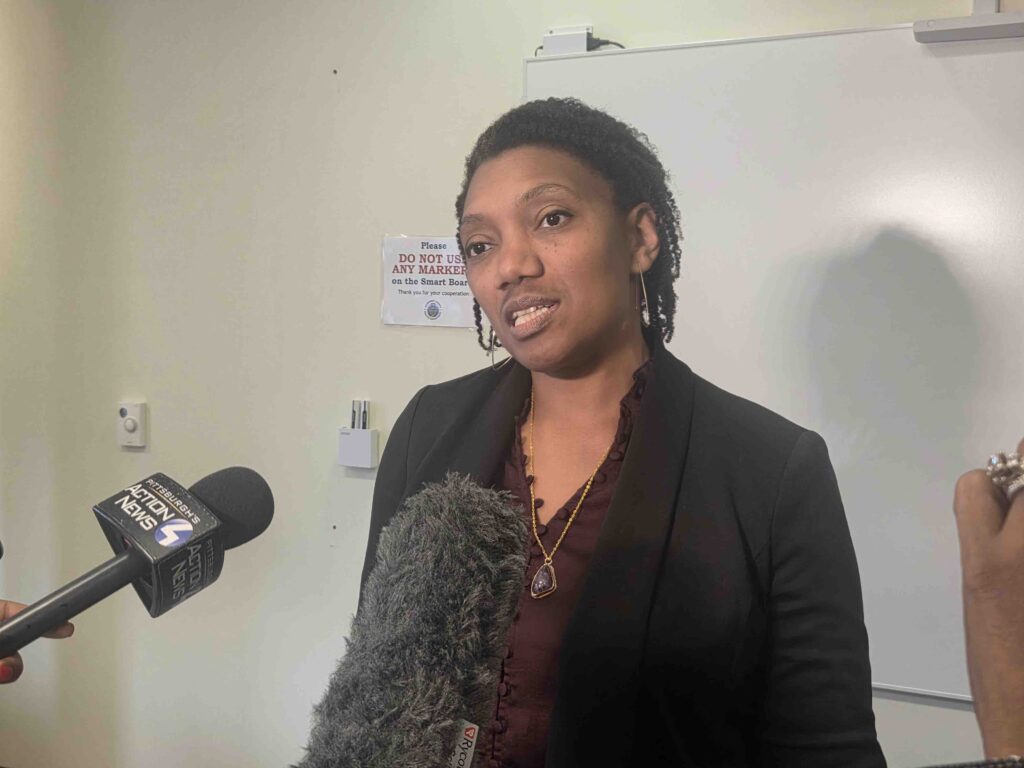
DR. JOYLETTE PORTLOCK IS BOARD CHAIR OF THE ALLEGHENY COUNTY DEPARTMENT OF HEALTH. THE BOARD VOTED TO PASS THE PAID PARENTAL LEAVE POLICY. NOW IT’S ONTO ALLEGHENY COUNTY COUNCIL FOR A FINAL APPROVAL. (PHOTO BY ROB TAYLOR JR.)
One of the issues of concern to participants was the fact that County Councilman DeWitt Walton, who is Black, has not spoken publicly on whether or not he supports the proposed legislation.
Two significant advocates of the proposed legislation are Allegheny County Executive Sara Innamorato and the Allegheny County Health Department board members. The health department said that between June 1-July 16, 2026, they received about 1,400 comments in favor of the proposed legislation.
Innamorato, who is currently pregnant, has said that “I will be so disappointed in myself as the first county executive who will give birth in office to not be able to provide parental leave for other families who are struggling every day and just want that time to recover and to bond and to build their family.”
On Monday, Sept. 28, 2026, the Allegheny County Health Department’s board members unanimously approved the revised proposed legislation of the paid parental leave policy, which now calls for employers with 15 or more eligible employees to provide up to 12 weeks of paid parental leave for employees. Those employees must be full-time for at least six months at said job, or part-time for at least 625 hours.
The revised proposed legislation now heads to the desk of the 15-member Allegheny County Council. It needs eight affirmative votes to pass, which would then by signed into law by the Allegheny County Executive, Innamorato. If it’s passed, employers would have one year to get on board with the new policy, which is a change from the originally-proposed six months. It’s unclear when Allegheny County Councilmembers will vote on the proposed policy.
One person who definitely wants to see the paid parental leave policy pass is Ariel Mejia. She’s a Ph.D. student in Africana studies at the University of Pittsburgh, whose focus is Black maternal health. She is mother to 2-year-old River. They both attended the Sept. 1 event sponsored by Pittsburgh United.
“I’m for it because daycare prices nowadays are ridiculous, and the waitlists are ridiculous,” Mejia, who just moved to Pittsburgh from the Detroit area (Southfield), told the Courier. “It would be nice for moms and dads to be able to get parental leave to spend more time with their children.”