
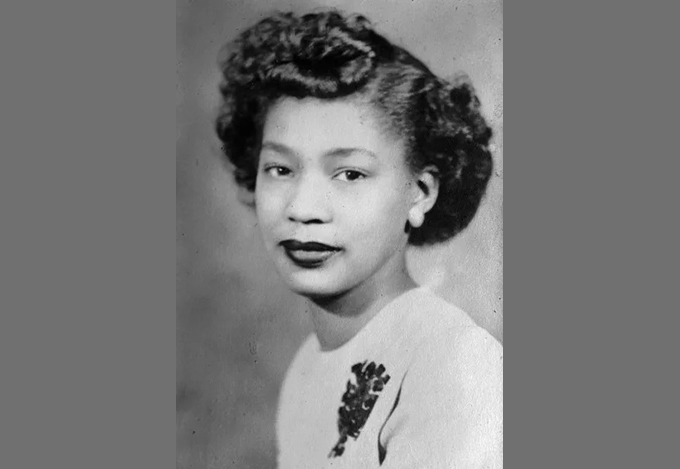


DR. RACHEL POOLE, in this undated photo, was one of the first African American students admitted into Pitt’s nursing program in 1943. (Photo courtesy Adriene Dilworth)
Nearly three-quarters of a century ago, public schools in America should have achieved racial integration. Considering five consolidated cases, the U.S. Supreme Court ruled in 1954 that official racial segregation in the nation’s public schools was unconstitutional. Topeka, Kansas; Clarendon County, South Carolina; Prince Edward County, Virginia; Claymont and Hokessin, Delaware and Washington, D.C. comprised the five school districts in the landmark decision.
Eventually—and to this day—the finding of the Court in the five cases became known as Brown v. the Board of Education (of Topeka, Kansas) or the Brown decision.
The matter of Clarendon County, South Carolina refusing to provide school bus service for segregated Black children as it did for Caucasian youngsters literally became a Federal case. Attending public school in that county could involve a trek of as many as nine miles walk to school for Black learners but not school bus-riding White ones—among other disparities.
And South Carolina law allowed racially segregated schools under the U.S. Supreme Court’s odious “separate but equal’’ 1896 finding in Plessy v. Ferguson. The obvious realities Black school children faced were indeed separate but clearly not equal.
Through the National Association for the Advancement of Colored People (NAACP), the NAACP Legal Defense and Educational fund Director-Counsel Thurgood Marshall and his team in 1950 decided to legally challenge the constitutionality of school segregation itself, rather than merely challenge unconstitutional unequal treatment of Black school children.
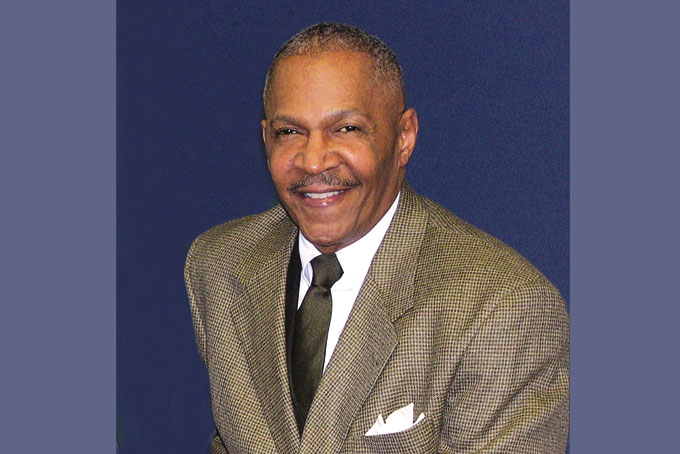
ROBERT HILL
The position of the legal team evolved to the argument that separate was inherently unequal in forced racially segregated public schooling.
If Thurgood Marshall was a fraction as erudite, persuasive and eloquently powerful as was Sidney Pointier playing him in the 1991 docudrama “Separate but Equal”, the entire court should have given Thurgood Marshall a standing ovation—disorder in the court notwithstanding.
Buttressing their case, the Marshall team presented evidence by Black New York City psychologists Mamie and Kenneth Clark (cited in the 11th footnote of the 1954 U.S. Supreme Court Brown decision) that their ‘’doll studies “—in which most Black children in the studies preferred White dolls among dolls identical except for color—showed Black children suffered low self-esteem from attending schools that were segregated by law.
Throughout the south, the U.S. Supreme Court Brown decision was defied. In the case of Brown ll, the Court directed in 1955 that school integration must proceed ‘’with all deliberate speed.’’ The late distinguished Pittsburgh attorney Eric Springer remarked that the decision was the only “take your time to obey the Constitution” directive that the U.S. Supreme Court ever issued.
Slow, stop and reverse—as the saying goes—defined school integration in numerous American school districts. The defiance was not only in the south. Nationwide, many school districts’ otherwise uneventful public school integration was only a justice seeker’s pipe dream.
As late as the 1960s, White Boston School Committee Chair Louise Day Hicks despised public school integration in Boston and by 1974 inspired violence against helpless little Black school children being bussed by Federal court order to achieve racially integrated public schools.
In 1968, fed up with failed attempts to integrate Brooklyn, New York’s Ocean Hill-Brownsville schools, Black community leaders sought local control of the segregated schools. Yes, the schools were de facto (in reality) rather than de jure (by law) segregated; segregated nonetheless.
As far west as Los Angeles, intractable issues of school segregation/integration claimed the attention of the residents of the city of angels for years. After the Los Angeles Unified School District was formed in 1961, unrest over racial segregation in its schools raged into the 1970s.
In this century segregation persists in United States public schools. More than one third of the nation’s children attend schools that are more than 75 percent of the same race or ethnicity, according to ABC News.
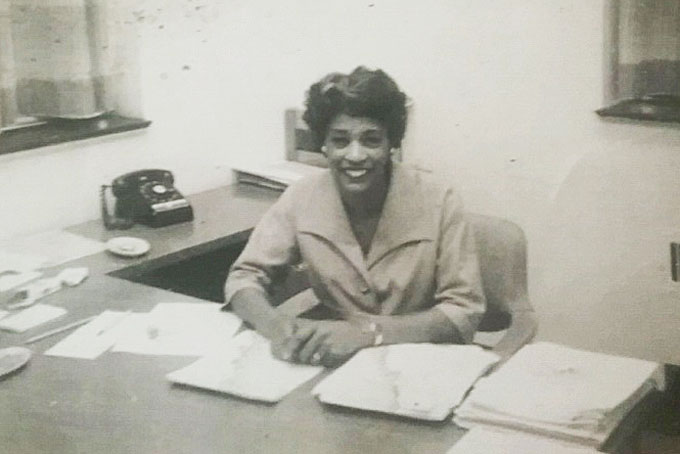
In Pittsburgh, Pennsylvania, as African American Rachel Poole— the late celebrated psychiatric nurse—graduated covaledictorian from Westinghouse High School in 1942, that public school was 65 percent White and 35 percent Black, she said in an interview. Despite that pre-Brown version of integration, Westinghouse is a modern-day overwhelmingly Black segregated public school, 72 years after the Brown school integration decision. The 2026 enrollment of Westinghouse is more than 90 percent Black, according to the Public School Review.
Seemingly, segregationist Alabama Governor George Wallace foresaw the continuing feature of post-Brown American public education, declaring in 1963, “segregation today, segregation tomorrow, segregation forever.’’
(Robert Hill is an award-winning Pittsburgh writer and communications consultant)