


In the movie The Hateful Eight, a character known as “the hangman” pointed a rifle at a sheriff. The sheriff said, “You put me at a disadvantage.”
The hangman responded, “Keeping you at a disadvantage is an advantage I intend to keep.”
***
Eight Democratic senators recently voted with the Republican majority to end the longest federal government shutdown in US history.

According to HuffPost senior reporters Paul Blumenthal and Igor Bobic, “These eight senators broke ranks with the majority of Democrats and Democratic Party voters, who viewed the shutdown as a necessary maneuver to both rein in President Donald Trump’s autocratic turn and prevent Republicans from raising health care costs for millions of Americans. It appeared as though the shutdown was working to Democrats’ political advantage. Polling showed Republicans and Trump taking most of the blame, and Democrats romped to victory in off-year elections on Nov. 4.”
Blumenthal and Bobic accused the eight Democratic senators of “folding on the shutdown.” In other words, they failed to maintain their advantage by keeping the Republican majority at a disadvantage.
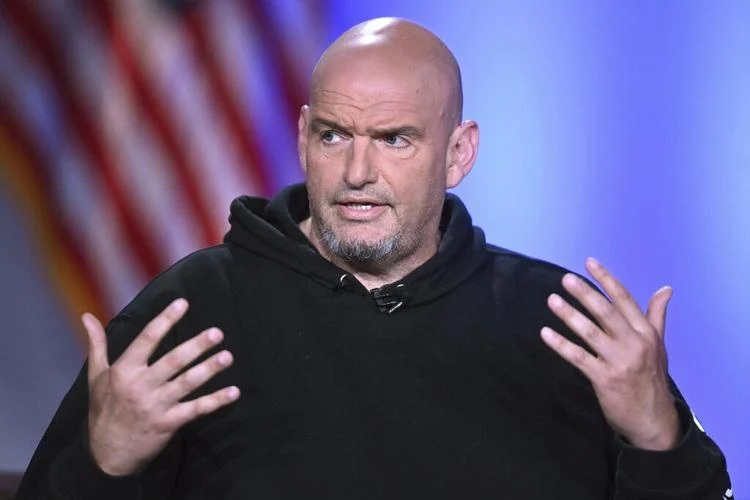
Other writers pointed out that none of the eight Democratic senators were up for reelection in 2026. Senators Dick Durbin (D-Illinois) and Jeanne Shaheen (D-New Hampshire) are retiring in 2026. Senators John Fetterman (D-Pa.), Maggie Hassan (D-N.H.), and Catherine Cortez Masto (D-Nev.) are not up for re-election until 2028, while Senators Tim Kaine (D-Va.), Angus King (I-Maine), and Jack Rosen (D-Nev.) won’t be on the ballot until 2030.
Obviously, the implication is that the eight senators ignored the “will of the people” by exercising their judgment because they didn’t have to face the voters next year.
House Minority Leader Hakeem Jeffries (D-N.Y.) lauded Senate Democrats for their “valiant fight” during the shutdown but revealed he hasn’t spoken with the eight senators who backed the GOP. Senator Chris Murphy (D-Conn.) argued that the eight Democratic senators acted against democracy by voting to end the shutdown.
Jeffries began the ostracism of the eight senators. That won’t matter to retiring senators, but the senators who continue in office will face strong primary challenges when they run for reelection for daring to defy party leadership.
The question remains: are the eight Democratic senators guilty of neglect of duty, or worse, betrayal?
These events are illustrative of a long-running debate among political theorists about the legislator’s function in Congress and which viewpoints should prevail on a specific issue. Do lawmakers have to vote as “constituent-instructed delegates” or “trustees,” voting their conscience even if it contradicts their constituents’ wishes?
As a senator, John F. Kennedy agreed with political theorists who felt politicians should serve as “trustees.” In his 1956 book Profiles in Courage, Kennedy stated that “both major parties today seek to serve the national interest. They would do so to obtain the broadest base of support, if for no nobler reason. But when party and officeholder differ as to how the national interest is to be served, we must place first the responsibility we owe not to our party or even to our constituents but to our individual consciences.”
He went on: “The voters selected us, in short, because they had confidence in our judgment and our ability to exercise that judgment from a position where we could determine what were their own best interests as a part of the nation’s interests.”
Kennedy can be dismissed as an elitist who promoted the notion that lawmakers are “trustees” because he believed his judgment was superior to that of his constituents, but this does not imply that legislators who consider themselves as “constituent-instructed delegates” are better able to represent the people.
Legislators do not choose between becoming “trustees” and “constituent-instructed delegates.” Legislators must balance the people’s will and their judgment.
Did the eight Democratic senators fold during the shutdown?
That depends on whether the voters regard legislators as “trustees” or “constituent-instructed delegates.” That answer will fall somewhere in the middle, but even if most people believe the eight Democratic senators folded, expressing one’s own judgment is not betrayal or neglect of duty because politics will always be the art of compromise.