
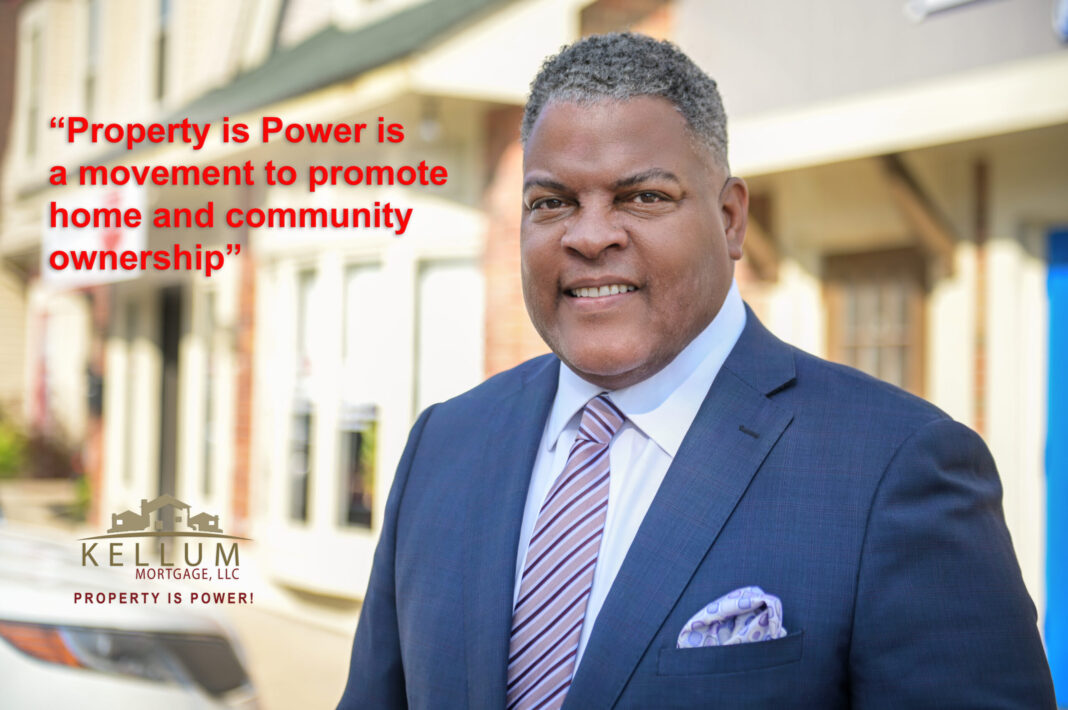


By Dr. Anthony O. Kellum, Guest Columnist
Some of the greatest opportunities in real estate arrive disguised as uncertainty.
When mortgage rates are low, the economy feels strong, home prices are climbing, and everyone seems confident about buying, purchasing a home feels comfortable. But comfort often comes with competition. Buyers compete against multiple offers, waive contingencies, offer above asking price, and sometimes make decisions based more on fear of missing out than sound financial judgment.
Today’s market feels different.
Mortgage rates remain elevated compared with the historically low rates many consumers became accustomed to. Affordability is challenging, economic uncertainty has caused some buyers to remain on the sidelines, and homes in many markets are sitting longer than they did during the frenzy of recent years.
For many people, those conditions sound like reasons not to buy.
But they may also represent something we have not seen consistently in several years; buyer leverage.
A slower housing market can create opportunities to negotiate the purchase price, request seller-paid closing costs, obtain repairs, negotiate interest-rate buydowns, and simply have more time to evaluate a property before making one of the largest financial decisions of your life.
That does not mean everyone should rush out and purchase a home. Real estate should never be purchased simply because someone says, “Now is the time to buy.” Your income, credit, savings, monthly payment, employment stability, and long-term goals all matter.
But there is an important distinction between a bad market and an uncomfortable market.
The two are not necessarily the same.
History has repeatedly shown us that people often feel most comfortable investing when everyone else feels comfortable. Unfortunately, by the time confidence becomes universal, much of the opportunity may already be reflected in the price.
Real estate investors understand this concept particularly well. Experienced investors do not simply ask, “What are interest rates?” They ask, “What is the property worth? What can I purchase it for? What will it rent for? What are my expenses? What is my cash flow? Where is the opportunity, and what is my exit strategy?”
Primary homebuyers should begin thinking with some of that same discipline.
A home is certainly where we live, raise our families, celebrate holidays, and create memories. But it is also an asset. Over time, the mortgage balance can decline while equity grows. That equity can become part of a family’s net worth and, ultimately, part of what one generation passes to the next.
For Black America, Ownership Has an Even Deeper Meaning
For Black families, this conversation carries additional weight.
For generations, Black Americans faced very real barriers to acquiring property, obtaining mortgages, living in certain communities, and fully participating in the wealth-building opportunities that homeownership provided to others. Those barriers helped create a homeownership and wealth gap that did not disappear simply because the laws eventually changed.
That history should not discourage us. It should motivate us.
We cannot change the opportunities previous generations were denied, but we can be intentional about the opportunities available to us today.
For Black families who are financially prepared, ownership should be viewed not simply as purchasing a house, but as establishing a foothold. One property can become equity. Equity can become capital. Capital can help finance another property, start a business, educate a child, strengthen retirement, or provide an inheritance.
That is how ownership begins to change the trajectory of a family.
We also have to become comfortable talking about ownership with our children. Teach them about credit, teach them about mortgages, teach them about equity, investing, property taxes, insurance, maintenance, and the responsibility that accompanies owning an asset.
Our children should grow up believing that ownership is normal and achievable.
We do not have to become wealthy overnight. Sometimes generational wealth begins much more quietly with one family purchasing one property, keeping it, building equity, and making sure the next generation does not have to start from zero.
That is why permanently waiting for the “perfect” market can have consequences.
Every year spent waiting is another year in which someone else may be building equity in an asset you are paying to use.
And we should stop measuring today’s opportunities against yesterday’s extraordinary mortgage rates.
The 2 percent and 3 percent mortgage environment was historically unusual. Building an entire homeownership strategy around waiting for those rates to return may cause prospective buyers to overlook opportunities that make financial sense today.
The better question is not simply, “Are rates high?”
The better question is, “Do the numbers work for me?”
Can you comfortably afford the payment? Are you purchasing the property at a reasonable price? Can you negotiate concessions that improve the transaction? Do you plan to own the property long enough for ownership to make financial sense? And does buying move you closer to your long-term goals?
If the answer to those questions is yes, an uncomfortable market may actually become an opportunity. Opportunity rarely announces itself by making everyone feel safe. Often, the greatest opportunities become obvious only after the uncertainty has passed.
Real estate is no different.
Do not allow headlines alone to determine your financial future. Do not buy because everyone else is buying, and do not automatically sit on the sidelines because everyone else is nervous.
And particularly in Black communities, we cannot allow the difficulties of the market to convince another generation that ownership is beyond our reach. We have spent enough generations fighting for access to ownership. Now we must also develop the knowledge, preparation, and confidence to exercise it.
Study the numbers. Understand your options. Negotiate aggressively but intelligently. Purchase when the property, payment, and strategy make sense for you.
Because sometimes the best time to buy does not feel like the best time to buy.
Property is Power! Ownership creates options. Equity creates opportunity, and what we own today can help determine what the next generation inherits tomorrow.
(Dr. Anthony O. Kellum – CEO of Kellum Mortgage, LLC Homeownership Advocate, Speaker, Author NMLS # 1267030 NMLS #1567030 O: 313-263-6388 W: www.KelluMortgage.com.)Property is Power! is a movement to promote home and community ownership. Studies indicate homeownership leads to higher graduation rates, family wealth, and community involvement.