
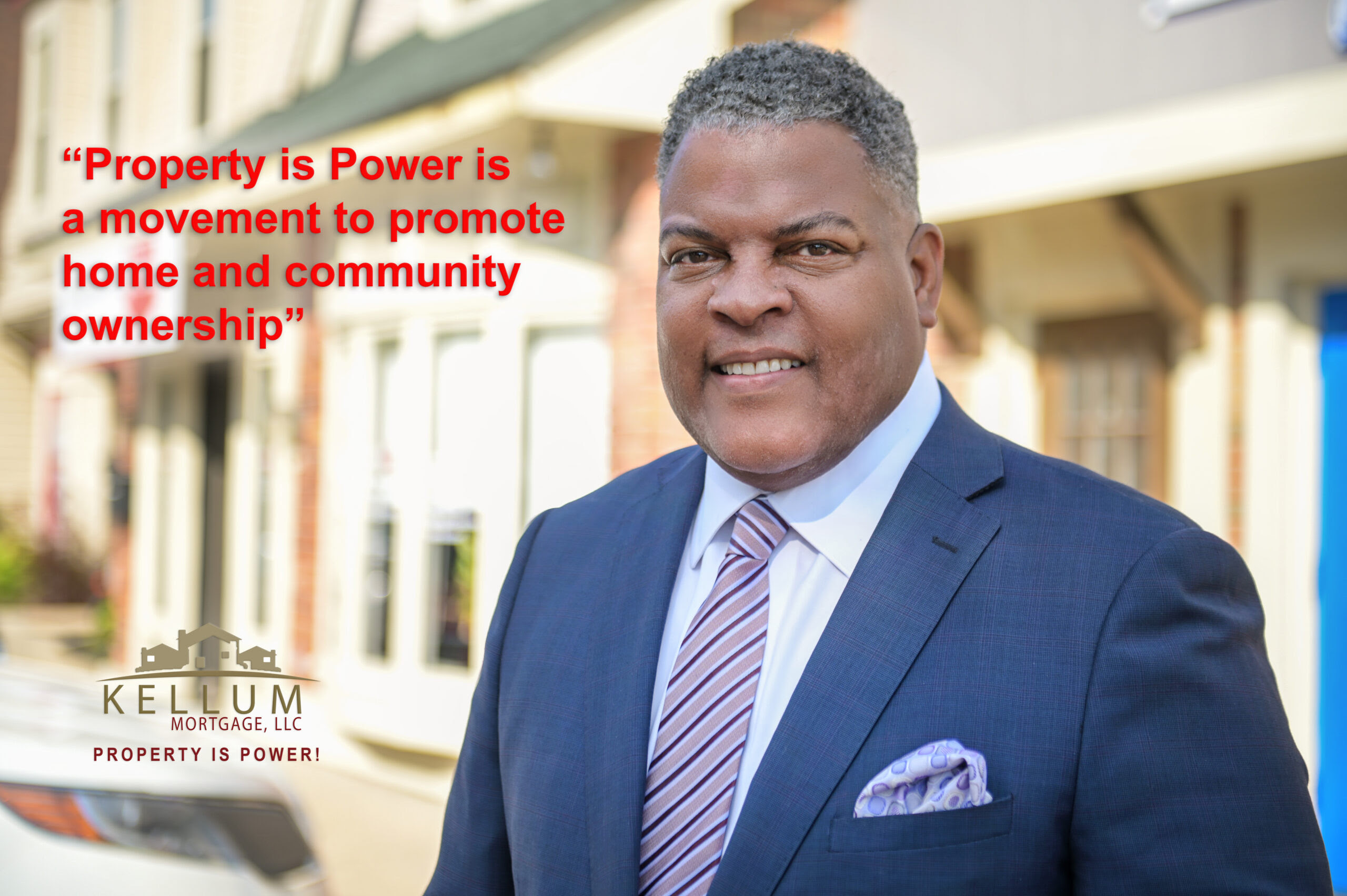


by Dr. Anthony O. Kellum
I’ve said many times, we have been taught to think about housing primarily as shelter, a roof, a neighborhood, a monthly payment. But in America, property has never simply been about where you live. Property determines where wealth accumulates, where opportunity concentrates, where schools improve, where political influence grows, and ultimately, whose future appreciates alongside the land beneath them. That is why appraisal bias matters far beyond real estate. It is not merely a housing issue. It is an economic justice issue, a valuation issue, and perhaps most importantly, a power issue.
And despite all of the conversations around equity since 2020, one uncomfortable truth remains deeply embedded within the American housing market—homes in predominantly Black neighborhoods continue to be systematically undervalued compared to similar homes in predominantly White communities. Study after study has shown that Black neighborhoods can be undervalued by as much as 25 to 35 percent, translating into an estimated loss of more than $160,000 in value per home in many markets. The implications of that are staggering. When homes are undervalued, equity is suppressed. When equity is suppressed, borrowing power shrinks. When borrowing power shrinks, businesses do not start, college tuition becomes harder to fund, retirement becomes less secure, and intergenerational wealth becomes harder to transfer.

This is not theoretical for me. I recently experienced this firsthand on an investment property I purchased for $240,000. The projected after-repair value came back at roughly $333,000. But after reviewing the appraisal closely, we initiated a rebuttal process and discovered something troubling—there were multiple comparable properties within blocks of my project, some within a mile radius that had sold for $450,000, $490,000, $500,000, and even as high as $620,000. These were not luxury outliers detached from reality. They were relevant, comparable properties in the same broader market area. Yet somehow, the valuation assigned to my property came in dramatically lower.
As someone in the industry, I understood immediately that this was not just a math problem. It was a framework problem. Appraisals are often presented as objective science, but in reality, they are heavily influenced by interpretation, market assumptions, neighborhood narratives, and historical data that itself may have originated from decades of discriminatory practices. In many Black communities, lower historical appraisals become the justification for future lower appraisals, creating a self-reinforcing cycle where suppressed values become normalized. The market begins to treat undervaluation as evidence rather than distortion.
This is where many conversations about race and housing become too simplistic. People often assume discrimination in housing must look explicit to be real. But modern inequity frequently operates through systems that appear neutral while producing deeply unequal outcomes. Appraisal bias is one of the clearest examples of this phenomenon. No one has to openly say a Black neighborhood is worth less. The market simply behaves as though it is, and that behavior compounds over generations.
If a family in a White neighborhood gains an additional $150,000 or $200,000 in equity over a decade while a similar Black family does not, the gap is not just financial. It affects inheritance, mobility, educational opportunity, entrepreneurship, and access to capital. Equity becomes leverage, and leverage determines who can move forward economically without starting from zero for each generation.
What makes this particularly frustrating is that Black buyers, investors, and homeowners are often asked to overcome barriers that have little to do with financial irresponsibility. Many Black professionals today are highly educated, dual-income earners with strong careers and stable finances. Yet they still encounter markets and valuation systems that frequently fail to recognize the full worth of the communities they invest in. In many cases, Black buyers are not underqualified, their neighborhoods are undervalued. That distinction matters, and it raises an important political and civic question: what do we do about it?
First, Black communities must become far more educated on how appraisals actually work. Most people assume an appraisal is fixed and unquestionable. It is not. Appraisals can be challenged, rebutted, and reviewed. Homeowners and investors should understand the importance of gathering strong comparable sales data, documenting renovations thoroughly, presenting neighborhood development trends, and understanding how appraisers select comps. Too many people accept undervaluation without realizing there are mechanisms to dispute it.
Second, we need greater engagement with appraisal companies and lending institutions themselves. This cannot simply be treated as an adversarial issue. There must be sustained dialogue between Black real estate professionals, developers, homeowners, and the appraisal industry about how neighborhoods are evaluated and how implicit assumptions shape valuation outcomes. Appraisers often rely on historical sales patterns without adequately accounting for neighborhood transformation, rising demand, infrastructure improvements, or broader economic shifts. Communities must push for valuation models that recognize future trajectory and actual market behavior rather than outdated narratives tied to race and geography.
Third, there is a political dimension that cannot be ignored. Regulators, housing agencies, and elected officials must continue scrutinizing appraisal disparities and modernizing oversight standards. Data transparency matters. If certain communities consistently appraise lower despite similar housing stock and market conditions, that should trigger investigation, not dismissal. The federal government has already begun acknowledging appraisal bias more openly, but acknowledgment alone is insufficient. Accountability mechanisms must follow.
But beyond policy, there is also a cultural responsibility within Black communities themselves. We must continue investing in ownership, development, and local economic ecosystems despite the frustrations. One of the dangers of persistent undervaluation is psychological; people begin to internalize the belief that their communities are inherently less valuable. Value is often political before it becomes financial. Neighborhoods appreciate when investment, confidence, infrastructure, and ownership align over time.
This is why property remains one of the most important battlegrounds in America. The racial wealth gap in America has never been driven solely by income differences. It has been driven largely by asset appreciation and homeownership remains the largest asset most families will ever possess. When Black communities are undervalued, the issue is not simply that homes sell for less. It is that the economic futures attached to those homes are constrained before families ever have a chance to fully realize them. That is why appraisal bias deserves far more public attention, and until we answer that honestly, the market will continue doing what it has quietly done for decades assigning different values not just to properties, but to communities themselves.
(Dr. Anthony O. Kellum—CEO of Kellum Mortgage, LLC
Homeownership Advocate, Speaker, Author
NMLS # 1267030 NMLS #1567030
O: 313-263-6388 W: www.KelluMortgage.com.)
Property is Power! is a movement to promote home and community ownership. Studies indicate homeownership leads to higher graduation rates, family wealth, and community involvement.