

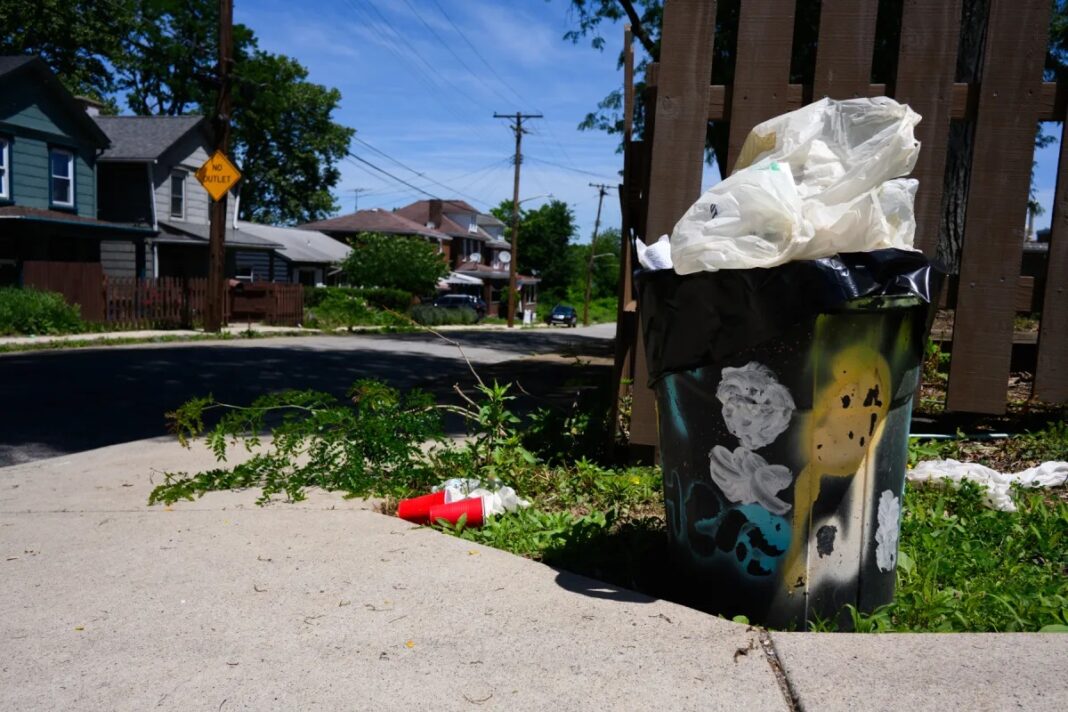

Calls to the city’s 311 help line reporting garbage collection whiffs have surged. In some neighborhoods, complaints are 10 times higher than in others.
“Pittsburgh’s Public Source is an independent nonprofit newsroom serving the Pittsburgh region. Sign up for our free newsletters.”
Pittsburghers are increasingly finding themselves stuck with garbage after collection day, 311 data shows.
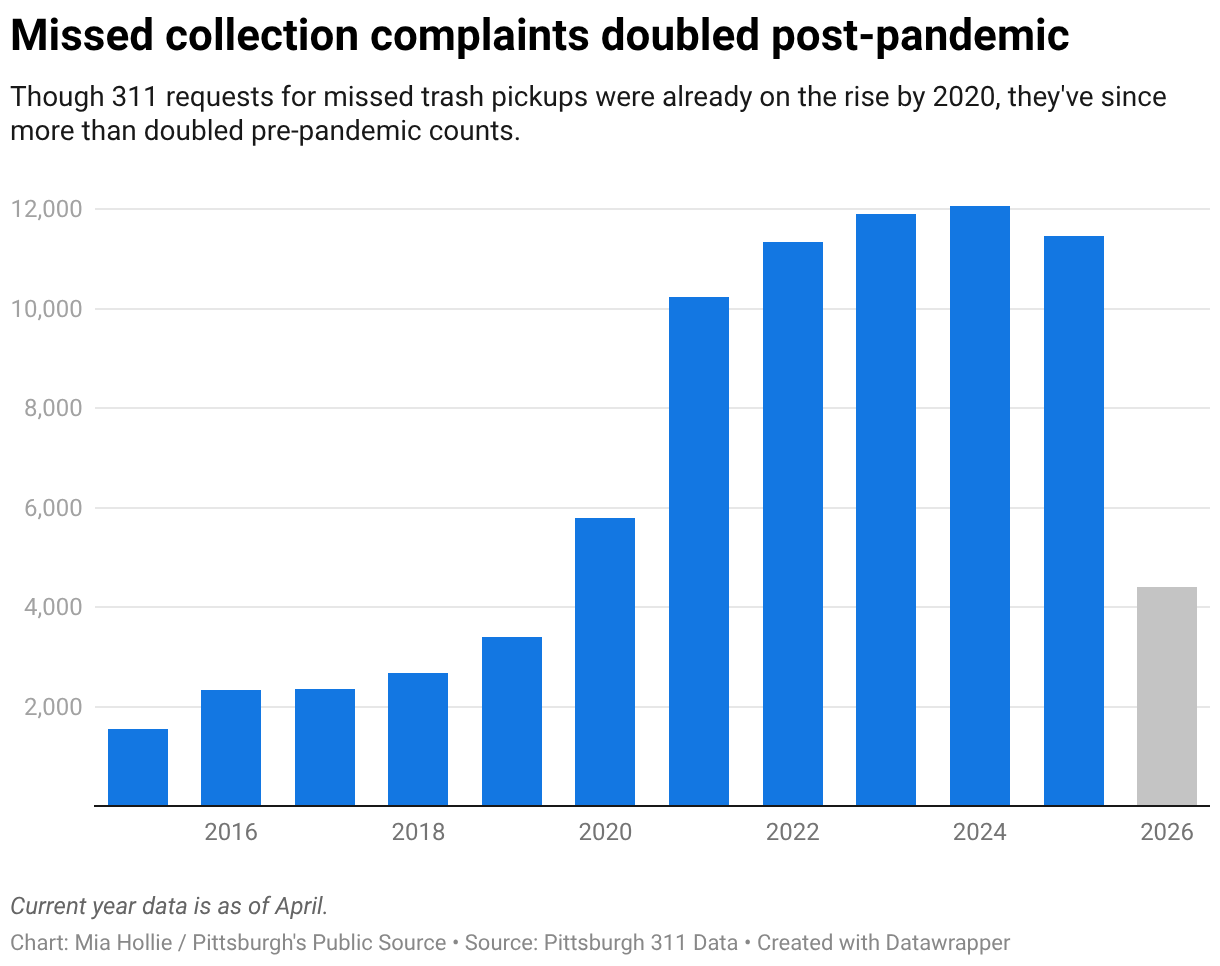
While the number of service requests to the City of Pittsburgh related to missed collections has been on an upswing over the last decade, a marked shift began after the pandemic. Now these complaints number more than 10,000 each year.
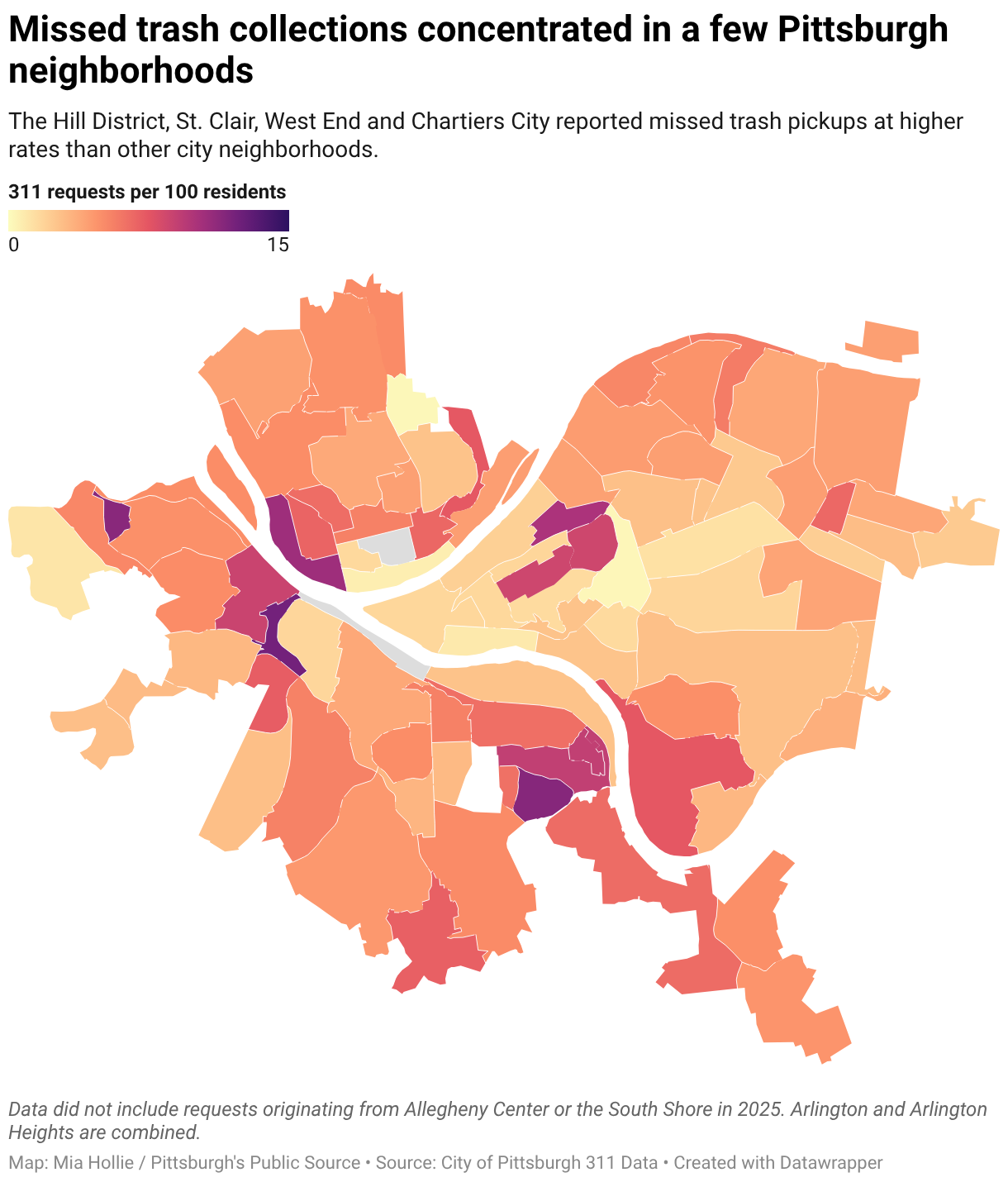
The issue is particularly acute in the West End, South Hills and Greater Hill District neighborhoods, where some residents say missed trash only adds to the pile of litter issues in their area. There’s no single reason the taxpayer-funded service has received an increasing number of complaints via the city’s 311 help line, according to city officials.
Why? It’s a bit of a mystery
Harold Love, a Highland Park resident, said “it’s inexplicable” why his trash doesn’t get picked up, sometimes for consecutive weeks.
“It’s happened at our house numerous times even including instances when the other four houses on the street were not skipped,” he said in an email.
While a call to 311 usually gets another truck out that same day, he said it’s usually a different crew unable to provide a reason for the initial missed collection.
Pittsburgh’s Public Source first learned of this issue at a Larimer Consensus Group community meeting in April, at which residents raised their missed pickup issues. Data available through the Western Pennsylvania Regional Data Center indicates that Pittsburghers submitted about 3,400 service requests related to missed trash collections in 2019. That number has more than tripled since.
Have a story of missed trash pick-up in Pittsburgh? Email it to mia@publicsource.org, including your name, neighborhood and the approximate date of the missed collection, and we may add it to this story.
Shifting work habits could be a possible reason, according to Molly Onufer, the mayor’s press secretary.
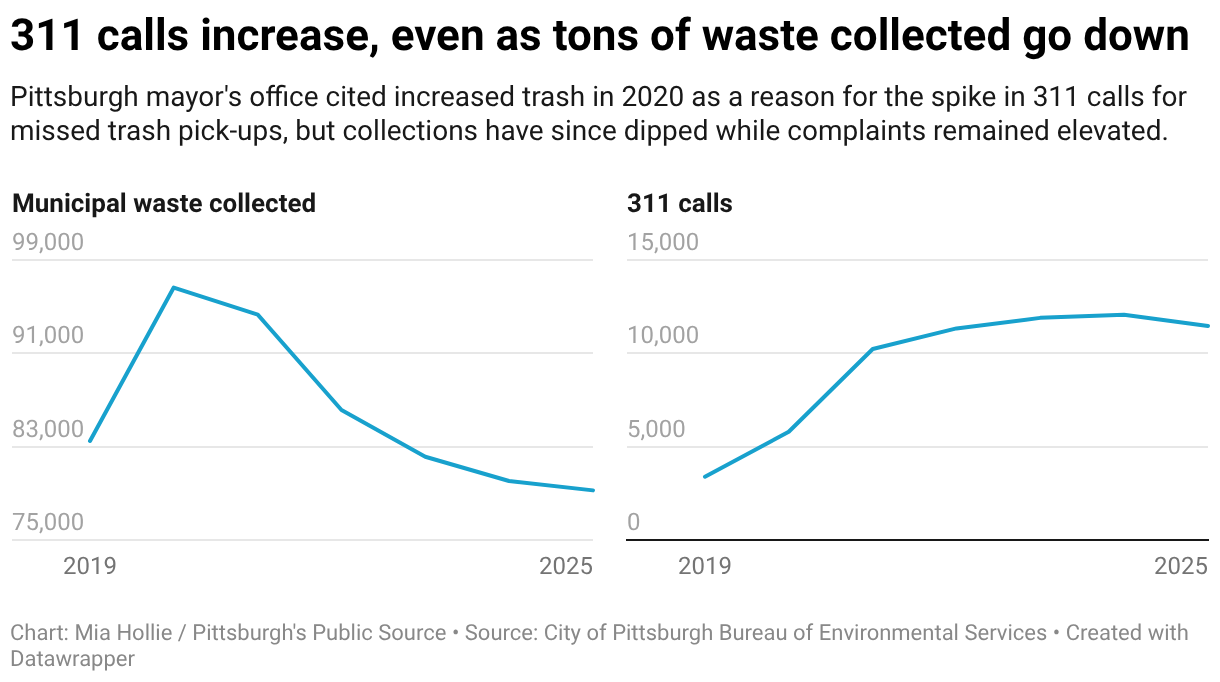
While employers enforced work-from-home protocols to limit the spread of COVID-19 in 2020, the city Bureau of Environmental Services collected more than 96,000 tons of garbage — a total not since reached — and 14,500 tons of single-stream recyclables.
“In 2020, everyone started working from home and not only did sheltering in place increase refuse, but people were cleaning out spare rooms for office space and creating tons more trash,” she said in an email. “Covid also affected the Environmental Services workforce.”
The tonnage of municipal waste collected by the city — which includes trash that’s been picked up after a missed collection — has since dropped below pre-pandemic levels, even as 311 requests continue to rise. Onufer said the increase in requests could be due to repeat calls over the same issue, or residents calling when trucks don’t come at their usual times.
The city’s garbage truck fleet also includes 36 vehicles for residential pickups and 13 for recycling — the same as before the pandemic. Not all vehicles are available each day, Onufer said, which can increase missed pickups.
She also said that the city no longer services trash cans over 35 gallons or recycled waste kept in blue bags. Putting out refuse that does not adhere to these new guidelines could result in a missed pickup, she said.
Just one issue in a pile of waste problems
Jonathan Alexander, a Sheraden resident and president of the neighborhood’s community council, said every now and then he’ll read complaints about missed trash collections posted to Facebook groups. He’ll even share his own at times — as he once did after seeing a stack of three mattresses sitting in a front yard.
For every 100 residents, Sheraden saw about five requests to 311 for missed trash collection last year — lower than nearby Elliott and Chartiers City, though above the citywide average of 4 in 100.
But collections are only one aspect of a broader waste problem in Sheraden, Alexander said: Littering and illegal dumpsites are persistent issues in the neighborhood, too.
“If we had perfect trash collection, we’d still have issues,” he said.
All waste in Pittsburgh should theoretically go to either landfills in Monroeville or Imperial, or to a sorting facility if it’s recyclable. Illegal dumpsites pop up when people instead drop off their waste on public land or private property.
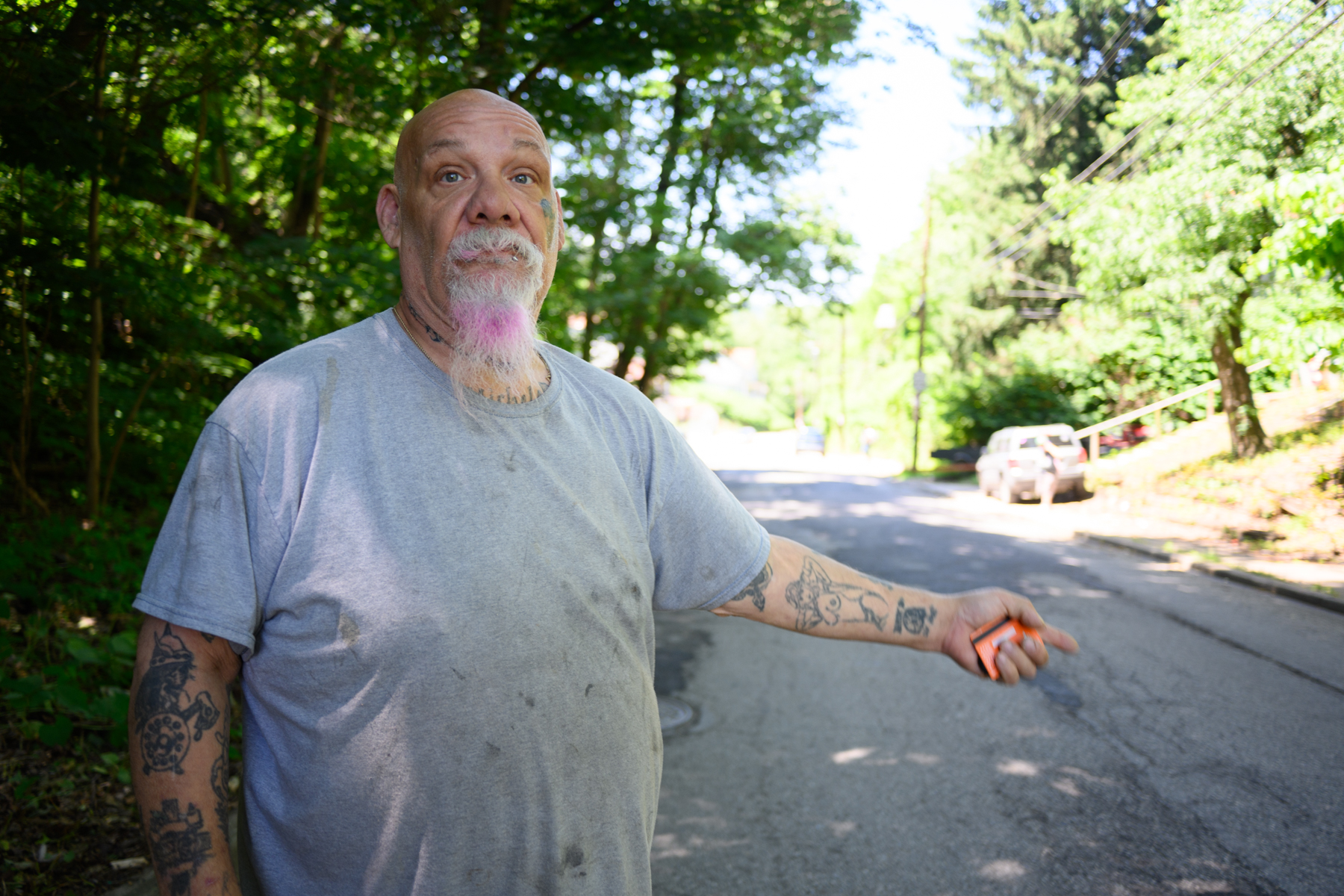
Allegheny Cleanways, a nonprofit that focuses on mitigating illegal dumping and littering, has identified more than 2,000 of these sites.
About 10 exist in Sheraden, Alexander said, and several sites exist in neighborhoods such as the Middle Hill and Hazelwood, where 311 requests were submitted at higher rates than other parts of the city.
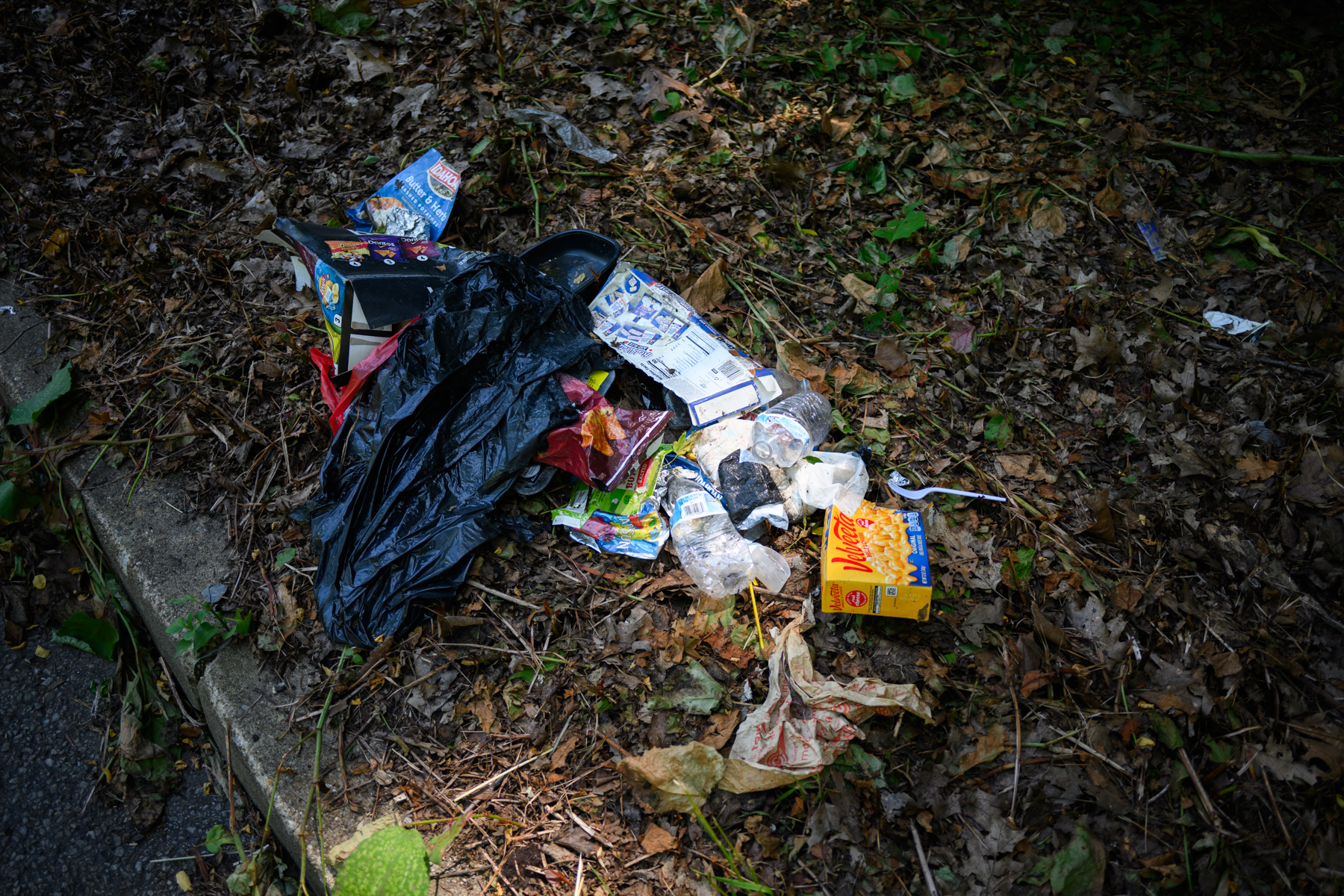
On top of that, “It is not uncommon for the trash collectors to come through, pick up trash and then the area where they pick up trash is filthier than when they came,” Alexander said. This often happens because the trash wasn’t packed well or animals got to it.
It’s not sanitation workers’ responsibility to pick up scraps from broken trash bags or cans that’ve been rummaged through, he said, but “it leaves a community impact.”
More education needed
City Councilor Kim Salinetro, whose western district includes neighborhoods with elevated requests, said she hasn’t seen any upticks in complaints recently. At the same time, she said more education is needed around how to properly bag trash, how to sort recycling and when to put waste out for collection.
“It’s just an education lesson that people need to have.”
Because of this, Salinetro said, some requests characterized as missed trash collections might really reflect other, related issues. “It’s not necessarily, ‘Hey you missed my house,’” she said. “It’s, ‘My neighbor put their garbage out and the raccoons are getting to it.’”
Donte Brown-Massie, a recreation leader for the city who’s been a resident of the Middle Hill for roughly 10 years, also said the issue is “50/50 all around.” While his household has not seen missed collections, he said issues can arise for others when the trash is set out too early, particularly in the summer when more animals are out.
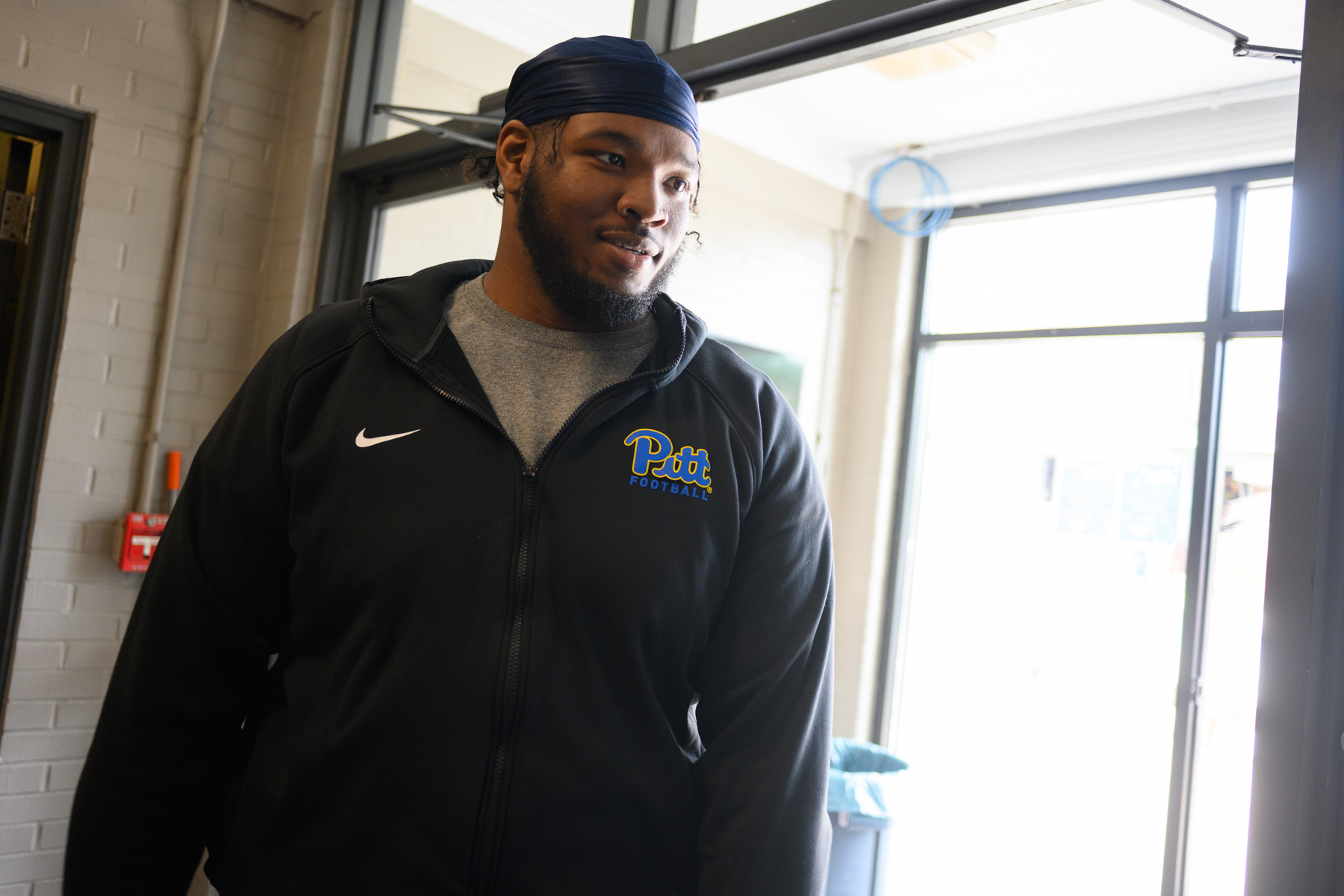
Residents should be encouraged to use 311 more often, Alexander said. “There’s a chasm between the residents and the importance of using [311],” he said. “The city isn’t ‘all-seeing and knowing.’”
But Alexander also said “there could be a lot of room for improvement” on the responses of the city and community groups where waste issues exist.
The Sheraden Community Council, for instance, holds annual garbage derbies, which bring community members together each spring to clean up the neighborhood for a few hours.
The city holds an annual Garbage Olympics.
Alexander said one of the reasons Sheraden started organizing derbies was because “litter begets litter,” and removing what they could might help veer others away from leaving garbage around.
Mia Hollie is the economic development and housing reporter for Pittsburgh’s Public Source. She can be reached at mia@publicsource.org.
This story was fact-checked by Emma Folts.
This article first appeared on Pittsburgh’s Public Source and is republished here under a Creative Commons Attribution-NoDerivatives 4.0 International License.
PARSELY = { autotrack: false, onload: function() { PARSELY.beacon.trackPageView({ url: “https://www.publicsource.org/pittsburgh-missed-trash-pick-ups/”, urlref: window.location.href }); } }