
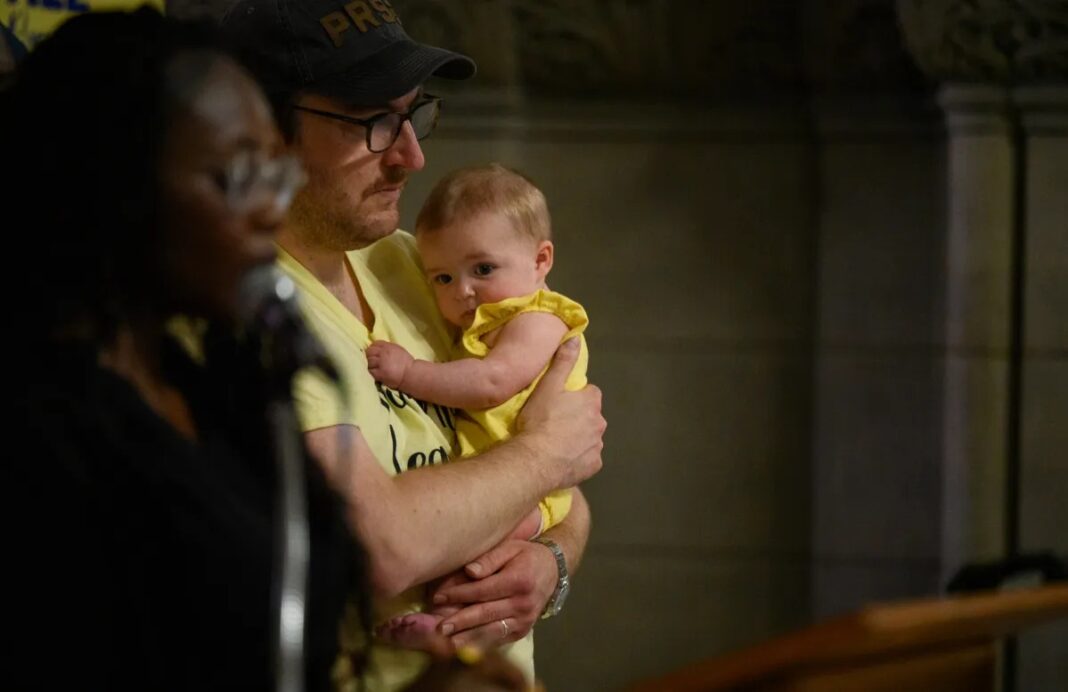

The Allegheny County Board of Health held a hearing on a proposed paid parental leave mandate for all employers, and heard both support and concern. A vote is possible July 15.
“Pittsburgh’s Public Source is an independent nonprofit newsroom serving the Pittsburgh region. Sign up for our free newsletters.”
Allegheny County’s proposal to require employers to provide 18 weeks of paid parental leave would be a boon to working parents who are struggling to get by.
That’s according to dozens of Allegheny County residents who spoke at a hearing put on by the Board of Health in downtown Pittsburgh on Tuesday. Their comments were part of a required 30-day comment period before the Board of Health is allowed to consider the measure.
Parents often suffer physical, emotional and financial problems as a result of being forced back to work too early after having children, according to these speakers.
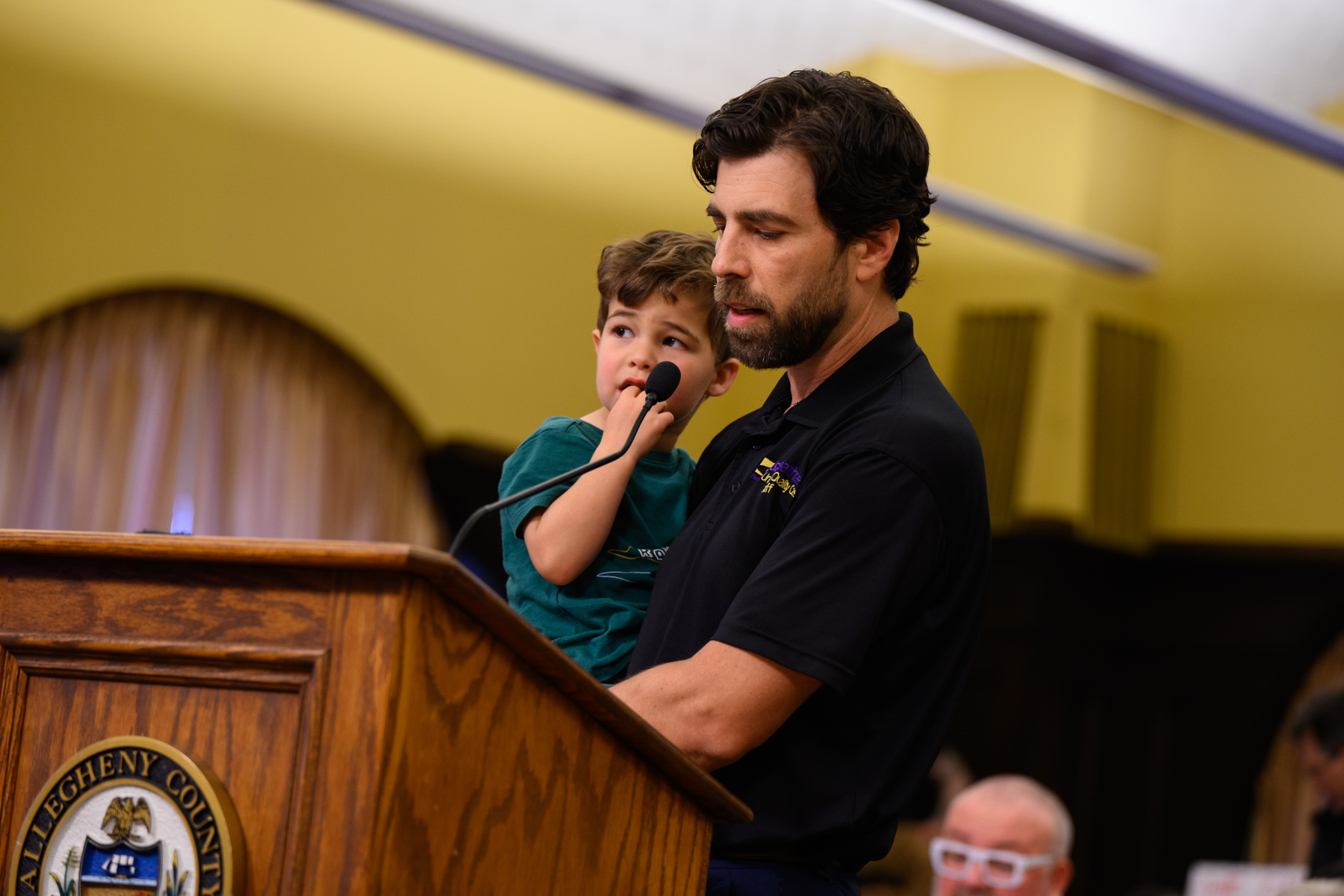
Many of the speakers at the nearly 3-hour hearing were parents who told sometimes harrowing stories of problems in childbirth or difficulties going back to work, often with a baby in their arms.
But the proposed new policy could also be a disaster for the county’s struggling small businesses and nonprofits, many of whom wouldn’t be able to afford the new benefit.
That’s according to around a half-dozen speakers who oppose the new policy, many of whom work for or own a small business. They said the new parental leave policy would cause the county’s private EMS services to slow down, hurt staffing levels at nursing homes and even leave childcare centers understaffed.
In her own public comment, County Executive Sara Innamorato said that during a recent trip to Ireland, a business leader there was shocked to learn that Pittsburgh didn’t have any paid parental leave. Innamorato said the woman told her, “’That’s barbaric.’
“This is the way the world views us as the United States,” she said. “I’m tired of waiting for federal action that never seems to come.”
After Innamorato’s speech, a man stood up in the crowd and said, “That’s a wonderful thing to say in a utopian society but the reality is …”
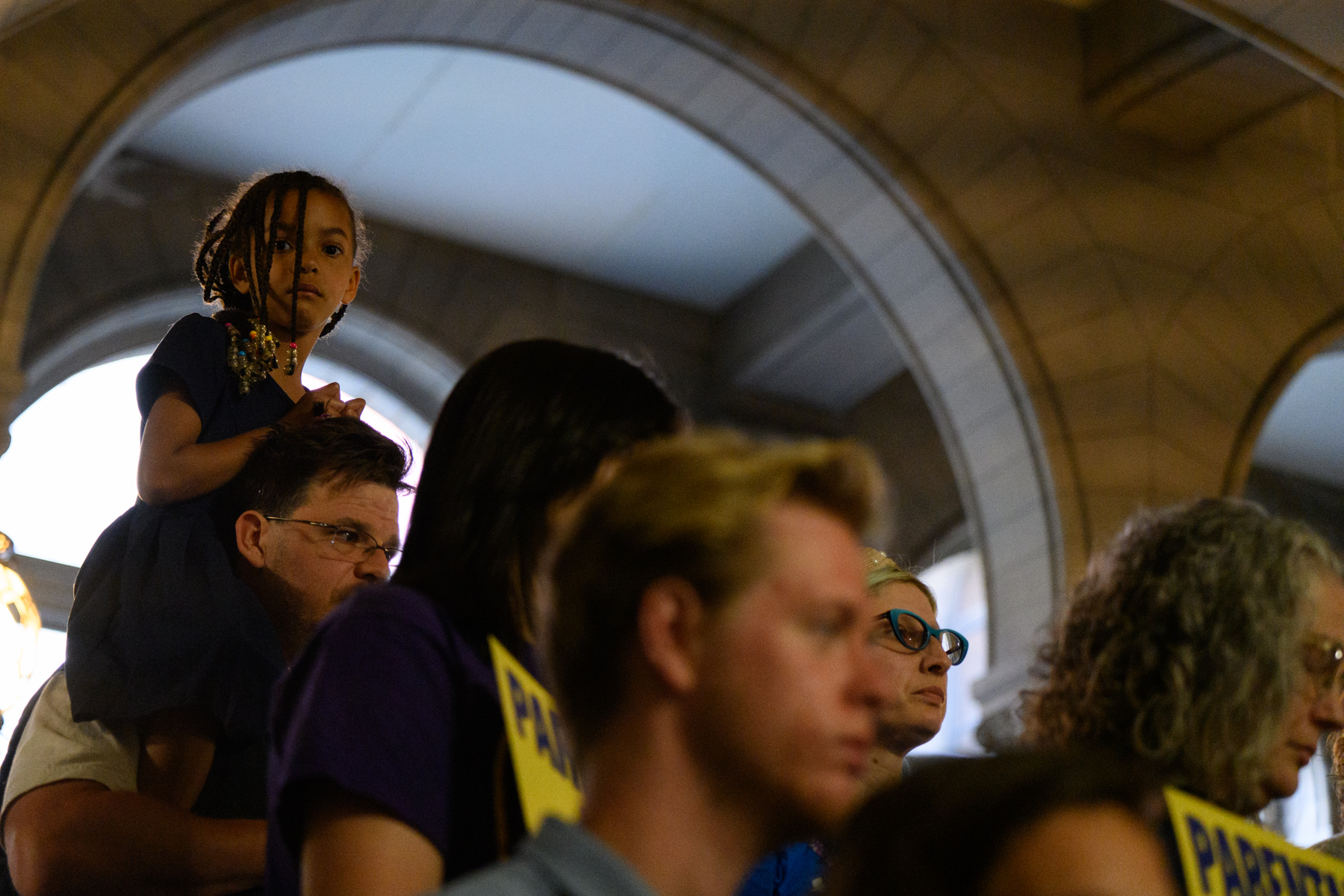
But before the man could finish, the standing-room-only crowd at the County Courthouse shouted the man down and Health Director Dr. Iulia Vann called the meeting back to order.
Businesses share cost worries
Not long after the verbal clash, two representatives from the Allegheny Conference on Community Development left the meeting but shared the group’s objections through written comments signed by its CEO Stefani Pashman.
Pashman’s letter said the proposal included benefits that are much longer in duration than similar policies elsewhere, forces companies rather than taxpayers to bear the burden and requires companies of all sizes to participate.
“In its current form, we believe the proposed paid parental leave requirement is a significant outlier relative to peer jurisdictions,” Pashman wrote, “and raises material concerns regarding employer feasibility and competitiveness.”

“This isn’t a public health problem. It’s a math problem, and the math simply does not add up,” said John Graf, the president and CEO of the Priory Hospitality Group.
Like many of the representatives of the business community who spoke Tuesday, Graf said agrees with the principles of the new policy but thinks it should be paid for in some other way and “not be put on the backs” of owners of small- and medium-sized businesses.
Eric Schmidt, the chief of Shaler/Hampton EMS and a county leader for EMS providers, said many small ambulance services in the county are “already operating on the edge” and would potentially go out of business. “Unlike many large corporations, EMS agencies cannot simply absorb these costs or leave positions vacant,” Schmidt said. “If an ambulance is not staffed, it means to wait longer for emergency care.”
Matt Napper, the chairman of the board of the Northside Chamber of Commerce, said many of the 450 businesses he represents support the principle of paid parental leave but don’t think they can afford it.
“For large corporations with extensive resources that may be manageable,” Napper said. “For small businesses and nonprofits that make up a majority of our membership, it is not.”
Matt Barbee, the director of regulatory affairs for the Pennsylvania Homecare Association, said the home healthcare businesses he represents are paid a set fee for their services. And because these fees are set by state governments, these businesses wouldn’t be able to raise their rates to afford any new costs associated with paid parental leave.
“Adding new mandates would push many agencies beyond their financial limits and these consequences would be very immediate and real,” including, he said, “agency closures for small and midsize providers.”
Allegheny County mothers tell stories of need
Many of the speakers who spoke in favor of county’s proposed new parental leave policy referenced studies that they say show the new policy would improve health outcomes for parents and children and make it more likely that parents will stay in the work place.
But the meat of many of their arguments were personal stories about the challenges they faced during the early days of parenthood.
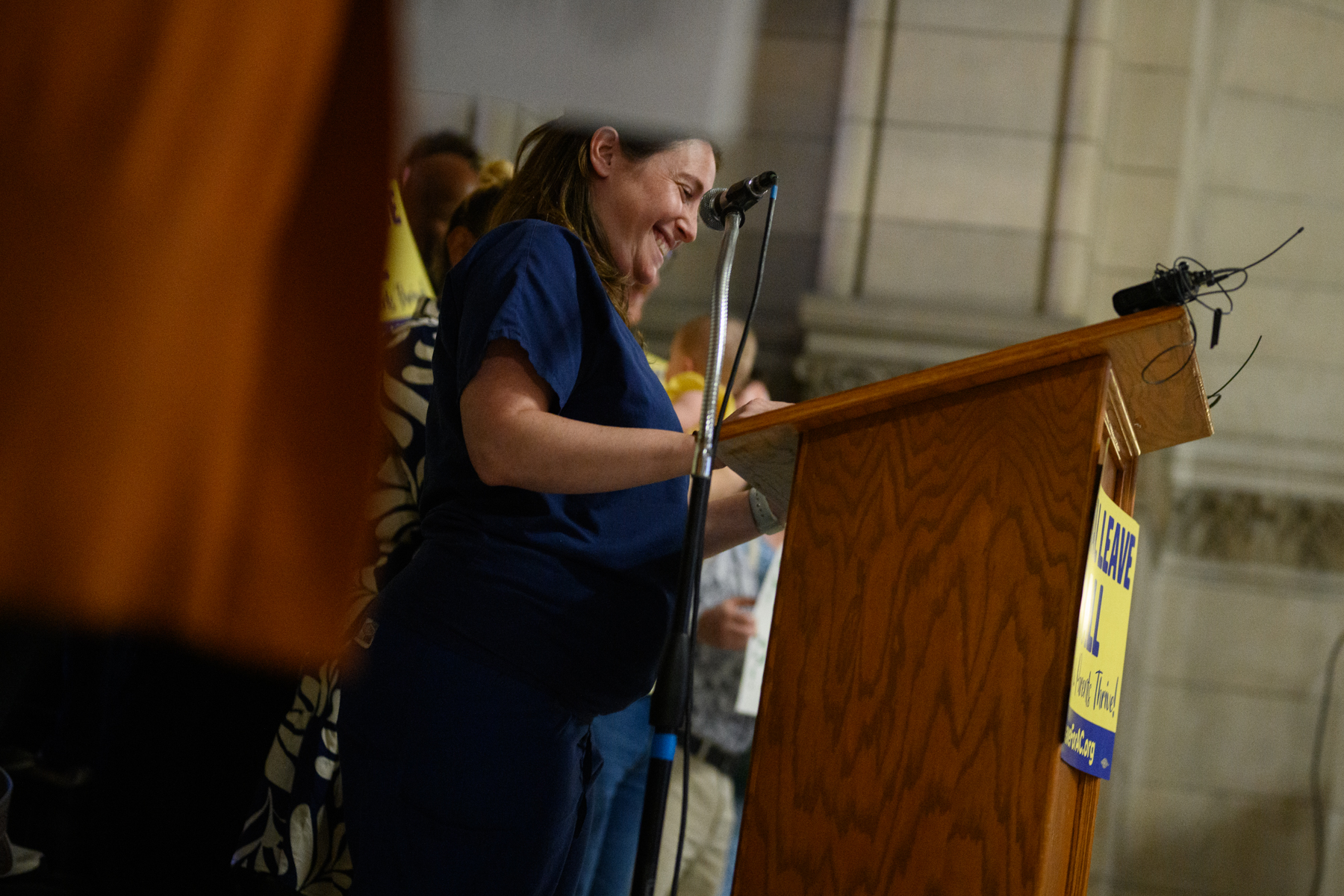
Stephanie Fello, a union worker from Plum, said that a paperwork error meant that she didn’t get short-term disability after her pregnancy and she had to rely on the support of family and friends for food, and $800 that a local church raised on her behalf. “Working families shouldn’t have to rely on social networks to support us,” she said. “We should also be able to rely on our employers.”
Kayla Calabro had to return to the hospital a week after her daughter was born with postpartum preeclampsia. “I missed out on so many experiences by having to go to work while being a new mother,” she said.” Additionally there were times I was trying to physically recover, mentally recover.”
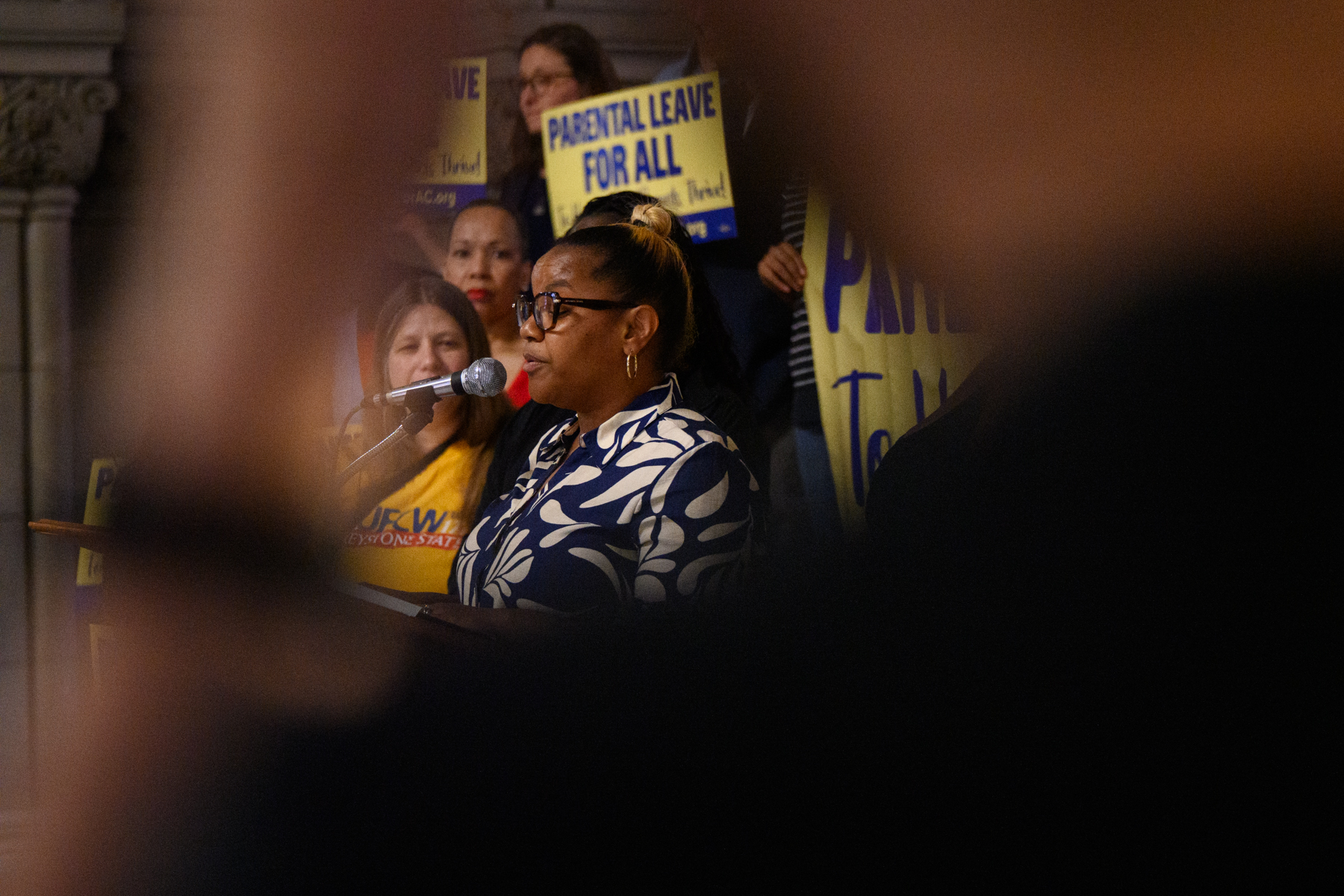
Melissa DeiCas, a midwife at UPMC Magee-Womens Hospital, said women who just gave birth are often still recovering physically, face mental health challenges, blood pressure problems, pelvic floor changes and struggle with breast feeding. And yet, she said, some of the women she helps give birth will ask her to write a “return to work” letter as soon as two weeks after they gave birth, “much earlier than I sometimes feel comfortable with.”
The Health Department will continue to receive public comments until June 16. The earliest the board could vote would be at its next meeting on July 15.
Oliver Morrison is the health and environment reporter at Pittsburgh’s Public Source and can be reached at oliver@publicsource.org.
This article first appeared on Pittsburgh’s Public Source and is republished here under a Creative Commons Attribution-NoDerivatives 4.0 International License.
PARSELY = { autotrack: false, onload: function() { PARSELY.beacon.trackPageView({ url: “https://www.publicsource.org/allegheny-county-paid-parental-leave-proposal-public-hearing/”, urlref: window.location.href }); } } m/keys/publicsource.org/p.js”>