
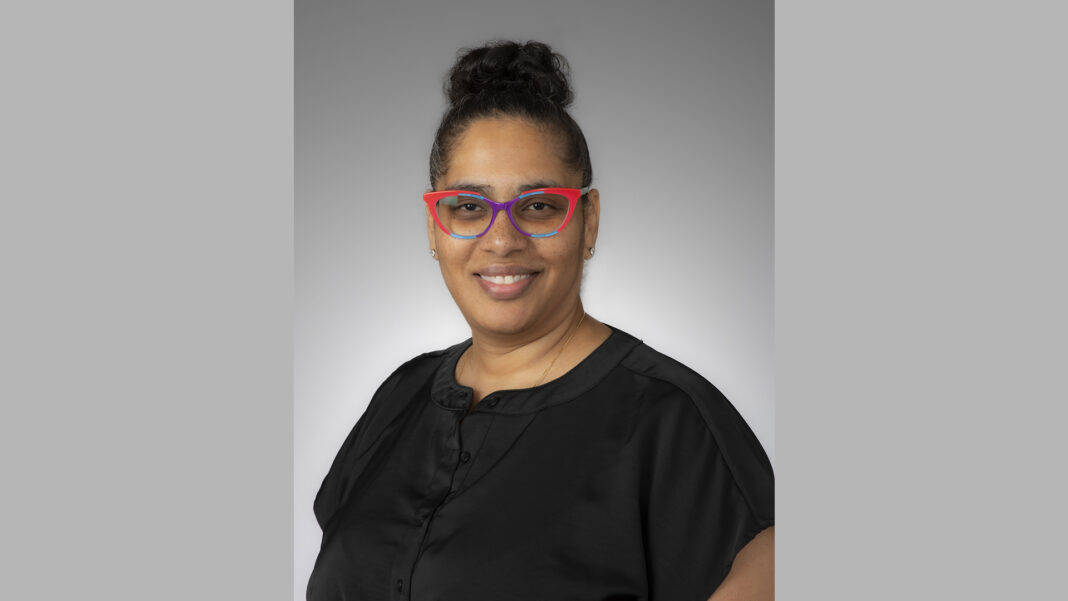


OMIESHA YANCEY
For patients living with HIV, medical care can involve far more than prescriptions, lab work, and follow-up appointments. Many arrive at UPMC’s PACT Clinic with questions about what their diagnosis means, how treatment will affect their lives, and whether they will be met with understanding instead of judgment. Some bring the weight of fear, stigma, family concerns, past health care experiences, or the added challenges that can come with being African American, LGBTQIA+, or both.
That is where PACT—Pittsburgh Area Center for Treatment—works to meet patients with both clinical expertise and human support. Founded around 35 years ago when HIV and AIDS were first emerging and today based at UPMC’s Falk Medical Building, the program helps patients navigate HIV care, understand treatment, stay connected to services, and build the trust needed to continue managing their health.
For Omiesha Yancey, an outpatient nurse coordinator at the PACT Clinic, that work means helping patients understand that an HIV diagnosis is not the end of their story, and that care can be both medically strong and personally affirming.
“I’m sure people remember all of the stigma that came along with HIV and AIDS back then,” Mrs. Yancey said. “Believe it or not, there is still a lot of stigma today, which is unfortunate. What we try to provide for our patients is a safe space to be vulnerable and help them feel that they can control their outcome. We try to give them back some autonomy as they navigate through this part of their lives, because it doesn’t define who they are.”
The PACT Clinic serves patients living with HIV and in many cases functions like a primary care provider. In her role Mrs. Yancey helps coordinate care, support clinic workflow, and work with nurses, nurse coordinators, and providers. She said the clinic sees about 1,600 patients and provides a broad range of support services, including social work, nutrition, psychology, psychiatry and pharmacy support.
That broad model is important because patients’ health needs rarely exist in isolation. Some patients are managing HIV along with other health conditions. Others face barriers tied to poverty, transportation, food access, housing instability or mental health. Yancey said many patients are disadvantaged or live in food desert areas, making nutrition and social work essential parts of their care.
“We provide a range of resources, including nutrition and social work,” Mrs. Yancey said. “We coordinate a lot of their appointments with different ancillary services. We even have a pharmacist on site who can help with medications.”
That coordination can be especially important for African American LGBTQIA+ patients, who may be navigating both racial disparities in health care and stigma connected to sexual orientation, gender identity or HIV status. Mrs. Yancey said the work begins with making people feel respected as human beings.
“There is still that stigma, and part of that is helping them feel treated as normal human beings—giving them a hug, shaking their hand, and making sure they feel respected,” she said.
Treatment for HIV has changed dramatically since the earliest years of the epidemic. Once widely seen as a death sentence, it can now be managed and controlled. With medication and consistent care, patients can suppress the virus and live full lives. But Mrs. Yancey said for those who are diagnosed with HIV, the old fears have not disappeared.
“First of all, it is a shock because it has always been instilled that, ‘I am going to die,’” she said. “But once we do the education and keep educating, keep reiterating what is going on, what this is and how we can keep it undetectable, then patients come around.”
Education remains critical because new diagnoses continue across age groups. Mrs. Yancey said some people still believe HIV will not affect them, even though it remains present in the community. “The thinking can be, ‘It is not going to happen to me,’” she said. “But it is still out there, and unfortunately it does happen frequently.”
That is why care at the PACT Clinic is not only about medication. It’s also about engagement. Mrs. Yancey said patients must be encouraged to stay connected to care, even when they are scared, overwhelmed or reluctant. She sees her role as helping them move forward without judgment.
One of the biggest remaining issues is encouraging African American patients to seek mental health care. “I always tell my patients that you have to be physically AND mentally healthy,” she said. That’s challenging because they might not be ready to engage in counseling or psychiatric care until they feel secure enough to take that step.
And often representation can be a barrier to those patients participating in mental health care. In Mrs. Yancey’s experience, African American patients may be more willing to engage in psychology or psychiatry services when they feel the provider understands their lived experience.
“It would be very beneficial in psychology and psychiatry to have more African American professionals spearheading that,” Yancey said. “I think we would get a lot more of our patients involved and engaged.”
That kind of representation matters because trust is often built through recognition. A patient who sees a provider who looks like them may feel more confident opening up about issues connected to race, sexuality, stigma, family, community or trauma.
“Patients can say, ‘You look like me. You have probably experienced things like me,’“ she said.
For African American LGBTQIA+ patients, culturally competent care means more than using the right language. “Having a patient come here and be met with dignity, respect, professionalism and competency gives them a sense of security,” she said. Mrs. Yancey has seen progress at UPMC during her four years at the clinic. She said patient satisfaction has grown significantly, and patients have shared personal information with her because they feel comfortable enough to be vulnerable.
“It is the relationship you build with patients,” she said. “Every patient who comes here, regardless of what they are coming in for, is vulnerable. You have to meet them where they are.”
At the same time, she said there is always room for improvement. “We need more physicians, more bodies, and more space to see patients as frequently as we should,” Mrs. Yancey said. “It would help if we could open it up a little bit more with staffing and have attendings or medical directors who look like the patients. Who knows, this could even inspire patients to pursue a career in healthcare and ultimately help others one day.”
For Mrs. Yancey the heart of the work is making sure patients know they are not alone. Even when a patient misses care or is not ready to take the next step, she wants them to know someone is still there for them.
“It is giving them encouragement and reminding them that they are not alone in this,” she said. “You are not going to give up on them. They all have a story.”
At UPMC’s PACT Clinic, that philosophy is central to the support Mrs. Yancey provides—care that treats the diagnosis, but also sees the person living with it.

