
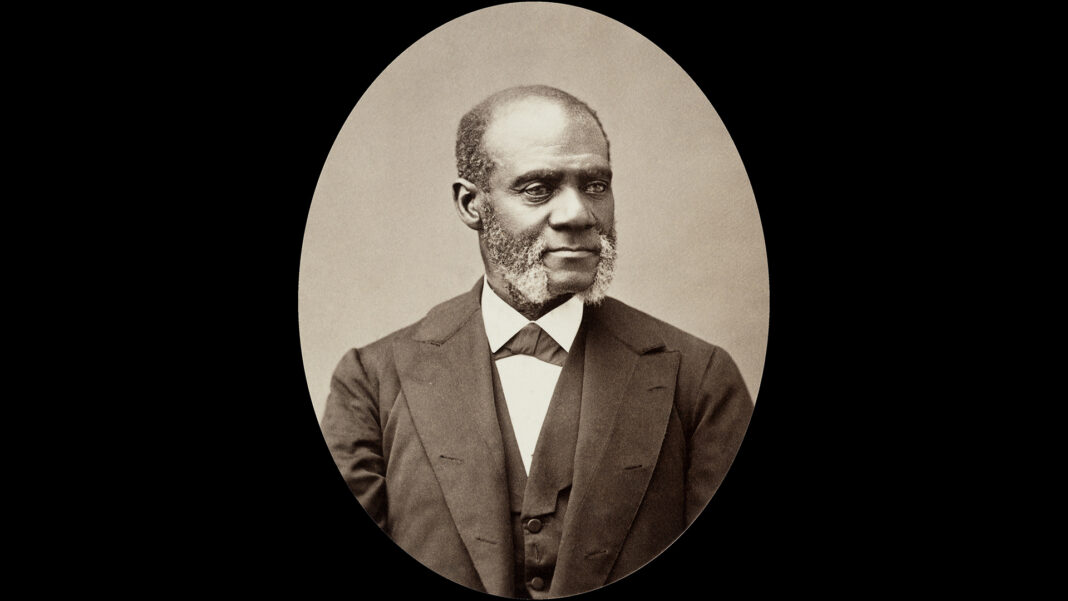

HENRY HIGHLAND GARNET
by Robert Hill
“What, to an American slave, is your 4th of July?” Abolitionist Frederick Douglass eloquently posed that contradiction in a speech delivered on July 5, 1852, in Rochester, New York. The audience was the Caucasian-dominated Ladies’ Anti-Slavery Society.
Nine years earlier, at the National Negro Convention on August 16, 1843, in Buffalo, New York, abolitionist Henry Highland Garnet delivered his “Address to the Slaves of the United States of America’’ oration. “…Resist, resist, resist…”, exhorted the Rev. Garnet.
In his address Frederick Douglas, though praising the heroism of the nation’s Founding Fathers for overthrowing the British monarchy, catalogued the sins of Black slavery in practice in a country that celebrated freedom on July 4.
In his Buffalo speech Henry Highland Garnet rejected violence as a means of liberation from slavery for Americans in bondage. He then went on in the address to advocate violence for liberation.
Public feuding, played out in the Douglass North Star and Garnet Impartial Citizen newspapers, highlighted the nonviolent approach to seeking an end to slavery as advocated by Frederick Douglass vs. Henry Highland Garnet’s militant advocacy.
These differences disguise similarities of the abolitionist pair. Henry Highland Garnet and Frederick Douglass were born in slavery three years apart, both in Maryland (heroes Harriet “Black Moses” Tubman and polymath Benjamin Banneker, as well as villainous slaveholding National Anthem writer Francis Scott Key and villainous slaveholding U.S. Supreme Court chief Roger {Dred Scott decision} Taney were all born in Maryland.) The pair of enslaved men self-liberated from slavery through clever trickery.
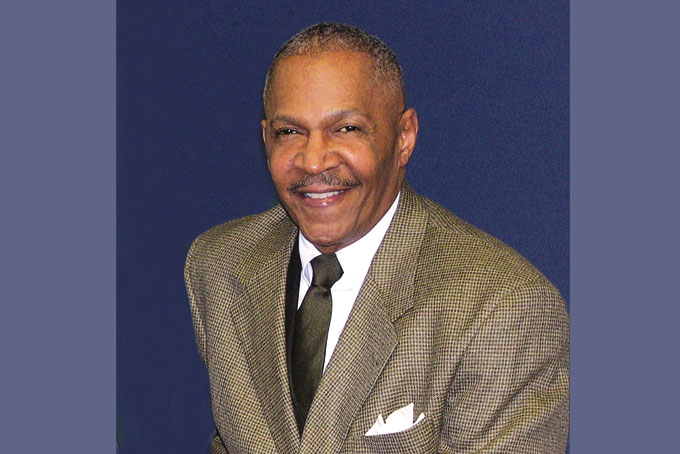
ROBERT HILL
Henry Highland Garnet was born on December 23, 1815. A slave at birth, he and his family freed themselves by getting permission from their Caucasian enslaver to leave home to attend a family funeral. They never returned to slavery in Maryland or anywhere. Henry Highland Garnet was nine years old.
After his arrival in New York City, the boy attended the African Free School and the High School for Colored Youth. He also attended the Phoenix High School for Colored Youth. He graduated from the Oneida Institute, a Presbyterian school in upstate New York State.
In 1840, a year after graduation, according to medical doctor James McCune Smith, a sports-related knee injury ultimately resulted in amputation at the hip of one of Henry Highland Garnet’s legs in the early 1840s. Nonetheless, his brilliance and oratory skills enabled forward movement in his professional life in the Presbyterian ministry.
In 1865 Henry Highland Garnet became the first African American to deliver a sermon in the U. S. House of Representatives. He advocated successfully for passage of the 1865 13th Amendment to the U.S. Constitution that ended chattel slavery in the United States.
He came to Pittsburgh (then Allegheny City) in 1868 as president of Avery College, an African American school. Henry Highland Garnet also founded Grace Memorial Presbyterian Church in Pittsburgh. The school was demolished but the church is operating in Pittsburgh’s Hill District on Bryn Mar Road and celebrated its 150-year existence in 2018.
Around 1818, Frederick Douglass was born. The abolitionist advocated for moral suasion to lead slaves from enslavement. He was the most famous Black man of his day, having self-liberated from slavery when he was 20 years old. He dressed as a sailor, and his forged papers certifying him a “free” sailor led to his liberation. He was never in enslaved service to anyone again.
Prior to his self-liberation, Frederick Douglass was beaten and abused by slave breaker Edward Covey, to whom the bondsman was leased. At 16 years-old, Frederick Douglass fought back, bloodying the tyrant. Neither the humiliated Edward Covey nor any other so-called slave breaker beat Frederick Douglass again. In his autobiographies “Narrative of the Life of Frederick Douglass” and “My Bondage and My Freedom” the great man reflects on those transformative times: “I was nothing before; I was a man now.”
Frederick Douglass was a multi-talented abolitionist, who wore many hats in his storied life. He was the first Black guest at the White House, where President Abraham Lincoln called him “my friend.” His advocacy and recruitment of soldiers including the Massachusetts 54th (think Denzel Washington in “Glory”) resulted in 180,000 Black Union soldiers.
He published the North Star newspaper, with Pittsburgh’s Martin Delany recruited as coeditor. The man from Maryland had other newspapers as well. Under President Benjamin Harrison, Frederick Douglass served as minister to Haiti (ambassador today.)
On November 6 and 7, 1843, Frederick Douglass spoke at the First Baptist Church of Pittsburgh. His abolitionist speaking tour that brought him to Pittsburgh was sponsored by The Massachusetts Anti-Slavery Society. In 1881 President James Garfield appointed him Recorder of Deeds, the Federal government’s real estate records czar for Washington D.C.
In the 1870s Henry Highland Garnet and Frederick Douglas reconciled. The icons came to respect each other and to stop squabbling. Nearly 100 years later, America would witness a similar end to bickering between militant-talking Malcolm X and passive resistance leader Martin Luther King Jr.
(Robert Hill is an award-winning Pittsburgh writer and communications consultant.)