
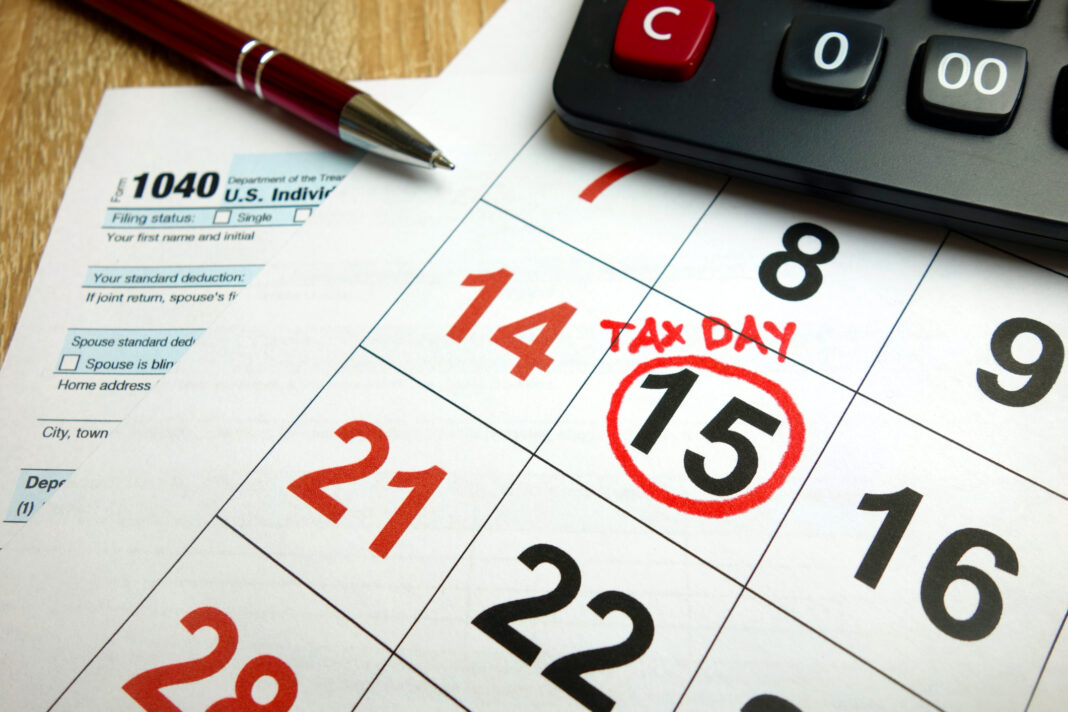


Most people don’t think about taxes until January, February, March—or April 14 at 11:59 p.m.
That’s the problem.
Tax season is when you file your taxes. Tax planning is what you do before the year ends. There’s a big difference between the two.
By the time tax season arrives, most of the financial moves that could have helped you are already in the rear view mirror. You can’t go back and change how much money was withheld from your paycheck. You can’t undo a year of sloppy recordkeeping. You can’t magically recreate receipts you lost eight months ago.
That’s why the middle of the year is the perfect time for a tax checkup.
You have roughly half the year behind you and half the year still in front of you. That means there’s still time to correct mistakes, organize your paperwork, adjust your withholding and make strategic financial moves before December 31.
Don’t wait until tax season to discover a tax problem. Find it now while you still have time to fix it.

Get Your Tax Records Organized
If your tax records are scattered between a kitchen drawer, your email inbox, your glove compartment and screenshots buried in your phone, you’re already making tax season harder than it needs to be.
Create one central location for tax-related documents. It can be a clearly labeled paper folder, an electronic folder or secure tax software. The method matters less than the organization.
Keep track of income documents, charitable contributions, business expenses, medical expenses when applicable, education costs, estimated tax payments and other records that may support a deduction or credit.
Good recordkeeping does two things. First, it makes tax preparation faster and less stressful. Second, it reduces the chance that you overlook a deduction or credit simply because you forgot about an expense.
You can’t deduct what you can’t document.
Check Whether Life Changed
Your Tax Situation
Life changes. When life changes, taxes often change with it.
Did you get married? Divorced? Have a baby? Lose a spouse? Take custody of a dependent? Send a child to college? Buy a home? Start a side hustle? Retire?
These events can affect your filing status, dependents, deductions, credits and overall tax liability.
Your filing status is especially important because it helps determine your standard deduction, tax brackets and eligibility for certain tax benefits.
Don’t assume your tax return will look the same this year simply because it looked a certain way last year. A major life event can change the entire picture.
New life. New circumstances. Possibly new tax rules.
Keep an Eye on Your Adjusted Gross Income
Adjusted gross income—better known as AGI—is one of the most important numbers on your tax return.
In simple terms, AGI is your total income minus certain adjustments. Your AGI can affect your taxable income and eligibility for various deductions and credits.
That’s why tax planning should include more than asking, “How much money did I make?”
The better question is: How much of my income will ultimately be subject to tax, and what legitimate moves can I still make before year-end?
Depending on your circumstances, contributions to certain retirement accounts and other allowable adjustments may reduce taxable income.
This is where proactive tax planning matters. Waiting until you receive your W-2 or 1099 is not tax planning. At that point, the year is over and many opportunities are gone.
Check Your Tax Withholding Now
This is one of the biggest mid-year moves you can make.
Federal income taxes generally operate on a pay-as-you-go system. If you’re an employee, taxes are usually withheld from your paycheck. If you’re self-employed or have other income without withholding, you may need to make estimated tax payments.
The problem is that many people never check whether enough—or too much—is being withheld.
Then tax season comes around and they’re shocked.
Some owe thousands of dollars. Others receive a huge refund and celebrate like they hit the lottery.
Pump your brakes.
A large refund often means you gave the government too much money throughout the year. A big tax bill may mean you didn’t pay enough.
The goal is not necessarily the biggest refund. The goal is accuracy.
The IRS Tax Withholding Estimator can help workers and retirees estimate how much federal income tax should be withheld. The updated estimator also reflects major tax-law changes affecting deductions for qualified tips, qualified overtime, eligible car loan interest and an enhanced deduction for qualifying seniors.
That matters because your tax situation may look different from previous years.
If the numbers suggest you’re significantly over-withholding or under-withholding, you may need to submit an updated Form W-4 to your employer.
Don’t guess. Run the numbers.
Pay Attention to the New Tax Breaks
Recent tax-law changes created several provisions that taxpayers should understand before filing season.
Eligible seniors age 65 and older may qualify for an additional deduction of up to $6,000. Qualified tipped workers may be eligible to deduct up to $25,000 in qualified tips. Eligible workers may deduct up to $12,500 in qualified overtime—or up to $25,000 for joint filers. Certain taxpayers may also deduct up to $10,000 in qualified passenger vehicle loan interest.
These tax breaks have eligibility rules, income limitations and other requirements. The headline may say “no tax,” but that doesn’t mean every dollar automatically qualifies for every taxpayer.
Tax laws come with fine print. Read it—or work with somebody who does.
Update Your Personal Information
Moved recently? Changed your name?
Address changes should be reported to your employer, the U.S. Postal Service and the IRS. Individuals can use Form 8822 to officially notify the IRS of a home mailing address change.
If your name changed because of marriage, divorce or another reason, update the Social Security Administration as well.
Why does this matter? Because mismatched names, outdated addresses and incorrect records can create unnecessary delays and administrative headaches.
Small paperwork problems can become big tax-season problems.
Use Retirement Contributions as a Tax-Planning Tool
Saving for retirement isn’t just about your future. Depending on the type of account and your eligibility, it may also provide tax benefits today.
Contributions to a traditional workplace retirement plan may reduce your current taxable income. Deductible traditional IRA contributions may also provide a tax benefit for eligible taxpayers.
If you’re behind on retirement savings, increasing contributions during the second half of the year may accomplish two goals: building your future nest egg and potentially reducing your current tax burden.
That’s what I call making your money multitask.
But don’t contribute blindly just for a tax deduction. Understand the account, contribution limits, eligibility rules and impact on your overall financial plan.
The Bottom Line
Here’s what I want you to understand:
Tax season should not be your first conversation with your taxes.
A mid-year tax checkup gives you time—time to organize, time to correct, time to adjust and time to plan.
Review your records. Revisit your filing situation. Monitor your income. Check your withholding. Update your personal information. Study the new tax rules. Look for legitimate opportunities to reduce your taxable income.
December 31 is coming whether you’re ready or not.
The smartest taxpayers don’t wait until tax season to ask, “What happened?” They plan before the year ends and ask, “What can I still do about it?”
That’s the difference between simply filing a tax return and actually doing tax planning.
(Damon Carr, Money Coach & Tax Pro can be reached at 412-216-1013 or visit his website at www.damonmoneycoach.com)
Helping you flip your finances from stressed to blessed—one smart decision at a time.