

The dispute follows a series of high-profile regional clashes since 2021 over books, displays and library policies. Here’s where a half dozen book battles stand today.
“Pittsburgh’s Public Source is an independent nonprofit newsroom serving the Pittsburgh region. Sign up for our free newsletters.”
Elected officials’ pressure to end a children’s Pride Month display early at the Monroeville Public Library — coupled with claims that the materials amounted to “sexual grooming” — has reignited a regional conflict over LGBTQ+ books and displays.
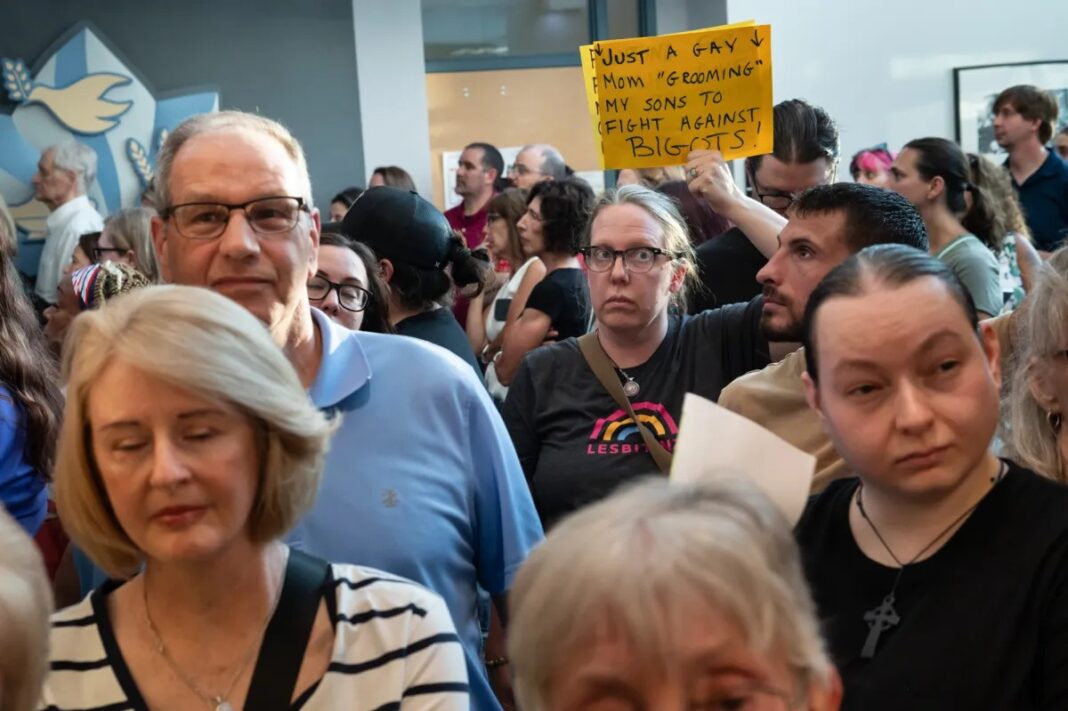
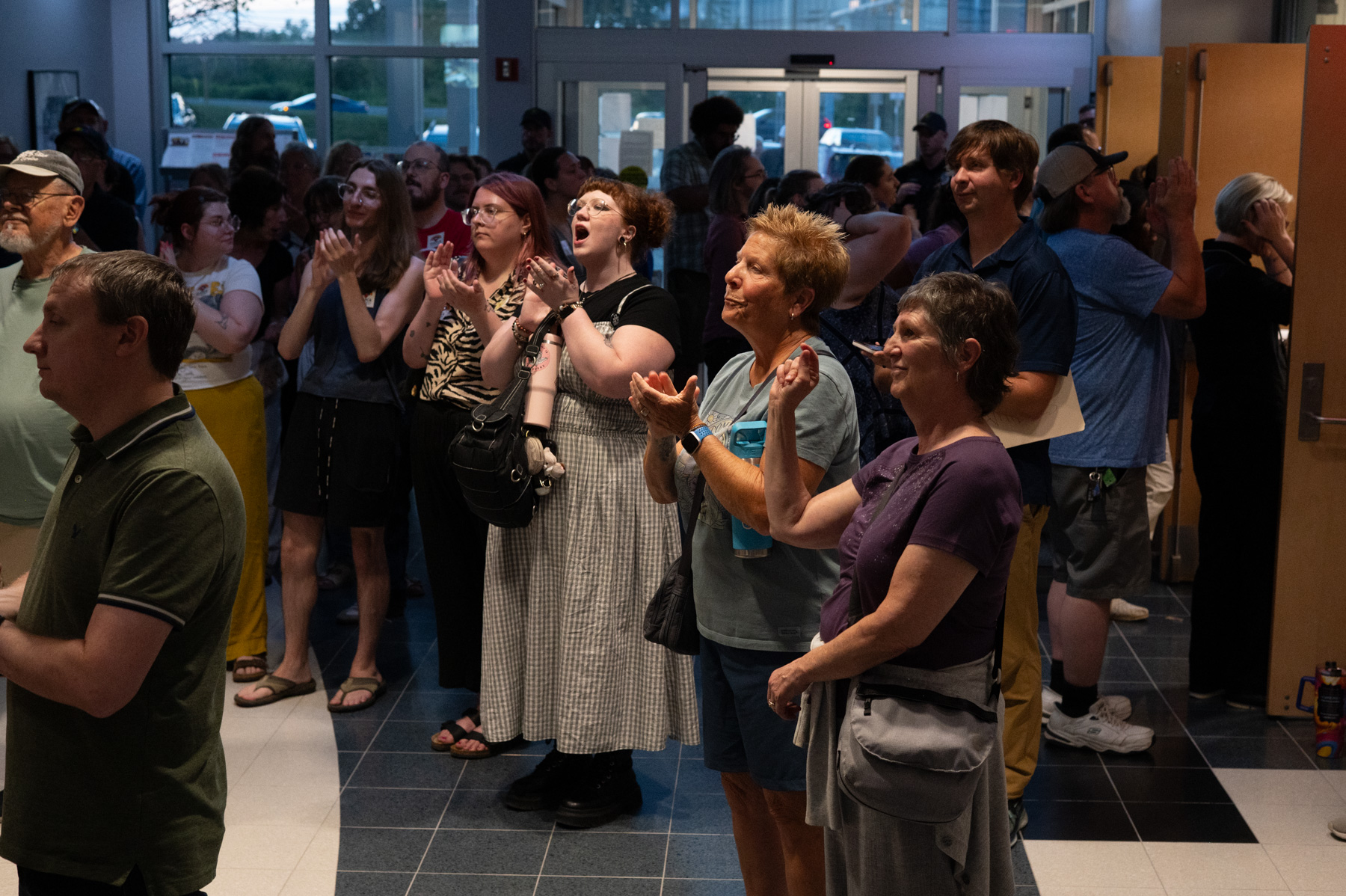
The library prematurely removed the display June 26 after council members raised concerns directly with municipal and library officials, without submitting a formal request for reconsideration. The move drew throngs of residents to a July 7 council meeting, where most speakers opposed the officials’ intervention. Members of the public continued to press the municipal council last week.
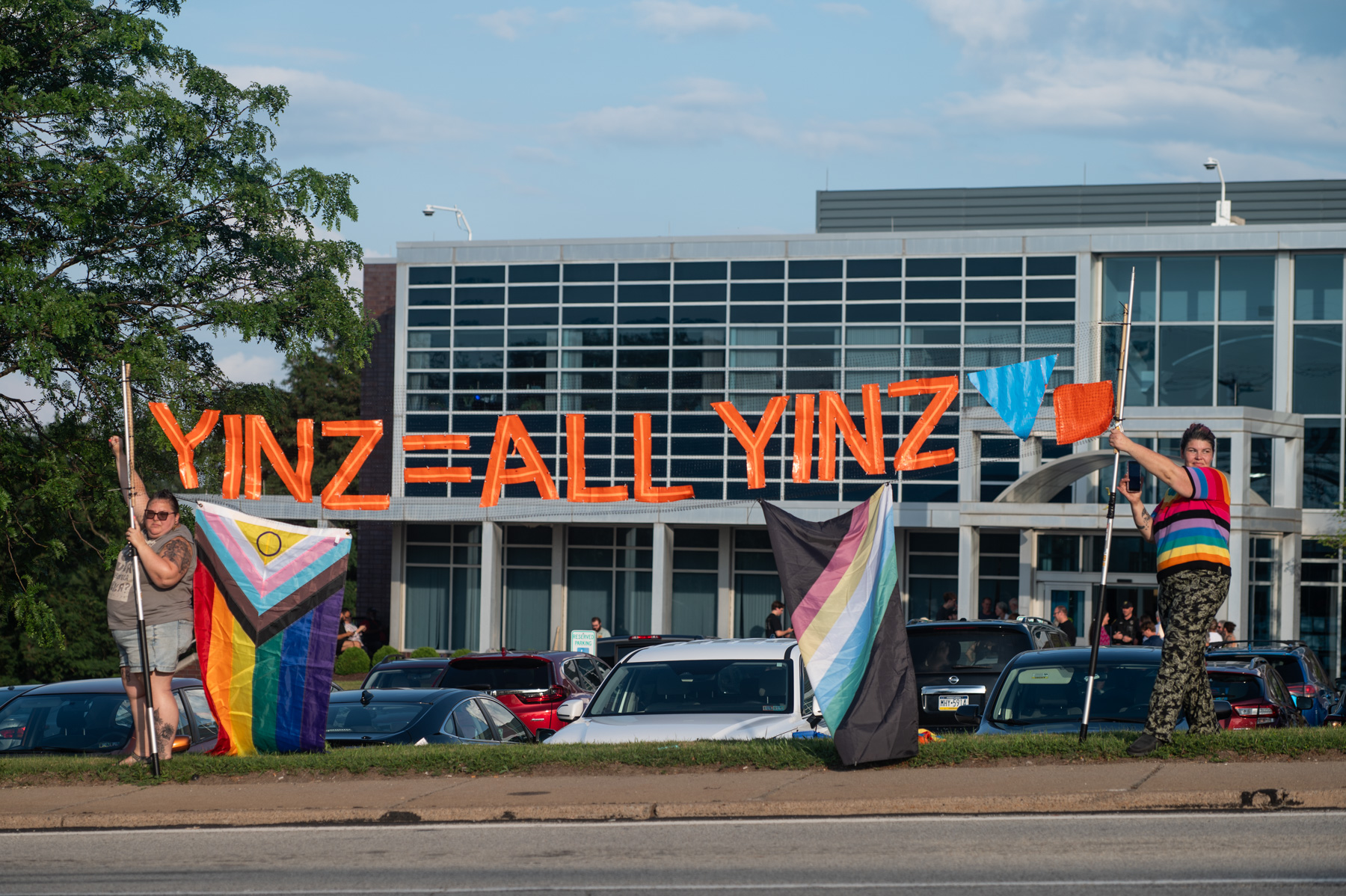
The Monroeville dispute revives tensions that have rippled across Southwestern Pennsylvania since 2021, as elected officials, school board members and activists have sought greater control over books, displays and policies involving LGBTQ+ identity, sexuality and other politically charged subjects. It is the region’s first high-profile eruption over such materials since a surge of school board activism in 2023.
Pittsburgh’s Public Source examined the Monroeville controversy and five other regional flashpoints to understand how these disputes unfold, who drives them and what happens when political pressure reaches libraries, schools and other public institutions.
Display’s early ouster energized opposition
Monroeville’s library put up, on June 1, a display intended for young children and middle grade students, including books such as “A Kids Book About Gay Parents,” “The GayBCs” and “Pride Puppy!” It was removed around a week before the end of Pride Month.
At the July 7 municipal council meeting, most of the 53 registered speakers criticized the apparent intervention from council members that led to the early removal. Some pointed to a Facebook post by Councilor Bill Krut, in which he referred to the pride display as “child, sexual grooming,” a term often used by opponents of LGBTQ-related material who seek to tie such content to techniques used by sexual predators.
“It’s outrageous and hateful,” April Scassera, a social worker from Monroeville, said of the post.
Krut, a retired police officer, stood by his comments but denied that he asked the library to take down the display.

“In our home, we taught our kids the ABCs when they were 3, 3 and a half, 4 years old,” he said during the meeting on July 7. “It seems to me that books like ‘GayBCs’ is intended to interfere with a child’s natural observation of what is common in a culture and a society, and to nudge them to be curious about alternatives.”
Councilors Mike Adams and Bob Williams voiced support for Krut during the meeting.
“I have nothing against the gay community. If that’s what you choose as a lifestyle, that’s fine with me,” said Williams. “I’m not saying it’s right, but I can live with that. I do believe that our kids were being groomed at that edge with some of the material.”
During the meeting, Municipal Manager Alex Graziani said he was approached by two council members, whom he did not name, who expressed concerns about the display. He said the decision to direct the library to take down the display to prepare for Independence Day celebrations was solely his.
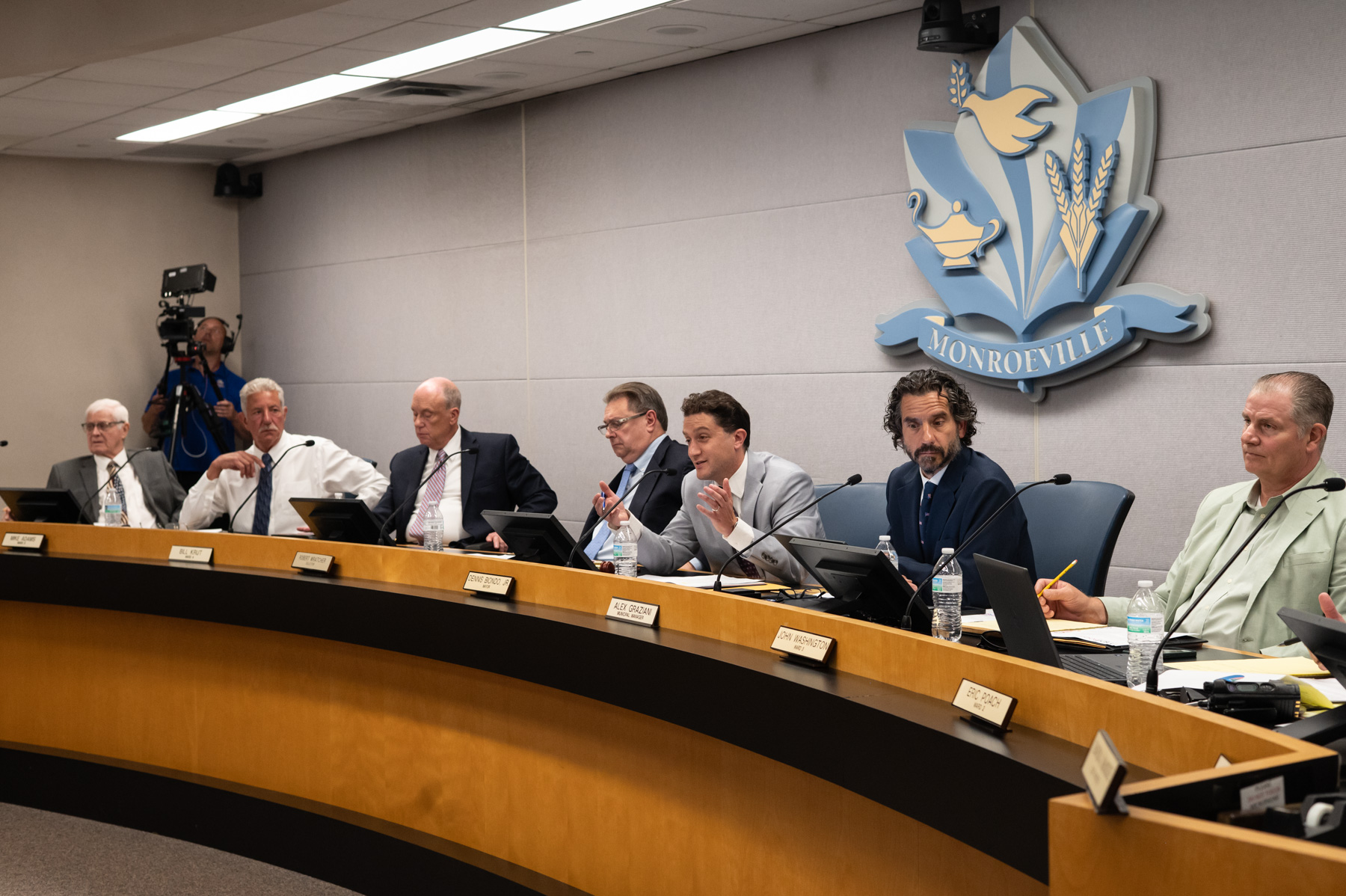
“I advised that the June Pride Month display in the children’s section be removed and replaced with a patriotic America 250 display in advance of the Independence [Day] holiday and our community celebration,” Graziani said.
Krut and Williams were present at a library board meeting on June 22, when they spoke against the display.
The library board initially kept the display up but, according to Kelly Meredith, the library board president, they reversed the decision shortly after facing private pressure from council members.
Meredith, who has been on the board since 2021, said in an interview she had not previously seen a situation like this.
“We really hope that council pays attention to their constituents because ultimately that’s what the council is elected to do,” Meredith said.

At the July 7 meeting, Scott McQuiston, a newcomer to Monroeville, said he saw the council’s actions as a slippery slope toward more extreme actions like book burning.
The display, he added, was affirming to someone who is LGBTQ+.
“If I had in my library a display like they had there, I would not have known I was alone, I would have known that I was a part of the community,” McQuiston said.
While many speakers criticized a lack of transparency, Jim Brown, a former Monroeville council member, defended the manager’s actions.
“It is not unusual for the municipal manager as the chief executive of the municipality to make executive-level decisions based on impromptu and informal input from the members of council,” Brown said.
The debate rippled through the eastern suburbs.
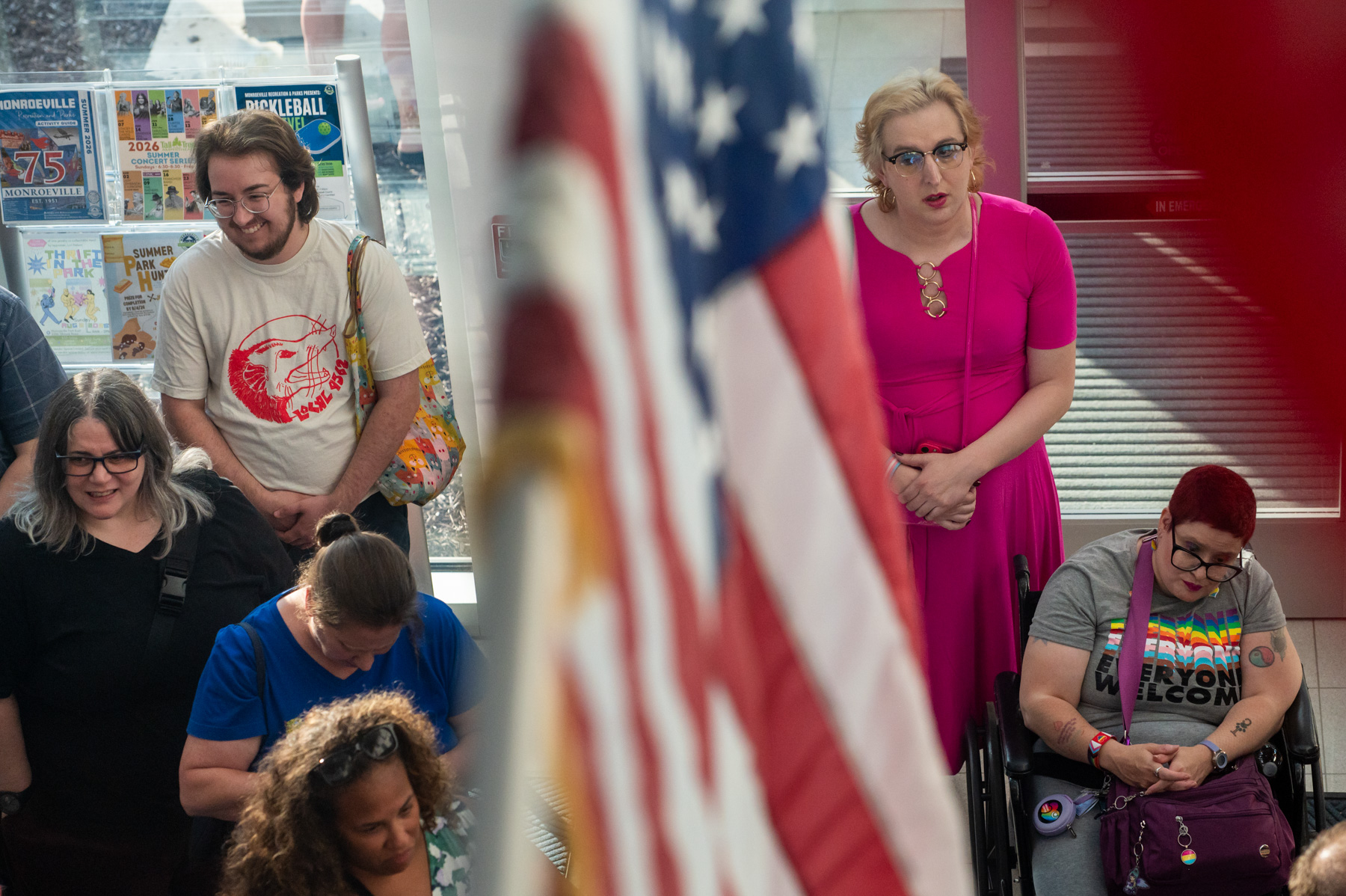
Forest Hills Pride organizer and early childhood educator Bucky Kephart said he was “horrified” to see Krut’s comments about the display.
“To have something completely innocent, like my personal gender identity associated with a crime against children, is really scary,” Kephart said. “It threatens my job, my livelihood and also my passion.”
Kephart said he was concerned that council members’ efforts to intervene could set a precedent.
“I find that really concerning that they could go outside of official channels and against what it sounds like from the library board meeting was the general consensus to keep the display up,” he said.
Suburbs have processes for reconsidering books
Amy Anderson, CEO of the Allegheny County Library Association, said in an interview that ACLA has a process for handling concerns. Residents can submit a request for reconsideration of a title they find inappropriate. ACLA serves the 46 independent public libraries throughout Pittsburgh’s suburbs.
Anderson said none of the Monroeville council members submitted a request for consideration, instead using unofficial channels.
“Unfortunately, that goes against the process, the approved policies of the [library] boards normally,” Anderson said. “That should not be the process, intimidation, and should never be used against the library.”
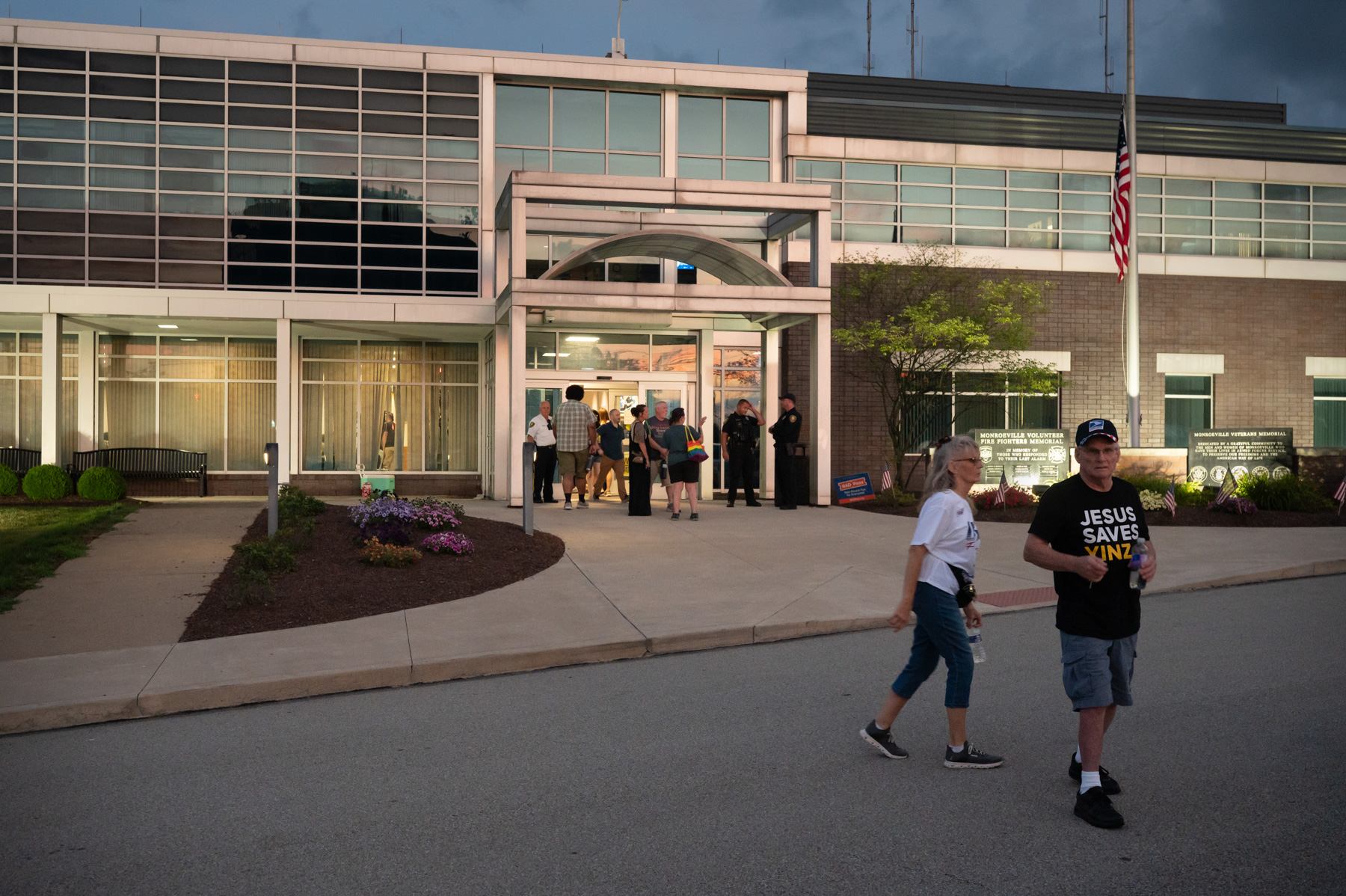
Anderson said librarians are professionals who curate books and materials based on their expertise and knowledge of communities.
People challenging books “see issues regarding books by and about people of color and historical books, but really, what we see the most are the books relating to and written by LGBTQ,” Anderson said.
Ray Sidney-Smith, president of the Pittsburgh Equality Center, said the claims of “grooming” or “sexually explicit content” are used to cause fear and to stigmatize an entire community, often by people who have not read the books they are challenging.
He added book bans could lead to the erasure of LGBTQ+ people from libraries, schools and bookstores.
“Once a community accepts that queer and trans stories can be removed because they make some people uncomfortable, it becomes easier to justify more censorship,” he said.
Efforts to suppress books dot Pittsburgh’s suburbs
The debate in Monroeville revives tensions over books and their display that have rippled across Southwestern Pennsylvania since 2021. These six disputes show how the conflict has unfolded across the region.
What was challenged: Pride Month children’s book display
Where: Monroeville Public Library
When: 2026
Who pushed it: Councilman Bill Krut publicly criticized the display; questions remain about which officials directed removal and whether the council acted.
What happened: Display was removed; residents organized around a July 7 municipal council meeting.
Public rationale: Concerns about children’s access to LGBTQ+ materials.
Pushback: Residents, parents and LGBTQ+ advocates defended the display as age-appropriate representation.
Status: Pending/active.
Why it matters: Raises questions about municipal authority over library decisions, open meetings and political pressure on public institutions.
What was challenged: Library book policy
Where: Pine-Richland School District
When: 2023
Who pushed it: Some community members objected to 14 books in circulation, saying they contained sexually explicit content. Books included “Heartstopper,” “All Boys aren’t Blue,” “The Handmaid’s Tale” and “The Bluest Eye.”
What happened: The district began reviewing the books and revised its library policy, which expanded the school board’s role in book selection and prohibited librarians from acquiring any materials with “pervasive vulgarity or profanity” or “explicit sexual content.”
Public rationale: Concerns about children’s access to LGBTQ+ materials and board oversight on the school’s library.
Pushback: Families and community members severely criticized the policy, the board received a vote of no confidence from the Pine-Richland Education Association and a slate of Democrats won board seats last November, flipping the conservative majority.
Status: Policy was reversed in May 2026.
Why it matters: As one of the most controversial book bans in the region, it epitomized the push by conservative groups for more oversight of libraries and schools, and showed that it can have consequences at the polls.
What was challenged: Library book policy
Where: Blackhawk School District
When: 2023
Who pushed it: Board member Gwen Deluca challenged 12 books, saying they had sexually explicit, obscene and vulgar content. Deluca is no longer on the school board.
What happened: The district revised its library policy, which would allow anyone in the community to challenge a book and file a complaint.
Public rationale: Concerns about children’s access to LGBTQ+ materials.
Pushback: Community members and the Education Law Center criticized the move, saying, “We’re most concerned about a small amount of parents really imposing their viewpoints on what books students have available to read in their school libraries.”
Status: Policy was reversed.
Why it matters: Anyone could challenge books based on personal and religious beliefs, leading to higher likelihood of censorship.
What was challenged: Library book policy
Where: Hempfield Area School District
When: 2023
Who pushed it: Some district parents, including Paula Cinti, then listed as vice chair of a Westmoreland County chapter of the organization Moms for Liberty, challenged two high school books.
What happened: Library policy was revised to include definitions of “sexual content” and “ethnic intimidation.” Librarians had to make intended book purchases public so parents could express concerns that the district would review.
Public rationale: Parents spoke both for and against these revisions. Some expressed concerns about “grooming,” while others said it would set a precedent for book banning.
Status: Active. Hempfield Area Superintendent Mark Holtzman declined to comment on the district’s amended library policy.
Why it matters: The district still has a book censorship policy in place. It epitomized the involvement of conservative groups like Moms for Liberty in school policies.
What was challenged: Inclusion of “Al Capone does my shirts” in the fifth-grade curriculum
Where: Norwin School District
When: 2023
Who pushed it: Some board members, including Shawna Ilagan and Robert Wayman, raised concerns about sexual innuendos, references to rapists who are in prison and the use of an outdated word when describing a person with special needs. Both members no longer serve on the school board.
What happened: Board members voted on whether to remove the book from the curriculum but the motion failed.
Public rationale: The book was evaluated by teachers and administrators who deemed it appropriate.
Status: Motion to remove the book failed.
Why it matters: The book was challenged in other school districts around the country.
What was challenged: Moon supervisors’ influence on the hiring of library trustees
Where: Moon Township
When: 2021
Who pushed it: A social media post said the book, “The Hips on the Drag Queen Go Swish, Swish, Swish” was inappropriate and accused the library of sheltering pedophiles.
What happened: Following that, Moon Township supervisors hired four new trustees without consulting the other trustees.
Public rationale: Library board members are concerned about unqualified people, who do not have expertise in library operations, being on the board.
Status: Active.
Why it matters: Shows how municipal officials can exercise indirect authority over library decisions.
Public Source made attempts to contact each of the named officials involved in these cases. Only one, Deluca, spoke with a reporter.
Deluca said her actions were part of “a national movement” to expose books deemed inappropriate for minors and were not directed at the LGBTQ+ community. She attributed the slowdown in local book challenges since 2023 to the resistance she and other challengers faced.
“I think people got worn down from harassment,” she said.
Book suppression and pushback are local echoes of national trend
In the 2023-24 school year, nonprofit organization PEN America, which advocates for freedom of expression, found 10,046 instances of book bans across the country. The organization identified 50 local and national conservative groups, such as Moms for Liberty, that have led efforts to suppress books. Their 2022 research found that Pennsylvania stood third in book bans nationwide.
Kasey Meehan, director of Freedom to Read at PEN America, said the majority of book bans in the country target books with LGBTQ+ representation, books with Black and brown characters, books that talk about race and racism or books that deal with sexuality or sexual experiences. Proponents of the bans often characterize those books as harmful, inappropriate or sexually explicit, she said. Efforts to suppress LGBTQ+ materials can negatively impact children who might share identities with those represented in those books, Meehan said.
A 2026 report by PEN America found that, despite claims of “pornography,” only 10% of banned titles included “on the page” consensual sexual experiences.
In response to book bans in the region, the Pittsburgh Equality Center funded and created Little Queer Libraries, where people can access queer literature in queer safe spaces.
“Because of the nature of the fact that we’re funding it, we’re not susceptible to really any of the, you know, pushback from politicians or conservative groups that might be against having freedom of expression and free speech rights,” Sidney-Smith said.

Mallory Grantz, communications secretary for Monroeville Area Pride and Community Aid, said she sees the conflict at the library as an opportunity for renewed community advocacy.
“I feel inspired that we are seeing such an outpouring of Monroeville to support this,” Grantz said. “… The people will not be silenced, and we will not stay quiet about it, and I don’t think that the council really knew what they were opening up.”
Cilia Catello is an editorial intern at Pittsburgh’s Public Source. She can be reached at cilia@publicsource.org.
Lajja Mistry is the K-12 education reporter at Pittsburgh’s Public Source. She can be reached at lajja@publicsource.org.
This story was fact-checked by Ada Perlman.
This article first appeared on Pittsburgh’s Public Source and is republished here under a Creative Commons Attribution-NoDerivatives 4.0 International License.