
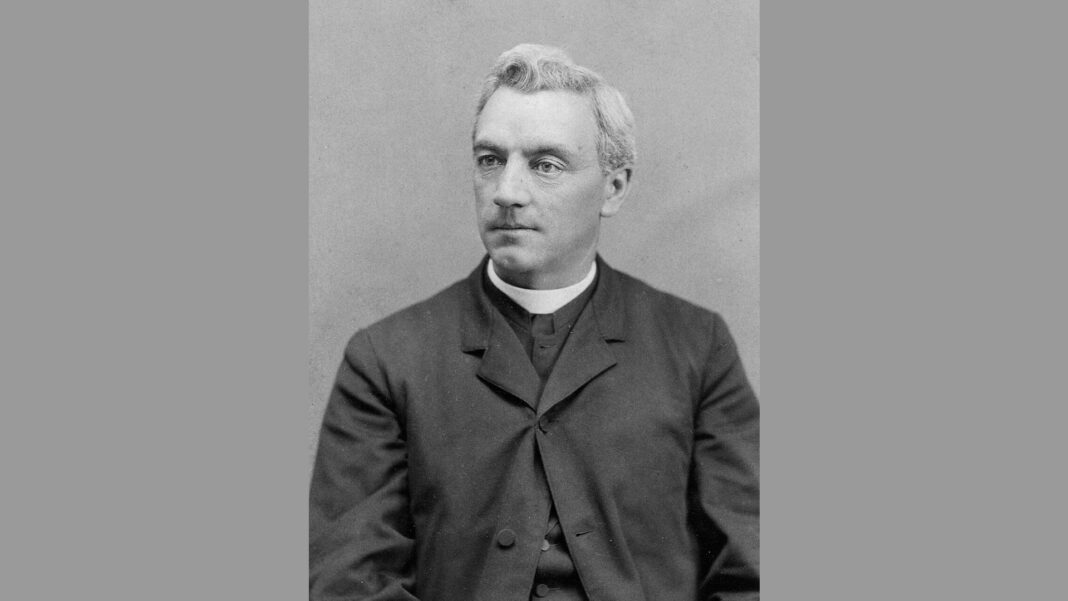

PATRICK FRANCIS HEALY
by Robert Hill
In researching my recent New Pittsburgh Courier column regarding Thurgood Marshall and Clarence Thomas I came upon a Forbes magazine reference to Clarence Thomas as one of the first Black students at the College of the Holy Cross, in 1967. That reference was incorrect.
Five enslaved Black Healy brothers graduated from the school during or just after the first half of the 19th century, more than 100 years before Black Associate Justice of the Supreme Court of the United States Clarence Thomas and his Black classmates graduated from Holy Cross.
As unusual as it was for an African American to attend any college in the 1800s, for five Black siblings to graduate from that Massachusetts Catholic school during the antebellum era is astonishing. By 1850, fewer than two per cent of Black adults were college educated, according to the Journal of Blacks in Higher Education.
African American James Healy was in the first graduating class of the College of the Holy Cross.
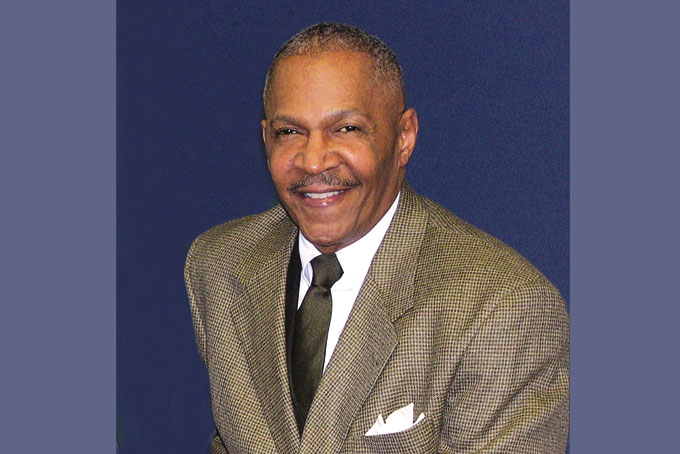
ROBERT HILL
James and Patrick Healy graduated from Holy Cross in 1849 and 1850, respectively. Both finished the college with valedictorian honors and both became priests in the Catholic faith, as did their brother Alexander. Moreover, James Healy became America’s first Black bishop, and Patrick Healy was elected president of the Jesuit Catholic Georgetown University.
Like the Healys, Clarence Thomas was born in Georgia. In their youth three of the Healys and Clarence Thomas aspired to be priests. Patrick Healy and his two brothers made it, but reported racism in his seminary took Clarence Thomas in a different direction more than a century later.
Patrick Francis Healy was one of 10 siblings born to enslaved and raped African American Mary Eliza Smith (also referred to as Clark) and to her enslaver and rapist, White Irish immigrant Michael Healy. As noted above, three of their sons became priests; one became a bishop, and one daughter became a Mother Superior.
Although their dad Michael Healy faked marriage to his adolescent child-rape victim, slaves could neither consent to sex nor deny consent to their slaveholders.
‘’Not tonight, dear; I have a headache’’, could not apply. Nonetheless, the wealthy rapist Healy did treat the Black Healy babies as his legitimate offspring, sending them north for their educations. Most of the antebellum south prohibited slave literacy.
Patrick Francis Healy was born in Macon, Georgia on February 27, 1834. After earning his Holy Cross bachelor’s degree, through Georgetown University, under whose charter unchartered Holy Cross conferred its degrees, Patrick Healy earned his PhD at the Catholic University of Louvain (among its several names) in Belgium. He was history’s first Black American to earn the PhD, in 1865 and became the first Black Jesuit.
Following more study at Georgetown University, teaching there and teaching in Philadelphia, Pennsylvania, Patrick Healy embarked on his historic climb to the top of Georgetown University leadership. Some awareness of his racial identity was quietly noted by a few in the University community. But mostly, he was regarded as White and the ‘’second founder’’ of Georgetown.
His enormous curriculum expansion, construction agenda and defining what was rendering Georgetown a major university earned him that distinct identity.
Prior to his Hoya days—in fact when Patrick Healy was only four years old—on June 19, 1838, Georgetown University (then College) met its budget shortfall by the selling of 272 slaves from the school’s Maryland plantations, saving the institution from bankruptcy.
There is no published evidence that President Healy—of course, himself born into bondage—addressed that historic slave-trading outrage after he became the school’s leader some 35 years later, in 1873. But, in 2016—and somewhat in penance—Georgetown pledged to offer its preferential legacy-admissions status opportunity to undergraduate applicants whose ancestors were among the 272 aforementioned slaves. There is little published evidence that more than a handful of African Americans became enrolled at Georgetown through that initiative.
In modern times, Georgetown University is celebrated for its Black basketball greats Patrick Ewing, Alonzo Mourning, Dikembe Mutombo, Allen Iverson and Coach John Thompson Jr. Needless to say, of course, 42nd President of the U.S. Bill Clinton is a Georgetown alumnus.
Historically, the stories of America’s centuries-long White/Black miscegenation are underscored by the accounts of pedophile Thomas Jefferson and his Black enslaved child-rape survivor Sally Hemings; of Ellen and William Craft who escaped slavery by White-looking young Ellen and her Black valet-masquerading husband William traveling in disguise as ‘’gentleman and servant’’; as well as of Georgetown’s Father Patrick Healy and his family of leaders in various fields.
The doctrine of partus sequitur ventrum—legally practiced throughout antebellum America—mandated that the children of Black slave mothers and the mother’s White enslaver be stolen slave babies of their slaveholder father. That aspect of American history helps to explain some of the tangled realities associated with hues/complexions of American Blackness to this day.
Astoundingly, deep-dive history reveals the Hemingses, Crafts and Healys to be—by blood—related parts of one extended family. Genealogists can have a great time with that fact.
(Robert Hill is an award-winning Pittsburgh writer and communications consultant)